
EPISODE · Jul 13, 2026 · 35 MIN
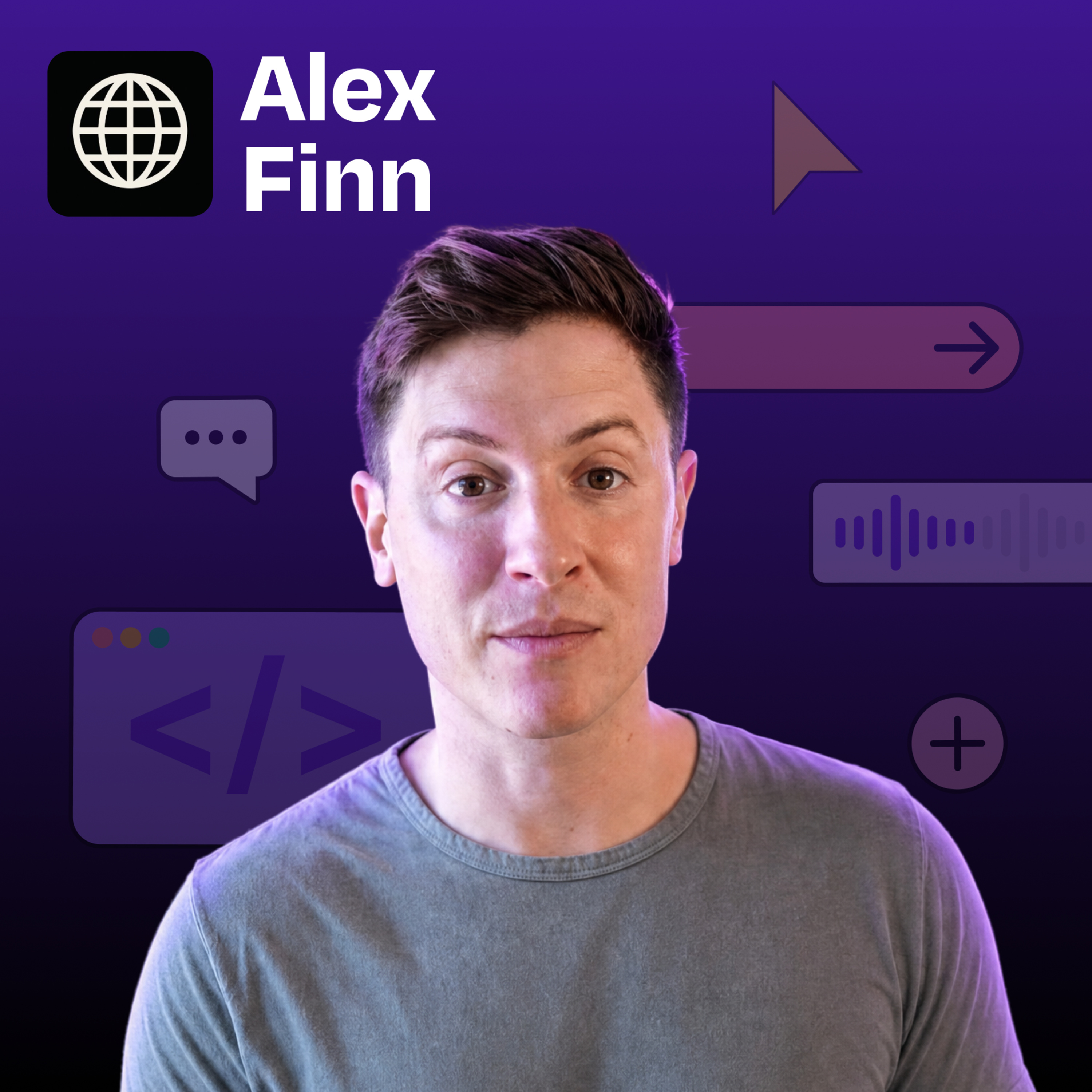
This solo builder runs 24/7 local AI on his own hardware | Alex Finn
from How I AI · host Claire Vo
Alex Finn is an AI builder, YouTuber, and the creator of Vibe Code Academy, a community for people learning to build with AI tools. He runs one of the most ambitious local AI setups I’ve come across: three Mac Studio 512 GB machines, a DGX Spark, and a custom RTX 5090 build, all coordinated through a fleet dashboard he built himself. He’s spent five months figuring out which local models belong on which machines, how to wire them to Claude Code loops, and how to get a software factory running without babysitting it.What you’ll learn:How Alex chose between a Mac Studio (512 GB unified memory), DGX Spark, and RTX 5090, and what each is actually good forWhy Tailscale is worth installing even on a single machine, and how it lets one agent manage your entire hardware fleetHow the build loop and review loop in Claude Code workHow to allocate tasks by machine and modelWhy unlimited local inference changes the use-case math in a way a $20 cloud subscription never canWhat OpenClaw and Hermes are each best suited for, and why Alex runs five agents total with failover baked in—Brought to you by:Runway—The creative AI platform for images, video, and moreJira Product Discovery—Prioritize with insights, build with confidence—In this episode, we cover:(00:00) Intro(02:58) Alex's hardware stack(03:48) What "ambient AI" means(04:15) Alex's red-pill moment with OpenClaw(07:04) Mac Studio vs. DGX Spark vs. RTX 5090(13:24) How to set up local models with no technical knowledge (Tailscale + OpenClaw/Hermes)(17:16) Fleet control dashboard: assigning 24/7 tasks across machines(20:42) Local models as security scanners feeding Claude Code(22:25) How Alex allocates GLM 5.2, Qwen 3.6, and Ornith 1.0 by task(24:28) OpenClaw vs. Hermes: the honest comparison(26:55) The software factory: build loop, review loop, rocket emoji(31:55) Lightning round: favorite hardware, favorite model, prompting style(34:46) Where to find Alex—Tools referenced:• Claude Code: https://claude.ai/code• OpenClaw: https://openclaw.ai/• Hermes: https://hermes-agent.nousresearch.com/• Tailscale: https://tailscale.com/• Codex (OpenAI): https://openai.com/codex• GLM 5.2 (z.ai): https://huggingface.co/zai-org/GLM-5.2• Qwen 3.6 (Alibaba): https://huggingface.co/Qwen/Qwen3.6-35B-A3B• Ornith 1.0: https://github.com/deepreinforce-ai/Ornith-1• Gemma 4: https://huggingface.co/collections/google/gemma-4• Playwright (browser testing): https://playwright.dev/• Vercel (preview deploys): https://vercel.com/—Other references:• DGX Spark (Nvidia): https://www.nvidia.com/en-us/products/workstations/dgx-spark/• Mac Studio (Apple): https://www.apple.com/mac-studio/• How to design AI agent loops: schedules, goals, and subagents in Claude Code and Codex: https://www.lennysnewsletter.com/p/how-to-design-ai-agent-loops-schedules—Where to find Alex Finn:LinkedIn: https://www.linkedin.com/in/alex-finn-1848684aYouTube: https://www.youtube.com/@AlexFinnOfficialX: https://x.com/AlexFinn—Where to find Claire Vo:ChatPRD: https://www.chatprd.ai/Website: https://clairevo.com/LinkedIn: https://www.linkedin.com/in/clairevo/X: https://x.com/clairevo—Production and marketing by https://penname.co/. For inquiries about sponsoring the podcast, email [email protected].
What this episode covers
Alex Finn is an AI builder, YouTuber, and the creator of Vibe Code Academy, a community for people learning to build with AI tools. He runs one of the most ambitious local AI setups I’ve come across: three Mac Studio 512 GB machines, a DGX Spark, and a custom RTX 5090 build, all coordinated through a fleet dashboard he built himself. He’s spent five months figuring out which local models belong on which machines, how to wire them to Claude Code loops, and how to get a software factory running without babysitting it.What you’ll learn:How Alex chose between a Mac Studio (512 GB unified memory), DGX Spark, and RTX 5090, and what each is actually good forWhy Tailscale is worth installing even on a single machine, and how it lets one agent manage your entire hardware fleetHow the build loop and review loop in Claude Code workHow to allocate tasks by machine and modelWhy unlimited local inference changes the use-case math in a way a $20 cloud subscription never canWhat OpenClaw and Hermes are each best suited for, and why Alex runs five agents total with failover baked in—Brought to you by:Runway—The creative AI platform for images, video, and moreJira Product Discovery—Prioritize with insights, build with confidence—In this episode, we cover:(00:00) Intro(02:58) Alex's hardware stack(03:48) What "ambient AI" means(04:15) Alex's red-pill moment with OpenClaw(07:04) Mac Studio vs. DGX Spark vs. RTX 5090(13:24) How to set up local models with no technical knowledge (Tailscale + OpenClaw/Hermes)(17:16) Fleet control dashboard: assigning 24/7 tasks across machines(20:42) Local models as security scanners feeding Claude Code(22:25) How Alex allocates GLM 5.2, Qwen 3.6, and Ornith 1.0 by task(24:28) OpenClaw vs. Hermes: the honest comparison(26:55) The software factory: build loop, review loop, rocket emoji(31:55) Lightning round: favorite hardware, favorite model, prompting style(34:46) Where to find Alex—Tools referenced:• Claude Code: https://claude.ai/code• OpenClaw: https://openclaw.ai/• Hermes: https://hermes-agent.nousresearch.com/• Tailscale: https://tailscale.com/• Codex (OpenAI): https://openai.com/codex• GLM 5.2 (z.ai): https://huggingface.co/zai-org/GLM-5.2• Qwen 3.6 (Alibaba): https://huggingface.co/Qwen/Qwen3.6-35B-A3B• Ornith 1.0: https://github.com/deepreinforce-ai/Ornith-1• Gemma 4: https://huggingface.co/collections/google/gemma-4• Playwright (browser testing): https://playwright.dev/• Vercel (preview deploys): https://vercel.com/—Other references:• DGX Spark (Nvidia): https://www.nvidia.com/en-us/products/workstations/dgx-spark/• Mac Studio (Apple): https://www.apple.com/mac-studio/• How to design AI agent loops: schedules, goals, and subagents in Claude Code and Codex: https://www.lennysnewsletter.com/p/how-to-design-ai-agent-loops-schedules—Where to find Alex Finn:LinkedIn: https://www.linkedin.com/in/alex-finn-1848684aYouTube: https://www.youtube.com/@AlexFinnOfficialX: https://x.com/AlexFinn—Where to find Claire Vo:ChatPRD: https://www.chatprd.ai/Website: https://clairevo.com/LinkedIn: https://www.linkedin.com/in/clairevo/X: https://x.com/clairevo—Production and marketing by https://penname.co/. For inquiries about sponsoring the podcast, email [email protected].
NOW PLAYING
This solo builder runs 24/7 local AI on his own hardware | Alex Finn
No transcript for this episode yet
Similar Episodes
Mar 31, 2026 ·54m
Mar 27, 2026 ·14m
Mar 24, 2026 ·42m
Mar 20, 2026 ·42m
Mar 17, 2026 ·41m
Mar 13, 2026 ·44m