
EPISODE · Mar 12, 2025 · 11 MIN
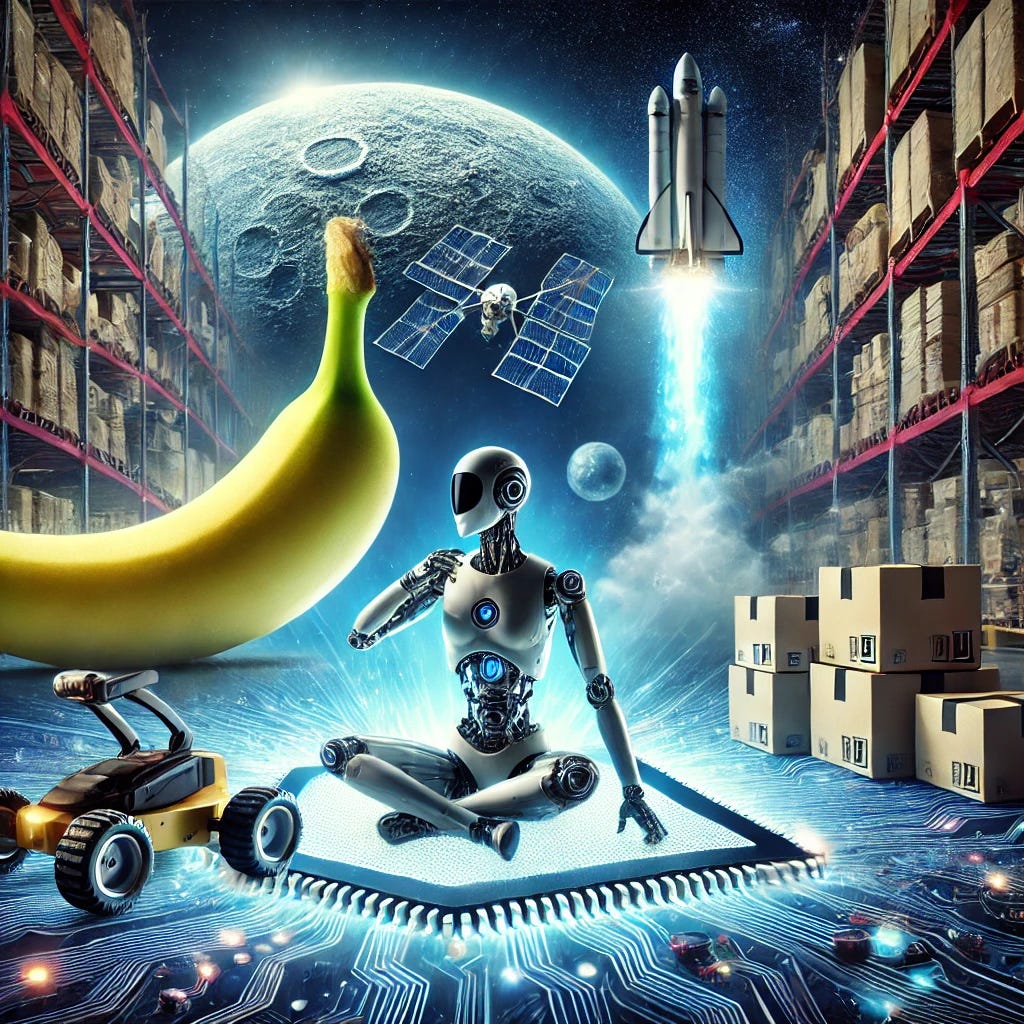
This Week in Technology: From Gene-Edited Bananas to Lunar Landings
from The Cogitating Ceviché Podcast · host Conrad T Hannon
1. Artificial Intelligence (AI) Integration Across IndustriesPharmaceutical Industry Embraces AI:The pharmaceutical sector is undergoing a significant transformation as companies integrate artificial intelligence (AI) to enhance various aspects of drug development and operations. Major players like Johnson & Johnson (J&J), Merck, and Eli Lilly are at the forefront of this shift, implementing comprehensive AI training programs to ensure their workforce is adept at utilizing these advanced technologies.Business Insider* Johnson & Johnson (J&J): J&J has mandated generative AI training for over 56,000 employees, emphasizing the importance of AI literacy across its global operations. Beyond basic training, the company offers immersive AI programs designed to deepen employees' understanding and application of AI in their respective roles. This initiative aims to streamline drug development processes, enhance regulatory compliance, and improve overall operational efficiency, potentially leading to substantial cost savings in the long term. Business Insider* Merck: To bolster productivity, Merck has developed a proprietary AI platform known as GPTeal. This platform is accessible to more than 50,000 employees, facilitating the integration of AI into daily tasks and decision-making processes. By leveraging GPTeal, Merck aims to accelerate research timelines, optimize clinical trials, and enhance data analysis capabilities, thereby maintaining a competitive edge in the rapidly evolving pharmaceutical landscape. Business Insider* Eli Lilly: Eli Lilly encourages extensive use of AI tools, such as ChatGPT, across various departments. The company has made AI certification a requirement for senior leaders, underscoring its commitment to embedding AI into its corporate culture. This approach is expected to foster innovation, improve drug discovery processes, and enhance collaboration across teams, ultimately leading to more effective treatments reaching the market faster. Business InsiderThese initiatives reflect a broader industry trend towards AI adoption, with companies recognizing the potential of AI to revolutionize traditional practices, reduce costs, and accelerate the delivery of new therapies to patients.Financial Sector's AI Adoption:The financial industry is similarly embracing AI to enhance productivity, automate complex processes, and refine decision-making strategies. Leading firms such as Goldman Sachs, JPMorgan, and Blackstone are integrating AI across various operations, signaling a significant shift towards technology-driven financial services.* Goldman Sachs: The firm is utilizing AI to draft initial public offering (IPO) filings, automating a traditionally labor-intensive process. This application not only speeds up the preparation of these critical documents but also reduces the potential for human error, ensuring greater accuracy and compliance with regulatory standards. * JPMorgan: JPMorgan has developed an AI system capable of parsing legal documents and extracting essential data, a task that previously required extensive manual review. By automating this process, the bank can expedite transactions, improve accuracy, and allocate human resources to more strategic activities, thereby enhancing overall operational efficiency. Wall Street Journal* Blackstone: Blackstone employs AI to analyze vast datasets, identifying investment opportunities and risks with greater precision. This technology enables the firm to make more informed decisions, optimize portfolio management, and respond swiftly to market changes, thereby maintaining its competitive advantage in the investment landscape. The integration of AI in the financial sector underscores a commitment to innovation, with firms leveraging technology to streamline operations, enhance client services, and drive growth in an increasingly digital economy.2. Quantum Computing BreakthroughsGoogle's Willow Quantum Processor:Google has announced a significant advancement in quantum computing with the introduction of its new processor, codenamed "Willow." This development addresses longstanding challenges in the field and marks a pivotal step towards practical quantum applications.nypost.com+1Business Insider+1Business Insider* Error Reduction: The Willow processor significantly reduces computational errors, a critical hurdle in quantum computing. This improvement enhances the reliability of quantum operations, bringing practical applications closer to reality. Business Insider* Computational Power: Demonstrations have shown that Willow can perform complex calculations in under five minutes—a task that would take classical supercomputers an unfathomable amount of time, highlighting the processor's immense potential. nypost.com+1Business Insider+1* Industry Implications: This breakthrough paves the way for advancements in various sectors, including drug discovery, materials science, and cryptography, by enabling computations previously deemed infeasible. Google's achievement with the Willow processor signifies a monumental leap in quantum computing, bringing the technology closer to transforming industries and solving complex global challenges.Advancements by Other Tech Giants:In addition to Google's progress, other technology leaders are making notable strides in quantum computing, each contributing unique innovations to the field.* Microsoft's Majorana 1 Chip: Microsoft unveiled the Majorana 1, a quantum chip powered by a newly discovered state of matter created from topological conductors. This innovation is expected to accelerate the development of functional quantum computers, potentially within a few years, offering transformative capabilities across various fields, including drug discovery and advanced material science. * Amazon's Ocelot Chip: Amazon introduced the Ocelot chip, which has shown advancements in quantum error correction efficiency. This development addresses one of the significant challenges in scaling quantum systems, bringing practical applications closer to fruition. Business Insider* IBM's Condor Chip: IBM continues to innovate with its Condor chip, focusing on modular and lower error designs. This approach aims to enhance the scalability and stability of quantum systems, facilitating their integration into real-world applications. Business InsiderCollectively, these advancements signify a concerted effort by leading technology companies to overcome existing challenges in quantum computing, moving towards a future where quantum technologies become integral to various industries.3. Biotechnology InnovationsGene-Edited Non-Browning Bananas to Reduce Food Waste:Scientists at Tropic, a biotechnology company based in Norwich, have developed a genetically engineered banana that resists browning, aiming to combat significant food waste associated with this highly perishable fruit. Bananas rank as the fourth largest crop globally, yet their high perishability leads to substantial losses, with estimates suggesting that up to 50% of bananas grown are never consumed. theguardian.com* Technological Approach: By employing gene-editing techniques, researchers have disabled the gene responsible for producing polyphenol oxidase, an enzyme that causes browning. This method does not introduce foreign genetic material, making it a precise and targeted approach to enhancing the fruit's shelf life. theguardian.com* Impact on Food Waste: The non-browning trait allows the banana to remain fresh and yellow for up to 12 hours after peeling and reduces susceptibility to bruising during harvesting and transportation. Such improvements are expected to significantly decrease the number of bananas discarded due to over-ripeness or damage, addressing a major contributor to greenhouse gas emissions from food waste. theguardian.com* Regulatory Approvals and Market Introduction: Tropic has received approval to sell these gene-edited bananas in countries including the Philippines, Colombia, Honduras, the United States, and Canada. The company anticipates that the product will comply with the UK's Genetic Technology (Precision Breeding) Act, potentially paving the way for its introduction into the UK market. theguardian.comThis development exemplifies how biotechnology can be harnessed to create more sustainable food systems by extending the shelf life of perishable produce and reducing waste.theguardian.comNanorobots: A New Frontier in Cancer Treatment:Advancements in nanotechnology have led to the development of nanorobots smaller than blood cells, offering promising new avenues for cancer treatment. These nanorobots, composed of biological materials such as proteins and strands of RNA or DNA, can navigate the human body to deliver drugs directly to tumor sites, potentially revolutionizing current treatment modalities like chemotherapy. thetimes.co.uk* Precision Medicine: The ability of nanorobots to target specific sites within the body allows for precise drug delivery, minimizing damage to healthy tissues and reducing the severe side effects often associated with conventional chemotherapy. This targeted approach enhances the efficacy of treatments and improves patient quality of life. * Clinical Research and Trials: The Karolinska Institute has conducted trials using nanorobots for intelligent drug delivery, with successful results observed in mice. Additionally, British biotechnology company Nanovery is developing nanorobot technology for early disease detection through liquid biopsies, with evaluations underway at the North East Innovation Lab in Newcastle to assess the accuracy and speed of these diagnostics. thetimes.co.uk* Future Prospects: While widespread clinical application of nanorobots in healthcare may still be years away, their potential to transform cancer treatment and diagnostics is substantial, offering hope for more effective and less invasive therapies. thetimes.co.ukThe integration of nanotechnology into medicine represents a significant leap toward personalized and precise healthcare solutions.De-Extinction Efforts: Engineering Woolly Mice as a Step Toward Reviving Mammoths:Colossal Biosciences, a biotechnology company specializing in de-extinction projects, has announced the creation of gene-edited "woolly mice" exhibiting traits inspired by the woolly mammoth. This development is considered a step toward engineering mammoth-like Asian elephants, with the ultimate goal of reintroducing these hybrids into their respective environments. en.wikipedia.org+1en.wikipedia.org+1* Genetic Modifications: The woolly mice possess long, shaggy, tawny-toned fur, achieved by incorporating a mix of mammoth-like and known mouse hair-growth mutations. These modifications aim to study the expression of mammoth traits in a living organism, providing insights into the feasibility of de-extinction efforts. en.wikipedia.org* Scientific Perspectives: While some experts express skepticism, viewing the experiment as more about mouse genetics than a breakthrough in de-extinction, Colossal Biosciences plans further studies on the mice's cold tolerance and long-term health. The company currently has no commercial breeding plans for these modified mice. en.wikipedia.org* Broader De-Extinction Projects: Beyond the woolly mammoth, Colossal Biosciences is also working on reconstructing the DNA of the dodo bird and the Tasmanian tiger, aiming to create hybrids with specific traits associated with these extinct species. The company plans to reintroduce these hybrids into their respective environments, contributing to biodiversity and ecosystem restoration efforts. en.wikipedia.orgThese endeavors highlight the potential of genetic engineering to not only understand extinct species but also to explore possibilities for reviving them, raising important ethical and ecological considerations.CRISPR and AI: A Transformational Partnership in Biotechnology:The convergence of CRISPR gene-editing technology and artificial intelligence (AI) is poised to revolutionize various sectors, including medicine, agriculture, and climate change mitigation. This partnership enhances the precision and efficiency of genetic modifications, leading to rapid advancements and novel applications. * Accelerated Discoveries: AI's ability to analyze vast genomic datasets enables the identification of small gene-editing proteins and the prediction of heat-tolerant RNA molecules, which have practical applications in therapy delivery and biomanufacturing. These capabilities allow for rapid discoveries that were previously unattainable, expediting the development of new treatments and technologies. * Medical Applications: The first CRISPR-based therapy for sickle cell disease, known as exagamglogene autotemcel (Casgevy), has been approved for use in the United States, United Kingdom, and Europe. This therapy utilizes CRISPR technology to edit a patient's stem cells, enabling the production of functional hemoglobin and reducing the occurrence of painful crises associated with sickle cell disease. Clinical trials have demonstrated that nearly 98% of treated patients avoided hospitalization for over three and a half years, marking a significant advancement in gene therapy. Reuters+7thetimes.co.uk+7en.wikipedia.org+7* Agricultural Enhancements: In agriculture, the integration of AI with CRISPR techniques facilitates the development of crops with improved resilience and productivity. For instance, AI can predict gene targets for editing to enhance drought tolerance or nutrient efficiency, contributing to food security in the face of climate change. Wired* Climate Change Mitigation: Combining AI and CRISPR holds potential for addressing climate change through natural carbon capture solutions. For example, researchers are exploring the modification of plant genomes to enhance their carbon sequestration capabilities, thereby reducing atmospheric carbon dioxide levels. WiredThe synergistic application of AI and CRISPR technologies represents a transformative approach to solving complex global challenges, offering promising prospects across multiple domains.4. Robotics and AutomationAdvancements in Surgical Robotics:The field of surgical robotics has seen significant advancements, with new systems enhancing precision and reducing recovery times for patients.* Next-Generation Surgical Robots: Recent developments include robots capable of performing minimally invasive surgeries with greater accuracy. These systems utilize advanced imaging and AI to assist surgeons in complex procedures, leading to improved patient outcomes.* Integration with AI: The incorporation of AI allows surgical robots to learn from previous surgeries, continually improving their performance and assisting in decision-making during operations.Autonomous Delivery Drones:Autonomous drones are revolutionizing the delivery industry, providing rapid and efficient transportation of goods.* Urban Deliveries: Companies are deploying drones to deliver packages in urban areas, reducing traffic congestion and lowering carbon emissions associated with traditional delivery methods.* Medical Supplies: In remote regions, drones are being used to transport medical supplies, such as vaccines and blood samples, ensuring timely delivery where traditional logistics are challenging.Warehouse Automation:Automation in warehouses is transforming supply chain management, increasing efficiency, and reducing operational costs.* Robotic Sorting Systems: Advanced robotic systems are now capable of sorting and organizing products at high speeds, minimizing human error and accelerating order fulfillment processes.* Collaborative Robots (Cobots): Cobots are designed to work alongside human workers, assisting with tasks such as lifting heavy items and transporting goods within warehouses, thereby enhancing productivity and safety.These advancements in robotics and automation are reshaping various industries, leading to increased efficiency, safety, and new possibilities for innovation.5. Aerospace DevelopmentsReusable Rocket Technology:The aerospace industry is making significant strides in developing reusable rocket technology, aiming to reduce the costs of space exploration and satellite deployment.* SpaceX's Starship Program: SpaceX continues to test its Starship spacecraft, designed for missions to Mars and beyond. The fully reusable rocket system aims to lower the cost of access to space and enable sustained human presence on other planets.* Blue Origin's New Shepard: Blue Origin has successfully conducted multiple flights of its New Shepard rocket, which is designed for suborbital space tourism and research missions. The rocket's reusable design allows for rapid turnaround between flights.Advancements in Satellite Technology:Innovations in satellite technology are enhancing global communications, Earth observation, and scientific research.* Miniaturized Satellites (CubeSats): The development of small, cost-effective satellites has democratized access to space, allowing educational institutions and smaller companies to conduct space-based research and services.* High-Resolution Imaging: New satellite sensors provide unprecedented high-resolution images of Earth's surface, aiding in environmental monitoring, urban planning, and disaster response efforts.Electric Propulsion Systems:Electric propulsion is emerging as a viable alternative to traditional chemical rockets, offering more efficient and sustainable options for space travel.* Ion Thrusters: Spacecraft equipped with ion thrusters can achieve higher speeds over longer durations, making them ideal for deep-space missions. These systems use electric fields to accelerate ions, providing continuous thrust with minimal fuel consumption.* Solar-Powered Spacecraft: Advancements in solar panel technology enable spacecraft to harness solar energy more efficiently, powering electric propulsion systems and reducing reliance on onboard fuel.These developments in aerospace technology are paving the way for more sustainable and cost-effective exploration of space, bringing humanity closer to becoming a multiplanetary species. This is a public episode. If you'd like to discuss this with other subscribers or get access to bonus episodes, visit thecogitatingceviche.substack.com/subscribe
Embed this episode
NOW PLAYING
This Week in Technology: From Gene-Edited Bananas to Lunar Landings
No transcript for this episode yet
Similar Episodes
No similar episodes found.
Similar Podcasts
No similar podcasts found.