
EPISODE · Aug 8, 2025 · 41 MIN
Thousands of Delayed Hurricane Deaths: Toll far Greater than Official Counts
from Meteorology Matters
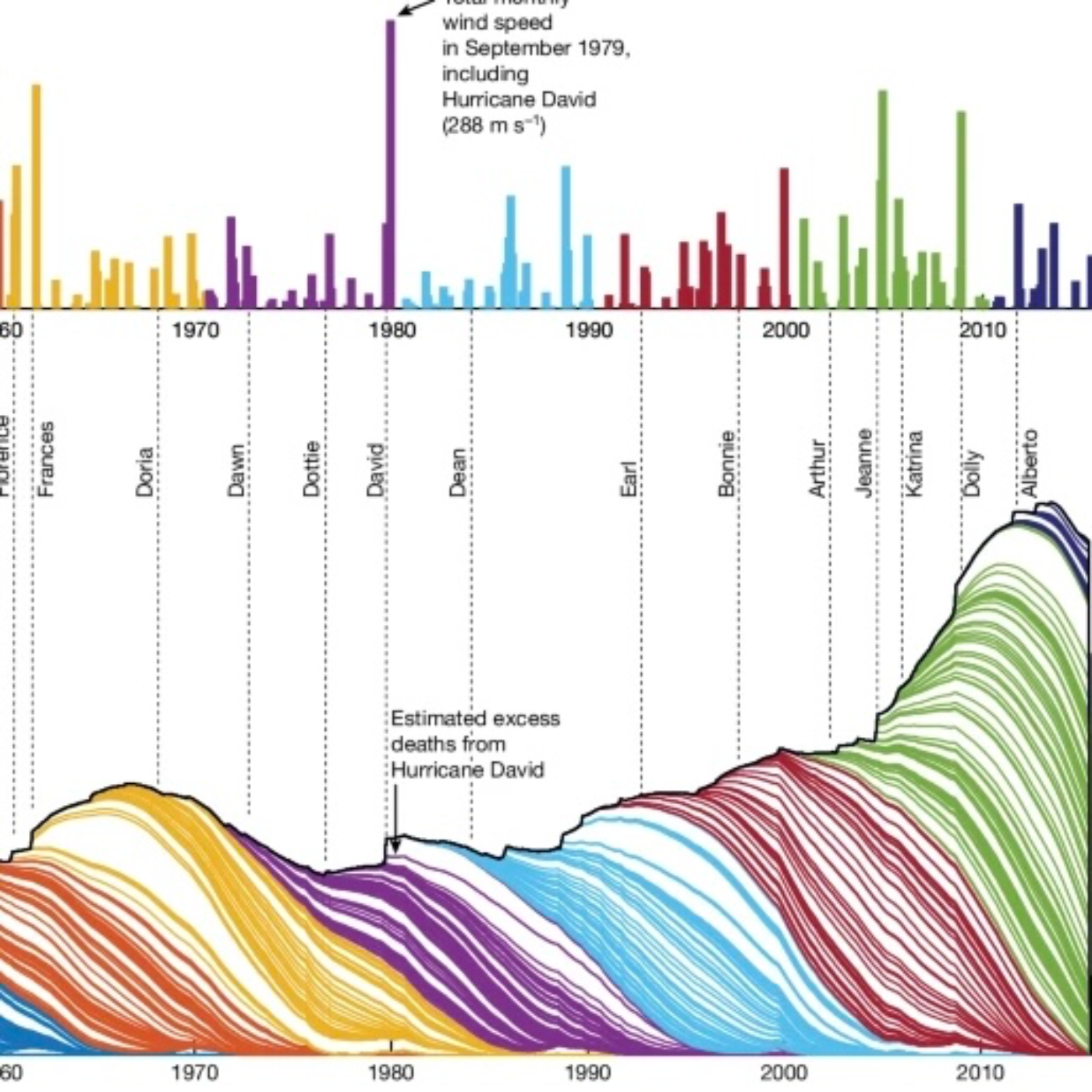
13% of Floridian Deaths can be attributed to hurricanes and tropical storms? Recent research from both South Korea and the United States reveals a significant and largely underestimated public health burden associated with tropical cyclones (hurricanes/typhoons). Beyond the immediate, direct deaths typically reported, these studies demonstrate a substantial "excess mortality" that can persist for weeks, months, and even years after a storm. This hidden death toll disproportionately affects vulnerable populations, including the elderly, those with lower socioeconomic status, and racial/ethnic minorities. The findings highlight the critical need for expanded public health preparedness and policy measures that account for the long-term, indirect impacts of these increasingly intense natural disasters.Significant and Underestimated Excess Mortality:Beyond Direct Deaths: Official government statistics typically focus on immediate, direct deaths (e.g., drowning, trauma). However, studies show that the true mortality burden is far greater due to indirect causes."The true mortality burden related to cyclone exposure may exceed officially reported death tolls, which usually focus on direct injury-related deaths." (Han et al., Korea)"Official government statistics record only the number of individuals killed during these storms... Usually, these direct deaths, which average 24 per storm in official estimates, occur through drowning or some other type of trauma. But the new analysis... reveals a larger, hidden death toll in hurricanes’ aftermath." (Young & Hsiang, US - Stanford)Quantitative Estimates:South Korea: An average of 150 excess all-cause deaths were estimated for each tropical cyclone during the 2 weeks post-exposure between 2002 and 2023. Daily average increases were 0.084 in all-cause mortality and 0.075 in non-accidental mortality in cyclone-exposed regions.United States (Short-Term): For 179 tropical cyclones between 1988–2019, there were 3,112 excess deaths after hurricane-force winds and 15,590 excess deaths after gale to violent storm-force winds in counties with >95% probability of excess deaths. Hurricane Katrina in 2005 was the deadliest, with 1,491 excess deaths.United States (Long-Term): A groundbreaking analysis of 501 tropical cyclones from 1930–2015 estimates that an average U.S. tropical cyclone indirectly causes 7,000 to 11,000 excess deaths, persisting for nearly 15 years after the storm. Total estimated deaths since 1930 range from 3.6 million to 5.2 million nationwide, vastly exceeding the official total of ~10,000 direct deaths."A big storm will hit, and there’s all these cascades of effects where cities are rebuilding or households are displaced or social networks are broken. These cascades have serious consequences for public health." (Solomon Hsiang, US - Stanford)"This burden is 300–480 times greater than government (NOAA) estimates of 24 deaths per storm on average (22 without Hurricane Katrina) and 11,937 total TC deaths during 1950–2015." (Young & Hsiang, US - Nature)
Embed this episode
NOW PLAYING
Thousands of Delayed Hurricane Deaths: Toll far Greater than Official Counts
No transcript for this episode yet
Similar Episodes
No similar episodes found.
Similar Podcasts
No similar podcasts found.