
EPISODE · Feb 8, 2024 · 8 MIN
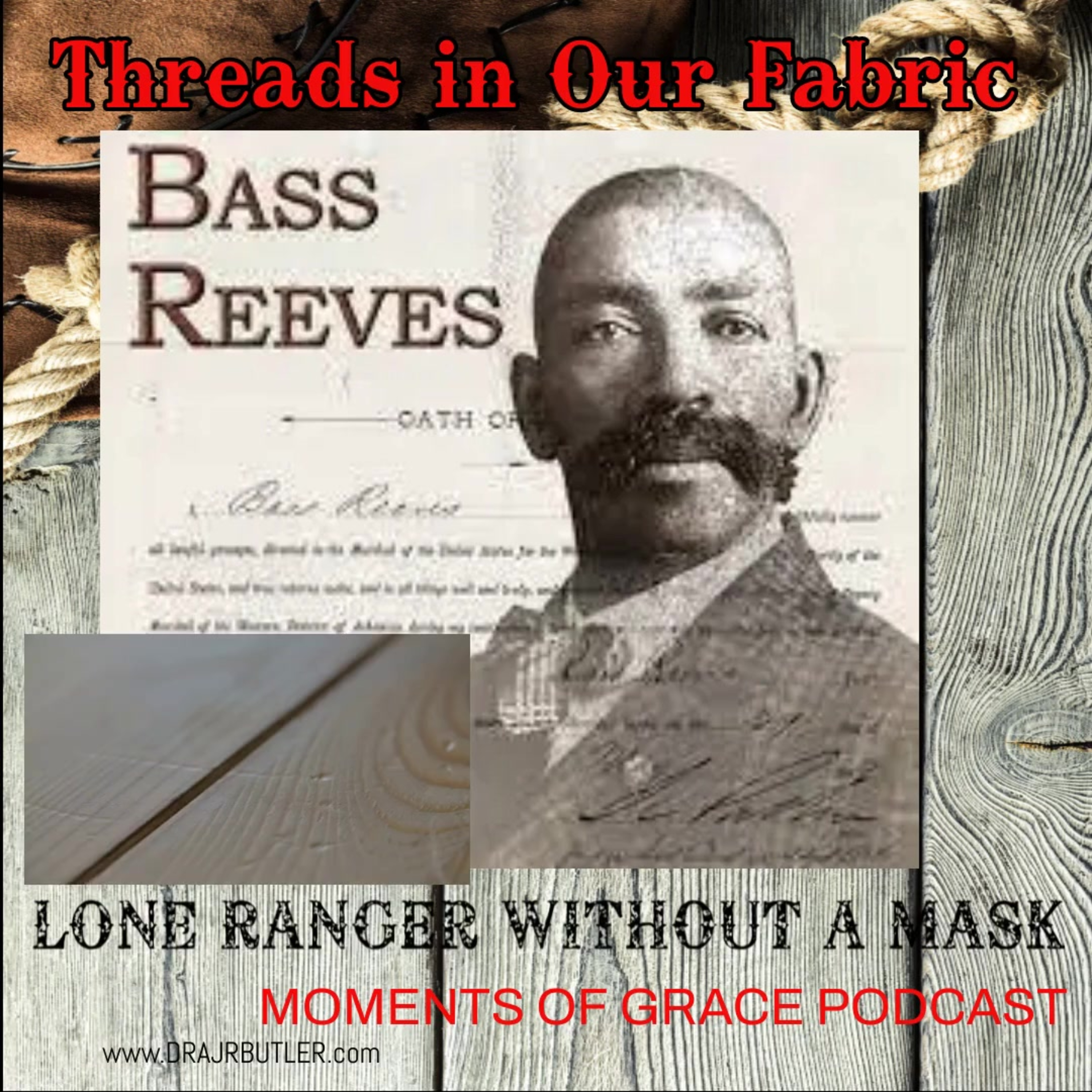
"THREADS IN OUR FABRIC" LONE RANGER WITH OUT A MASK, BASS REEVES
from Moments of Grace Podcast · host Dr. A. Jerome R. Butler
Bass Reeves was born a slave in 1838 in Crawford County, Arkansas. Under the ownership of farmer and politician William Reeves, Bass Reeves worked alongside his parents and was a water boy until he became old enough to work as a field hand. William Reeves moved his farming operations, including his slaves, to Grayson County, Texas around 1846. Bass Reeves was known for his tall stature, good manners, and sense of humor, and it was in Texas that these characteristics caught the attention of his master’s son, George. George Reeves eventually chose Bass to become his bodyguard and valet, and the two became rather loyal companions. When Texas sided with the Confederacy, George Reeves joined the Confederate Army and Bass went along with him. It was during the Civil War that Bass and George Reeves parted ways—and many speculate the reasons for their parting. Some legends say that the two got into a heated dispute over a card game, others say that Bass overheard talk of “freeing slaves” and just ran away. Whatever the circumstance, Bass Reeves ended up in what was then called “Indian Territory,” in present-day Oklahoma. He took refuge with members of the Seminole, Cherokee, and Creek nations, learning their languages, customs, and tracking skills which served him well during his later law enforcement career. It was during this time that he also honed his skills with a pistol, and while he humbly claimed throughout his life that he was only a “fair” shot, he was regularly barred from turkey shooting competitions in the territory. In 1863, Bass Reeves was ultimately freed from his life as a slave and a fugitive by the Emancipation Proclamation. He left “Indian Territory” and bought land near Van Buren, Arkansas, which he used to successfully farm and ranch. He married Nellie Jennie, a woman from Texas, in 1864, and they had 10 children. In addition to farming and ranching, Reeves occasionally worked as a scout and guide for U.S. Deputy Marshals entering “Indian Territory” on business of the Van Buren Federal Court. Reeves officially began his law enforcement career in 1875 after the Federal Western District Court was moved to Fort Smith, Arkansas. He was hired as a deputy by Judge Isaac C. Parker, who had been tasked by President Ulysses S. Grant to “clean up Indian Territory.” Reeves was one of the 200 deputies hired by Judge Parker in 1875, and he was the only one on record that stayed until Oklahoma achieved statehood in 1907. In his 32-year tenure as a U.S. Marshal, Reeves was known for his ruthlessness and his ability to catch outlaws that other deputies couldn’t. Reeves was reportedly involved in a number of shootouts, yet was never injured. He stated once that he had killed 14 men in self-defense, and at the time of his death a newspaper had reported the number was actually 20. By 1901 it was reported that he had arrested 3,000 men and women who had broken federal laws in the Indian Territory—one of which was his own son who was convicted in the murder of his wife. Reeves achieved all of this while also being illiterate due to his background as a former slave, so he would memorize the warrants and writs he served. The Indian Territory was notoriously the most dangerous for federal law enforcement officers in the Old West—records show that 120 lost their lives before Oklahoma achieved statehood in 1907. Bass Reeves himself escaped numerous assassination attempts as he was the most feared of federal officers in the Territory. Reeves retired from federal service upon Oklahoma’s statehood in 1907 at the age of 67, but his law enforcement career was not yet over. He went on to serve a city policeman in Muskogee, Oklahoma, for two years prior to his death in 1910.
What this episode covers
Bass Reeves was born a slave in 1838 in Crawford County, Arkansas. Under the ownership of farmer and politician William Reeves, Bass Reeves worked alongside his parents and was a water boy until he became old enough to work as a field hand. William Reeves moved his farming operations, including his slaves, to Grayson County, Texas around 1846. Bass Reeves was known for his tall stature, good manners, and sense of humor, and it was in Texas that these characteristics caught the attention of his master’s son, George. George Reeves eventually chose Bass to become his bodyguard and valet, and the two became rather loyal companions. When Texas sided with the Confederacy, George Reeves joined the Confederate Army and Bass went along with him. It was during the Civil War that Bass and George Reeves parted ways—and many speculate the reasons for their parting. Some legends say that the two got into a heated dispute over a card game, others say that Bass overheard talk of “freeing slaves” and just ran away. Whatever the circumstance, Bass Reeves ended up in what was then called “Indian Territory,” in present-day Oklahoma. He took refuge with members of the Seminole, Cherokee, and Creek nations, learning their languages, customs, and tracking skills which served him well during his later law enforcement career. It was during this time that he also honed his skills with a pistol, and while he humbly claimed throughout his life that he was only a “fair” shot, he was regularly barred from turkey shooting competitions in the territory. In 1863, Bass Reeves was ultimately freed from his life as a slave and a fugitive by the Emancipation Proclamation. He left “Indian Territory” and bought land near Van Buren, Arkansas, which he used to successfully farm and ranch. He married Nellie Jennie, a woman from Texas, in 1864, and they had 10 children. In addition to farming and ranching, Reeves occasionally worked as a scout and guide for U.S. Deputy Marshals entering “Indian Territory” on business of the Van Buren Federal Court. Reeves officially began his law enforcement career in 1875 after the Federal Western District Court was moved to Fort Smith, Arkansas. He was hired as a deputy by Judge Isaac C. Parker, who had been tasked by President Ulysses S. Grant to “clean up Indian Territory.” Reeves was one of the 200 deputies hired by Judge Parker in 1875, and he was the only one on record that stayed until Oklahoma achieved statehood in 1907. In his 32-year tenure as a U.S. Marshal, Reeves was known for his ruthlessness and his ability to catch outlaws that other deputies couldn’t. Reeves was reportedly involved in a number of shootouts, yet was never injured. He stated once that he had killed 14 men in self-defense, and at the time of his death a newspaper had reported the number was actually 20. By 1901 it was reported that he had arrested 3,000 men and women who had broken federal laws in the Indian Territory—one of which was his own son who was convicted in the murder of his wife. Reeves achieved all of this while also being illiterate due to his background as a former slave, so he would memorize the warrants and writs he served. The Indian Territory was notoriously the most dangerous for federal law enforcement officers in the Old West—records show that 120 lost their lives before Oklahoma achieved statehood in 1907. Bass Reeves himself escaped numerous assassination attempts as he was the most feared of federal officers in the Territory. Reeves retired from federal service upon Oklahoma’s statehood in 1907 at the age of 67, but his law enforcement career was not yet over. He went on to serve a city policeman in Muskogee, Oklahoma, for two years prior to his death in 1910.
NOW PLAYING
"THREADS IN OUR FABRIC" LONE RANGER WITH OUT A MASK, BASS REEVES
No transcript for this episode yet
Similar Episodes
Mar 26, 2026 ·1m
Mar 19, 2026 ·34m
Feb 18, 2026 ·11m
Feb 11, 2026 ·45m