
EPISODE · Mar 21, 2021 · 13 MIN
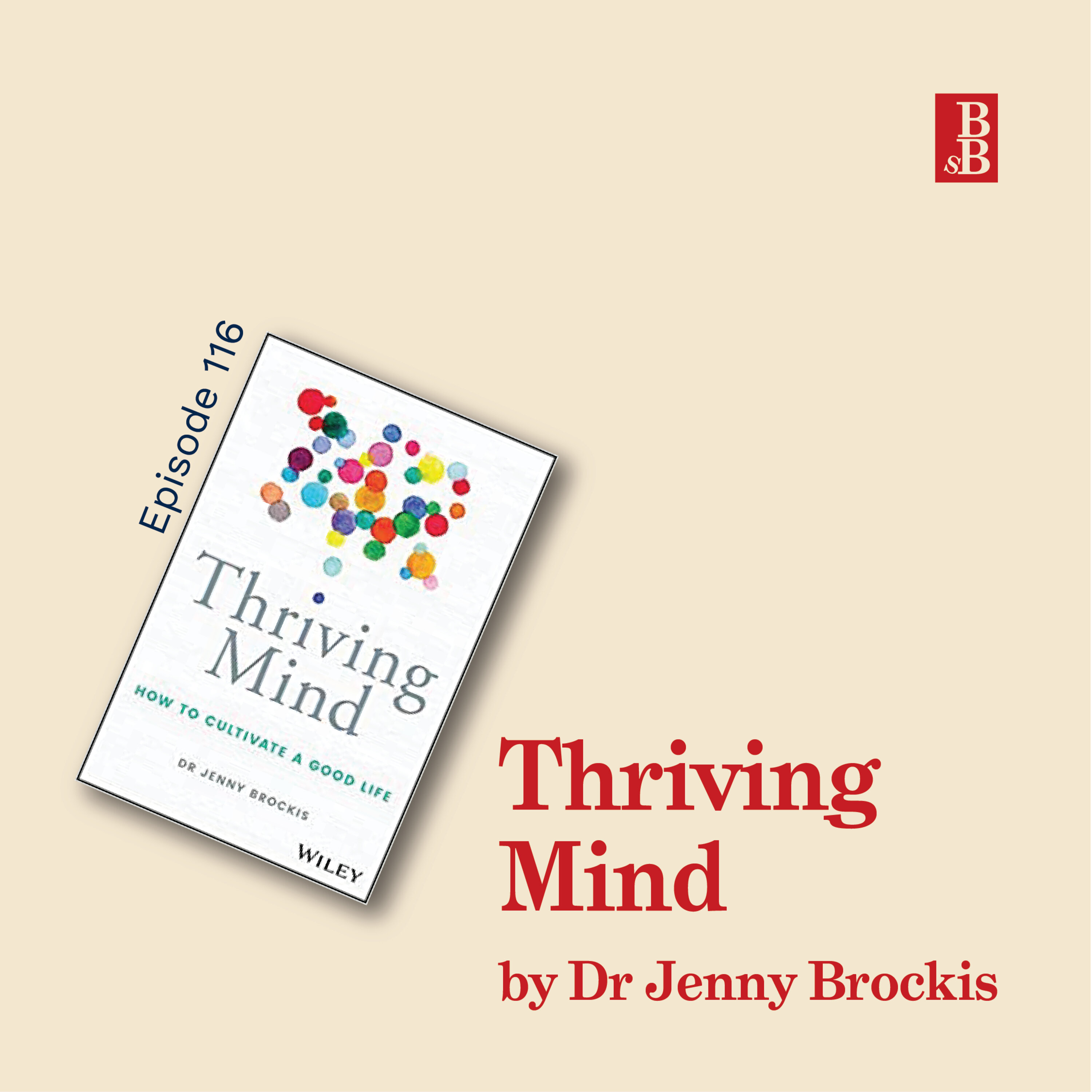
Thriving Mind by Dr Jenny Brockis: how to get smarter by looking after yourself better
from Steph's Business Bookshelf Podcast · host Steph Clarke
Business Bookshelf affiliate stores for Book Depository (Global) or Bookshop.org (US) in your browser. Or you can buy me a coffee. About the book In Thriving Mind. Dr. Jenny Brockis has draws on deep research and 30+ years of helping people solve persistent and serious problems to provide science-based strategies for overcoming them as well as the habits to help avoid them in the future. Walking you through common issues, such as loneliness, stress, relationship breakdown, loss of social connection and mental health issues. Dr. shows us that there are practical ways to alleviate or even banish these difficulties. And to reclaim a sense of meaning and vitality, you might not have felt in years. Whatever your worries, it is important to remember you’re not alone. And that by using the tools and strategies outlined in thriving mind, you can take real scientific steps toward reclaiming your humanity and start doing the things today that will bring a brighter tomorrow. About the author Dr. Jenny Brockis is a medical practitioner and board certified lifestyle medicine, physician specializing in brain health and mental performance. She works to inspire others to become the best versions of themselves by translating the findings of the nearest science and positive psychology into simple practical tools that enable people to work smarter. Not harder. With three decades experience of working with people, she understands that while intentions may be good, changing behaviors is not always easy. As an international speaker trainer and author of three books, including the best selling smarter, sharper thinking. Jenny is frequently sought after, as a commentator in the media and has many articles published in a variety of magazines and journals. And when she’s not speaking, researching or writing, Dr. Jenny loves to spend her time with her family traveled to new destinations, and continues to challenge her long standing fear of heights. Source: https://www.drjennybrockis.com/ Big idea 1: the mindful keys to happiness The first part of the book is dedicated to happiness. And much of it is actually internal to you. It comes from having a strong sense of purpose of practicing gratitude of having humor, practicing mindfulness, a healthy, positive mindset, and from helping others. It’s an important reminder when you read that particular part of the book around happiness, that the context is around burnout. Jenny talks a lot about her personal experience with burnout, which drove her to end up having her “gap year”, as she calls it. Most of this is caused by work. And it is work that often drives us to think that the next promotion, the next pay rise, the next job, the next thing to buy or the next nice holiday, are the answer to happiness. But it is usually short-lived bursts of happiness that come from those more material, external things. Reading this book shows that really it’s the things that are internal to us, and being able to build practice and habits around those, will give us anti-fragile and resilient happiness, that is able to withstand shocks and external pressure. Big idea 2; eat, move, play, sleep repeat In the second section of the book (thriving) you’ll find the brainy benefits of activities like sleep, healthy food and exercise, and why these are performance enhancing habits and not time detractors, just for soft people who can’t cope with life. Some of the things there in terms of sleep are quite frightening. For example, sleep deprivation increases our risk of, death from, heart disease by 45%. That’s right. 45%. And the even more frightening thing is that most studies around sleep, consider fewer than six hours sleep as the threshold for sleep deprivation or prolonged sleep deprivation. So if you’re getting fewer than six hours sleep on a regular basis, yes you’ll have increased heart disease risk, but that comes after it’s already made you less effective in decisions, impacted your memory, made you more dangerous (particularly if you’re driving), more grumpy, less likable and less likely to make healthy choices. Because sleep deprivation also makes you feel hungrier, and probably hunting for the less nutritious options when you want to satiate that hunger. Beyond sleep, food, and exercise, Jenny also talks about the importance of things like play, getting into nature and music, and the proven benefits of these on your work and your brain function. Big idea 3; be more human. We are wired to connect. We have evolved that way. It is good for us, and it’s sadly often one of the early things to go when we’re feeling tired or stressed or busy, even though we know it will make us feel good. Building trusting relationships, asking for help, helping others and being part of some kind of community (whether that is with friends, with family or from a broader perspective, whatever that that particular word means to you) not only makes us happier and less susceptible to loneliness, but also can make us more effective. Empathy is a big part of these particular types of human connection and empathetic leaders and professionals are often rated as more effective. For example, empathetic doctors are actually less likely to be sued. Now that’s all great, but there is a really important part in this section of the book around humanness, about starting with ourselves. Being kind to ourselves, extending compassion to ourselves and connecting with our own needs and emotions. Because again, stressed and burnt-out people are often not taking good care of themselves. So whilst the big idea is about being more human. We also need to be more ourselves or be more human with ourselves and be kinder to ourselves as well. This is a really good reminder, particularly in 2021, when we’re maybe out of the habits of connecting with some people. Maybe there’s some people we haven’t been able to connect with yet because they’re overseas or interstate, or people we’ve just not had the chance (or not made as much effort) to connect with. Whoever those people are, and wherever they are, it’s a wise reminder to reconsider reconnecting. Support my book habit: https://www.buymeacoffee.com/stephsbookshelfSee omnystudio.com/listener for privacy information.
Embed this episode
NOW PLAYING
Thriving Mind by Dr Jenny Brockis: how to get smarter by looking after yourself better
No transcript for this episode yet
Similar Episodes
No similar episodes found.
Similar Podcasts
No similar podcasts found.