Throughlines (part 1)
from The Rush of it All Hosted by Jeff Calvert
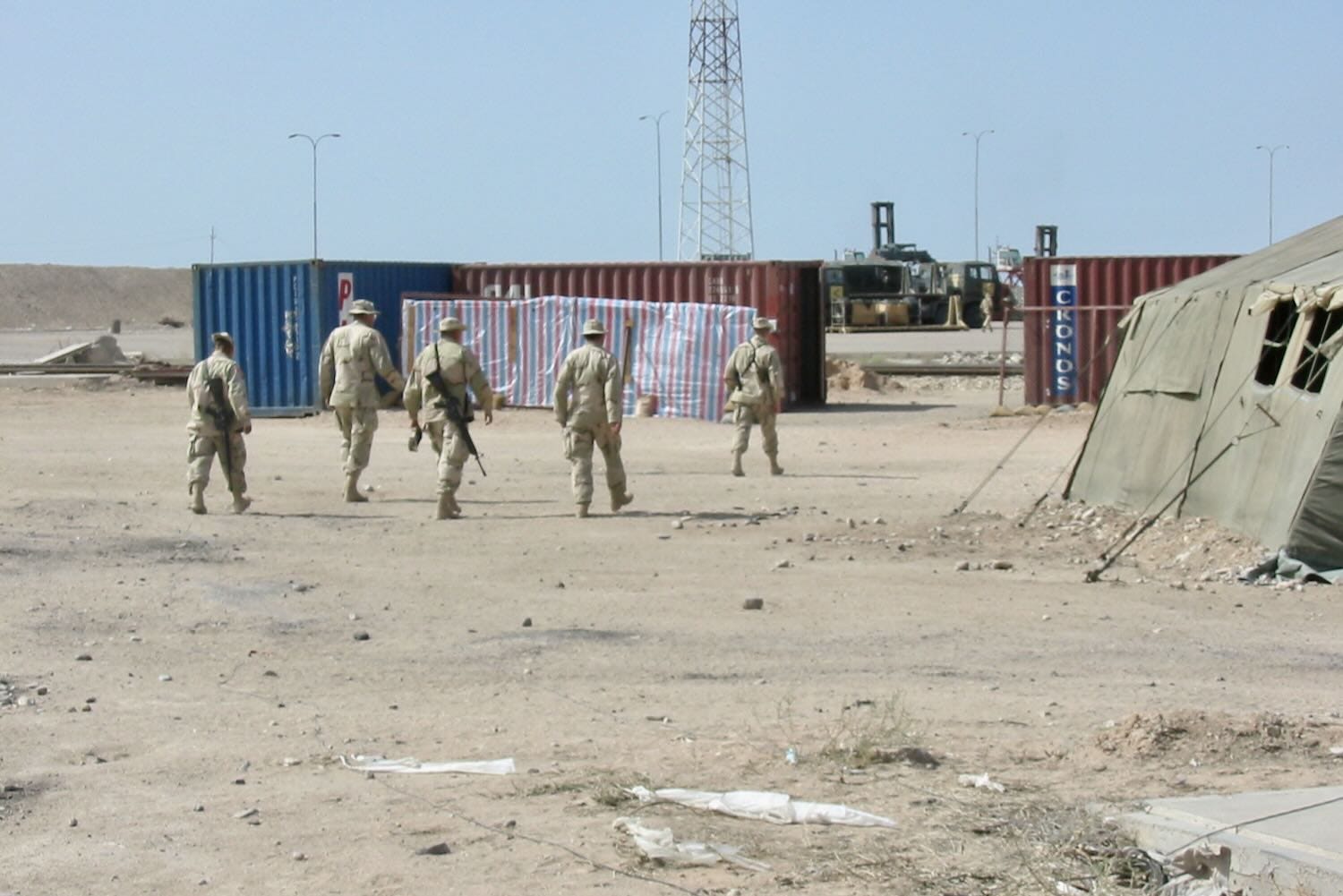
Welcome to everyone who subscribed after my last post: There were a lot of you — thanks! That post drew more attention than anything I’ve published here before, and I’m heartened by the fact that so many people shared concern about the situation and were willing to speak up about it. In the interest of fairness, I want to acknowledge that UTMB gave a prompt and professional reply to our organization’s request to have our race (Eastern States 100) removed as an Index Race, and they sent this link to their “Open Letter to the Trail Running Community”. I’m not personally swayed by this, and our response was not based on the technicalities of the situation, but I appreciate that they at least acknowledge the issue. Now, on to today’s topic… Throughlines In the first of my 20-years-ago posts about my second tour of duty in Iraq (Change of Mission (Iraq, 2003)), I said that running can be a test in itself, an elective “hard thing”, but it can also be a way to get through hard things — an anchor, or a refuge, a consistency that’s there regardless of pressures and chaos and deprivation. That’s true, but there can be more to it. The real power, the thing that takes you beyond just temporary refuge, is continuity, the fact of a throughline that is solidly anchored in your past, and that you can see leading clearly into your future, (even if that line is the only thing you can see). The strength of it depends on the strength of the anchors, and how tightly you grab hold of that line and follow it. I think it was during this deployment that I first thought of it this way. Here’s a journal entry from June 29, 2003: There really are these two things that ground me, that have been pieces of constancy and relative stability through the past several years — writing and running. For the past 5–6 years, I’ve been steadily doing both, regardless of what else is happening [and there was a lot happening], where I’m living, what I’m doing, what the external factors are. Looking back now at my running (and writing) through those days, I can see how much I needed that, how preserving — and formative — it was. In particular, I can see that my commitment to a nascent marathon streak helped set my anchors in stone and gave me the throughline that, decades later, I still grasp tightly. Finally on mission After months of mobilization training, we finally arrived in southern Iraq in April, 2003 (30 days after the start of the war). Our mission was tactical civil-military operations and support to civil administration in southern Basrah Province, specifically in the towns of Umm Qasr, Safwan, and Khor Zubayr, and at the Port of Umm Qasr (which is also where we lived, on a British logistics base located on the port). There are many stories to tell about the work we did there, but those are for a different post (or maybe a book). This one is about running… When we arrived to Umm Qasr, we didn’t know how long we’d be there. The optimistic scenarios had us home by autumn, but other versions said we’d be there until sometime in 2004. At this point, my running was only a tenuous throughline, but I was already starting to identify as “a runner”, and in 2002 I’d managed my 5th marathon in as many years despite being mobilized then, too. (That one was easier to manage — I was deployed to Germany for work in the Balkans, and I lived in Stuttgart.) So, from the start of this deployment I was scheming about how to get my 2003 marathon in — either by getting home in time to run it in the fall, or by doing one here (soldiers were already staging marathons in Afghanistan… surely we could do the same in Iraq or Kuwait). So I embraced the heat, I did my job, and while off-duty, I ran. A long, hot summer (and lots of loops) Initially, the threat level was low, and the entire port facility (over a mile and half end-to-end) was guarded and secure, so there was room for relatively large loops and lots of exploring. The weather was warm from the beginning, and by May it was consistently over 100F in the daytime, but it didn’t get really hot until June. A sampling of journal entries tell the tale (both the good and the bad) of heat acclimation: June 1, 2003: I can’t believe how low my heart rate is staying lately when I’m running. It is weird, and I thought maybe the machine was misreading it, but I’ve done spot checks and it is accurate — and my heart rate is 5 or 10 beats lower than I would expect it to be. Maybe it’s a short-term fluke, or maybe I just all of the sudden got healthier — from the fresh Iraqi air or something... June 8, 2003: I would like to think that today was just one of those periodic flukes of a bad day for me for running, and that well may be the case. But it also might be the case that I got cocky about my abilities and didn’t give proper respect to the high temperature. I’ve been doing fine lately with my afternoon/evening runs at ~105°F, and so I wanted to challenge myself, so I decided to do a double lap, which would have been 7.4 miles, and I waited for the hottest part of the day to do it. It was at least 113°F, and maybe warmer, and it was full sun, and I wore my 100-ounce Camelback which weighs several pounds (for the first time) and I set out with good intentions. But it quickly became evident that it would be a struggle. My heart rate shot up and stayed up early on, and I couldn’t keep it in the zone for anything without walking — which I eventually did. … Was it the extra 5 degrees? The extra weight? Maybe just a bad day? I don’t know for sure, and it is probably a combination of all of that. I just have to take it in stride and learn from it and not be so cocky about hot-weather running, and most of all continue to be careful, without taking the easy way out. June 10, 2003: Well, I feel better about myself now. I went out and ran today when it was at least 112F, and I ran 5.6 miles, and it was fine. So it makes it seem more and more like the bad run on Sunday was just a bad day. I didn’t set any records, but I did finish strong, and my heart rate stayed down, and I felt fine. And I will do a good week of running — shoot for maybe 27 miles total. I think that level will be very sustainable. … Then I can start to add a long run each week once I have a date in mind for a marathon. By mid-June, the days of free-ranging the port were pretty much over. Much of the port had been opened, the security situation was beginning to fray, and the only consistently “safe” running was within the confines of the logistics compound we lived in — a set of five large warehouses within a perimeter wall of shipping containers topped with barbed wire. I was reduced to endless looping in the space between the buildings and the wall: less than 0.8 miles per lap, four loops for a 5k. If you’re curious, here’s that route today on Strava: UQ compound loop Of course there was no Strava back then, and I didn’t get my first GPS watch until later in the tour, so knowing precise distances involved careful map measurement and a systematic approach… I logged hundreds of laps of that nasty little compound, the broken vehicles and oil-soaked sand, and I kind of hated it. But in another way the hypnotic sameness of it, over and over, was soothing. As the temperature climbed and the mission dragged on, it helped keep me sane. It also made me stronger. Two months later… I hate to brag, but… Wednesday was the hottest day we’ve had so far, and I waited until mid-afternoon when it peaked to go for my run. I already had a run at 120F, but now I’ve logged mileage at 123F — how many people can say they’ve done th… This is a public episode. If you would like to discuss this with other subscribers or get access to bonus episodes, visit rushofitall.substack.com
Embed this episode
No transcript yet.