
EPISODE · Mar 3, 2026 · 14 MIN
Tides of Uncertainty: Cruise Margins and the Fuel Pivot
from Breaking News To Trading Moves
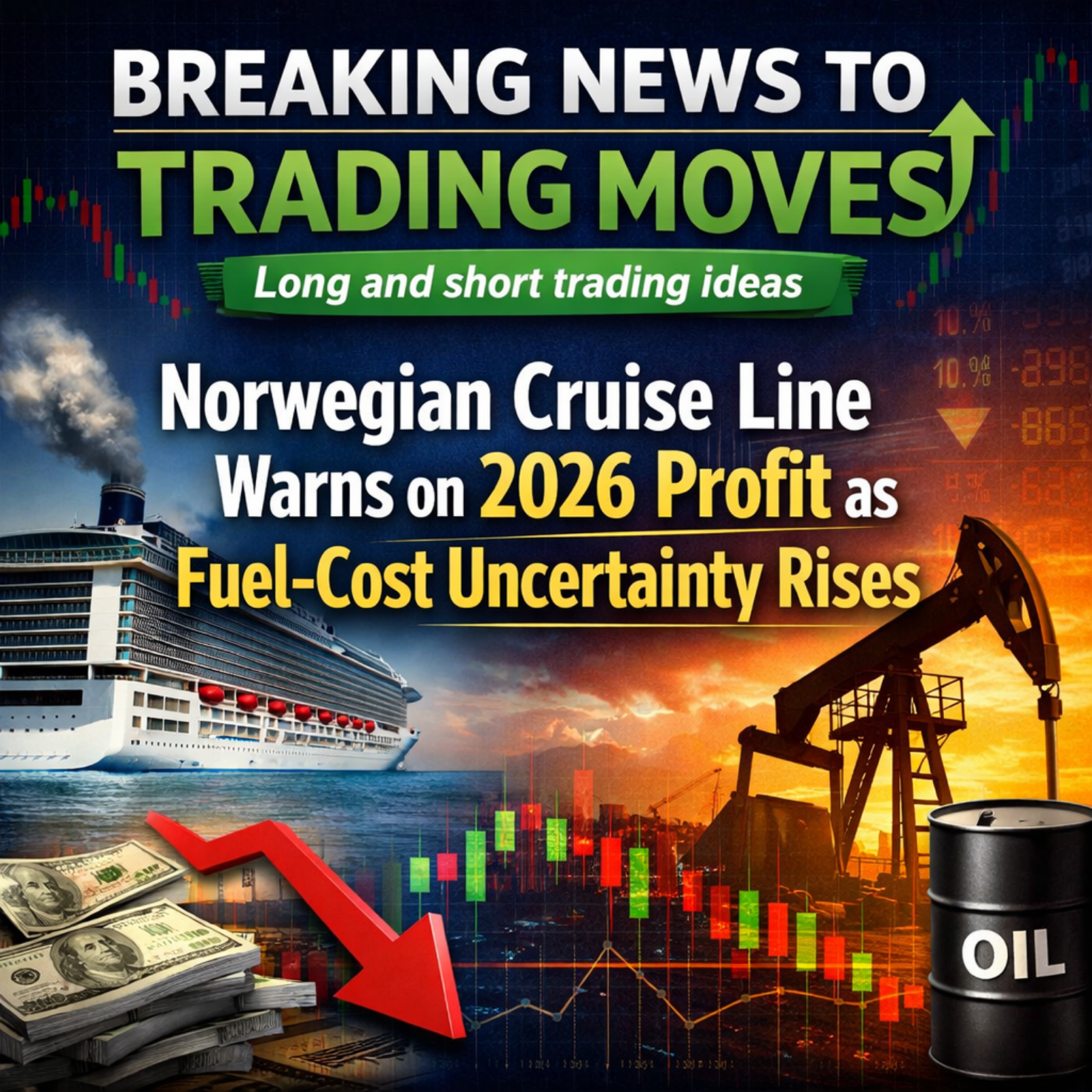
Norwegian Cruise Line warns on 2026 profit as fuel-cost uncertainty risesCruise stocks got hit after Norwegian Cruise Line Holdings cut expectations for 2026 profits, pointing to a pressured demand backdrop and uncertain fuel costs tied to geopolitics. The big question for traders: is this a Norwegian-specific stumble, or a broader travel margin squeeze?What happened1. Norwegian Cruise Line ($NCLH) guided 2026 adjusted profit to about $2.38 per share, below analyst expectations around $2.55.2. The company said the long-term impact of geopolitical tensions on fuel costs is uncertain and flagged a “pressured” environment with weaker bookings and execution issues.3. In the immediate reaction, $NCLH and peers sold off sharply, reflecting both cruise-specific worries and a broader risk-off tape.Why the market caresFuel is a major variable cost for cruise operators. Even if itineraries don’t change, higher bunker fuel can compress margins quickly.Softness in higher-priced demand plus flat net-yield expectations tells the market pricing power may be capped, which is a problem when costs are rising.“Execution missteps” matters because investors will ask whether this is fixable near-term or a longer reset story.Big picture takeaway for tradersThis is a classic “guidance + costs” setup. If oil stays volatile, cruise names can trade like leveraged travel beta: they fall fast on margin fear and only recover when fuel and booking commentary stabilise.WinnersIntegrated oil majorsIf geopolitical risk keeps oil prices supported, integrated majors can see stronger upstream revenue, and investors often rotate into energy as a hedge versus travel and consumer weakness.Names: $XOM (Exxon Mobil), $CVX (Chevron)US shale and independent producersHigher crude tends to lift cash flow expectations for producers, improving free cash flow narratives and buyback capacity.Names: $OXY (Occidental Petroleum), $EOG (EOG Resources)RefinersIn periods of energy volatility, refining margins can move sharply. If product spreads stay favourable, refiners can outperform even when parts of consumer travel weaken.Names: $MPC (Marathon Petroleum), $VLO (Valero Energy)LosersCruise operators and cruise exposureGuidance disappointment plus fuel-cost uncertainty is the exact combination that pressures near-term earnings confidence. When investors can’t model fuel and see demand softening, multiples compress and the group trades down together.Names: $NCLH (Norwegian Cruise Line Holdings), $CCL (Carnival), $RCL (Royal Caribbean Group)Travel and leisure with high fuel sensitivityWhen headlines focus on fuel volatility, the market often marks down travel names with thinner margins or higher sensitivity to jet fuel and discretionary demand. Even if fundamentals differ, sentiment can spill across “travel beta.”Names: $AAL (American Airlines), $UAL (United Airlines)Online travel agenciesIf higher fuel costs and macro uncertainty start denting discretionary travel demand, booking volumes and take rates come under scrutiny. The first move is often multiple de-risking, especially if travel demand data softens.Names: $BKNG (Booking Holdings), $EXPE (Expedia)#StockMarket #Trading #Investing #DayTrading #SwingTrading #CruiseStocks #TravelStocks #Earnings #Guidance #Oil #EnergyStocks #Geopolitics #MarketNews #RiskOff #USStocks
Embed this episode
NOW PLAYING
Tides of Uncertainty: Cruise Margins and the Fuel Pivot
No transcript for this episode yet
Similar Episodes
No similar episodes found.
Similar Podcasts
No similar podcasts found.