
EPISODE · Aug 14, 2026 · 23 MIN
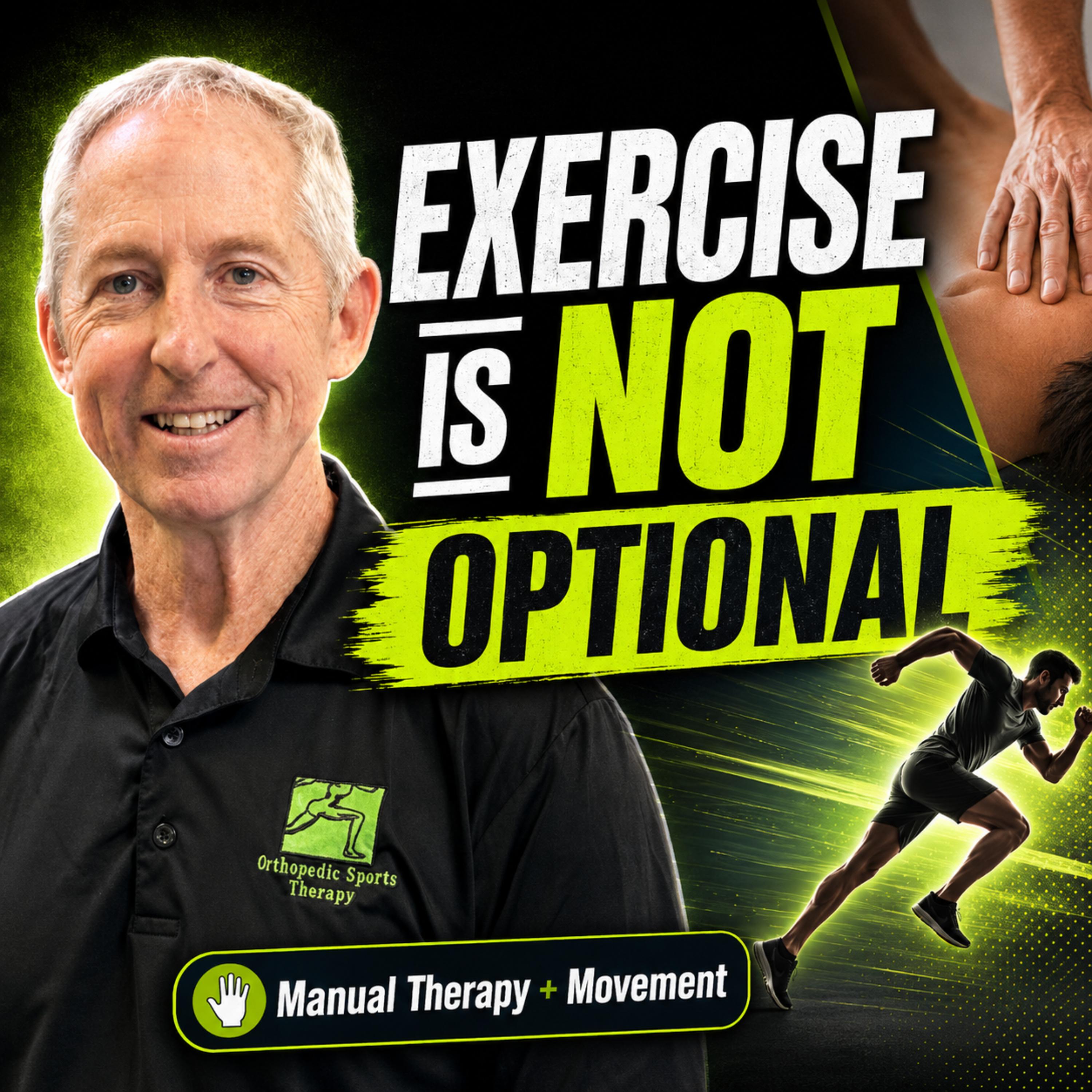
Tim Fearon on Exercise, Manual Therapy, and Patient Responsibility
from Hands On Hands Off: Manual Therapy & Orthopedic Physical Therapy (AAOMPT) · host AAOMPT
In this episode, Seth speaks with Tim Fearon, a respected leader in orthopedic manual physical therapy, about the role of exercise in manual therapy practice.Tim reflects on retirement, mentorship, and the clinical evolution that led him to place exercise and patient responsibility at the center of care. He shares how early mentorship shaped his manual therapy skills, but how recurring patient problems forced him to ask a harder question: if symptoms improve but the problem returns, did we really fix anything?The conversation explores Tim’s shift toward active participation, PNF principles, the Maitland model, reassessment, and exercise as a reasoned clinical intervention rather than a generic home program. Tim also challenges clinicians to stop treating exercise as the less important part of care, stop overdosing patients with too many exercises, and stop outsourcing the very thing that helps patients take ownership of their recovery.The episode also looks toward the future of physical therapy, including remote therapeutic monitoring, exercise apps, online programs, and why skilled clinicians who can integrate passive care, active care, and patient psychology will continue to matter.Key TakeawaysManual therapy alone may not create lasting change. Tim describes realizing that he could improve symptoms manually, but patients sometimes returned with the same problem because the underlying functional capacity had not changed.Exercise should be reasoned like manual therapy. Tim emphasizes using reassessment after active interventions just as clinicians do after passive techniques.Patient psychology matters. The best exercise is not just biomechanically appropriate. It has to match the person’s behavior, motivation, tolerance, and readiness.Do not overdose the home program. Tim warns that giving too many exercises can reduce adherence and cause patients to abandon even the most important pieces.Exercise should not be treated as lower-value care. Handing exercise off too casually can signal to the patient that it is less important than the manual treatment.The patient must own part of the outcome. Tim repeatedly returns to personal responsibility: patients need to experience that what they do can change their symptoms and function.Generic exercise apps will help some people, but not everyone. Tim sees value for people in the middle of the bell curve, but warns that more complex patients still need skilled clinical reasoning.Skilled PTs integrate passive and active care. Tim is not dismissing manual therapy. He argues that passive care and active management work best when they are both delivered with skill and intention.
Embed this episode
Ready to play
Tim Fearon on Exercise, Manual Therapy, and Patient Responsibility
No transcript for this episode yet
Similar Episodes
No similar episodes found.
Similar Podcasts
No similar podcasts found.