I finally stuck it up and bought a pair of lederhosen. I'm going full of manna. The only style of beer that I would say is bad is any beer in which peppermint is used. So now I have this really expensive case of beer, like lukewarm chicken and no sides. Like a three-time loser. Testing one, two, three on my mic. Hey everybody, Todd Meisner from the Talking Picture Studio. We are in the basement studio today and we're talking to Tim Hines.
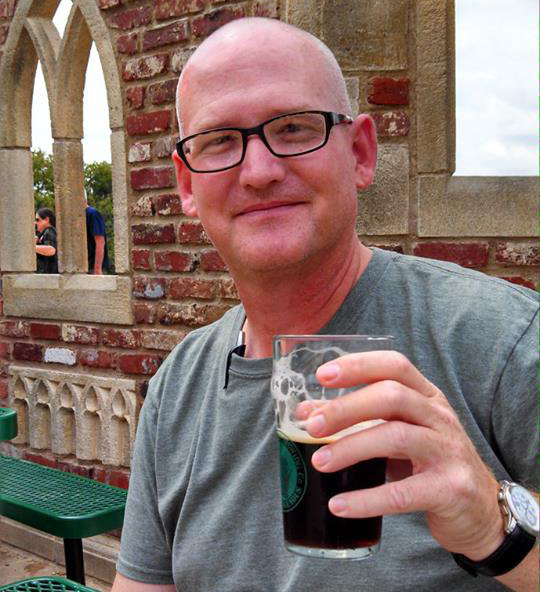
the visuals editor of the Sioux City Journal in Sioux City, Iowa. Now, Tim is a fabulous photojournalist, but he also writes a beer column. So we want to talk about beer as much as we want to talk about photojournalism. And secretly, I really want to talk about beer more than I want to talk about photojournalism. So stay tuned. It's going to be a great episode. Here we go. Tim, Todd Meisner. How are you doing, Todd? I'm doing great. How are you? My eyeballs hurt from looking at photos. That's the price of being the visuals editor of the Sioux City Journal. That is definitely.
The blessing, maybe? I don't know. If I had just started editing that time-lapse as I went, instead of waiting until the last minute, my life would be good. But you know how that goes. Time is a precious commodity. Since this is a photojournalism podcast, and I have Tim Hines of the Sioux City Journal on the phone, the visuals editor, I want to know, I'm obligated, it's union rules to ask you photojournalism-related questions until we get to the real topic that I want to talk to you, which is your beer column. But anyway, so how are things at the Sioux City Journal today, photojournalism-wise?
You know, things are going well. The Journal, like all of the newspapers in America, are facing some challenges. I just said that time is the most precious thing that we have here, and that'd be the truth. We've got a lot of work to do, not a lot of people to do it, so time is the big issue. But overall, I think we're doing well. We certainly hold our own here. Well, that's good to hear. I know that that's the same way it is for us, is that you use the resources the best you can, and I hope it all comes out in the wash, I guess. First of all, can you do me a favor and introduce yourself in the sense of give me a quick history of Tim Hines?
Well, certainly, the long saga starts in Williamsburg, Iowa, just a little west of Iowa City, which is my hometown. I started working for the Williamsburg Journal-Tribune newspaper when I was a junior in high school. That would have been 1982. Initially, just shooting high school football games, high school sports, and got a part-time job during the summertime doing that photography, as well as doing some county government reporting. enrolled at Iowa State University as a journalism major. You know, went back the first two summers to work at the Journal-Tribune as sort of a fill-in managing editor where I did a lot of reporting, a lot of paper, page layout, and of course a lot of photography. Throughout college, I worked as a stringer for the Associated Press's Bureau in Des Moines, as well as I had a part-time 20-hour-a-week photography job at the Des Moines Register and was also at that same time one of the Iowa State Daily. I was twice named Iowa College Photographer of the Year while in Iowa State, which is pretty cool. I graduated, worked for a newspaper in Nebraska, then moved back to Iowa to Fort Dodge, worked there for five years.
and then took the chief photographer job at the Sioux City Journal back in 1997 and have been here happily ever since. Well, that's awesome. That's awesome. You know, I've been at the dispatch, Argus, for 30 years. Opportunities sometimes have come up to leave, and it's always turned out better that I didn't. And so I imagine, is that the same for you? You know, I've had opportunities and been asked to apply for jobs elsewhere. A couple of those I actually did apply for. And in retrospect, you know, a few of them I interviewed for and then withdrew. A few of them I decided, you know, that's probably not the opportunity for me.
Had I been offered and or taken those jobs, I would probably not have a job right now. So it ended up being fortuitous that I stayed here. And quite frankly, it wasn't a tough decision. Sioux City is a really nice community. It's about 85,000 people, a great diversity, yet still maintains sort of a hometown feel. I like to joke that it's the largest small town in the state of Iowa. And, you know, that suits me fine. No, it's interesting that I have told that exact story about jobs that have come up that have those papers are closed or those papers have had such massive layoffs that I would have been last in and first out. So it's just interesting that our careers in that sense mirror each other quite a bit. Did you say you were a junior in high school in 1982?
Correct. I was a junior in high school in 1982. So you graduated in 1983. I love those Goldilmé shirt era. Yes, I had big hair. Let's not talk.
There are very few people like, hey, how come you don't post funny pictures from high school? It's because I had glasses and big hair. I don't want those pictures in the public bloodstream because once they're out there, I can't get them back. Well, yeah, my Facebook page has a photograph shot by a friend of mine from Iowa State when I was at school. It was circa approximately 86 or so, and I had a perm in the mustache and I think it was a Swiss Army surplus.
wool overcoat on and it was yeah it was pretty it was pretty 80s um luckily luckily none of the photographs where my hair was red which was kind of that punk rock phase oh my hair is naturally red so i couldn't get away with it you had you had punk rock hair Well, you know, the thing, the thing was that we were all shooting black and white film. So that red doesn't quite, uh, the red never quite made it to, uh, made it to color film. But the one of me on the side ride bus with the, uh, with the trench coat, that, that was, uh, some very rapidly fading ectochrome. Tell me about this, this, now you, you alluded to it at the beginning. This is a three and a half year time-lapse. I'm fascinated. Tell me about it. Well, it's an interesting story.
When my wife and I finally bit the bullet and bought a house, we bought one that was about half a block away from an elementary school. Now, this particular elementary school was the oldest in-use elementary building in Sioux City. Approximately late 1800s was when the first iteration of this building was first built. In the intervening years, well, let's say in the last 20 years, Sioux City started a program to rebuild its aging schools. They started with some middle schools and started replacing elementary schools.
Let's say about five or seven years ago, the talk came up to replace the Bryant Elementary School. And it kind of, kind of, the school board hemmed and hawed and hemmed and hawed. Eventually, three or four years ago, they said, yep, we're going to do this. So the school, there were a lot of plans floated around to rebuild this building. And the upshot was, I am now next door neighbor. Instead of being a block, half a block away from the elementary building, I am now next door neighbors with the elementary building. And when they finally came up with a site plan, because throughout this time, we were worried that they were going to buy, the school district was going to buy our house and tear it down and use part of that land for the school, which ended up not happening. But when the plan finally came, I looked at it and said, you know.
They're tearing down my neighbor's house. My other neighbor's house in the school is going to be right there. Wouldn't it be cool if I mounted a GoPro to the side of my house to do a time lapse of the demolition of the neighborhood, the demolition of the old 1880s school, and the construction of the new building? And that was about three and a half, maybe pushing four years ago because they were still doing house demolition when that building was still occupied. And tomorrow, Friday, the brand new Bryant Elementary School building opens for students for the first time. I am furiously.
trying to edit almost two terabytes of GoPro frames. I did a meticulous job of cataloging them when I downloaded those images off of the GoPro camera over the course of the three and a half years. But sadly, I was negligent in not making time to edit them at the time. So I'm going through and I'm picking, basically comes down to one frame every hour for the time that I have, you know, sort of action, so to speak, in the time lapse. So I'm working on creating a master.
And then I recorded some audio of the school administrators talking about the process of finding a site for the – or finally figuring out what the new building was going to look like, the demolition progress, and, of course, the construction of the new building. And that's been the project the last couple days. Wow, wow, wow, wow, wow, wow, wow. I'd like to add, as a photographer, you come up with these ideas. Wouldn't it be nice if – but then you get to think of the logistics of it. Well, I'd have to get permission from the landowner to put a GoPro on their house. Then I'd have to have 24-7 access because –
gopro's break i've got i'm on my third gopro that was my question how do you get electricity the thing the gopro battery might last an hour and a half or two hours if you're lucky so you need to constantly have access to this thing and a lot of times you know it's it's it's just it's for this particular project it's not gonna be worth it well i was the homeowner if i were if i were the photographer going to approach a homeowner i would be the homeowner so i mounted a gopro hero 4 because that was the new model back then when this project started on a magic arm, chiseled out a hole to put a USB power connector in the housing, and then mounted a USB power adapter to the magic arm, and then ran a 50-foot outdoor extension cord to an outdoor outlet looper over the roof of my house, and basically hard-powered a GoPro for two and a half years.
Wow. And weather safe and all that. Do you have any problems with it getting wet or the power knocking down because of the water? Well, the interesting thing is I'm also a ham radio operator, and they sell a kind of a rubber-like material called coax seal. And when you put cable connectors to antennas, you use it. It's a moldable putty that's waterproof, and you use it to weather seal antenna connections. And I had a fair amount of that stuff hanging around the house, and it is just perfect for weatherproofing a power connection into a waterproof housing of a GoPro. So it rained. It was up almost the entire time. It went through blizzards and rain.
And it survived. Wow. It was a lot of trial and error because I'd kind of hinted around with different photographers that have done time-lapse. Well, how do you do this? And I think I talked to a photographer that had done a two- or three-day time-lapse, but no one had ever done that much that I was aware of, at least locally, that I could connect with. So it made sense. The housing itself is waterproof. I had to notch out, basically drill a hole in it to put the USB power connector into it. I also had the GoPro backpack, the auxiliary battery.
So that gave me a bit of a cushion. But I just powered the thing and used the coax seal. And for the most part, it worked. There were some issues. The Wi-Fi would mysteriously just plain stop working randomly. And there might be a stretch of two or three days when the thing was not working, when I was not aware of it. But fortunately, two or three days over the course of three and a half years, as long as it didn't happen during the demolition of the old building or the major part of the construction of the new building, it pretty much seemed to not make a difference. There were also times in the winter when there was no visible activity going on, where I just shut the thing down.
What are you building it in, the time-lapse? You know what? I'm doing the editing in Photo Mechanic just to go through everything because I can click through photos like no one's business and sort them. I had some firmware failures where the camera just, for whatever reason, I don't know whether it took some static electricity or there might have been a nearby lightning strike or something. I had to reload firmware five or six times, so there were some issues that way. The plan was to create the master timeline in Photo Mechanic. Right now the folder has somewhere on the order of 15.
12,000 photos in the master timeline right now. Of course, that'll be winnowed back. And, you know, I might just drop those into a MPEG stream clip to create MP4s out of them and stitch multiple MP4s back into MPEG stream to further condense it. You know, I might take it into Final Cut and compose it that way with the help of our multimedia producer here. But, you know, that's...
Kind of where I was thinking about going on that. It's going to be fairly basic. As I said, I have audio of the administrators talking about the building, and that'll just be dropped into the background. How long do you think in the end it will be? I am shooting for seven minutes because most people have the attention span of a photographer. So I'm just trying to condense it as much as I can and still do justice to it.
You know, there might be a lot of condensing of time during some of the periods where there's not a lot going on. You know, it may be only one or two or three frames per day when there's a lot of stuff going on. For example, the demolition of the existing, the previous Bryant building, you know, that might be 20 or 30 frames in a day. How many frames were you having? What was the rate in which the camera was working? The Hero 4, the slowest I could make it was one frame a minute. Okay. Wow, that's a lot of frames. You know, I'd try...
When I got up in the morning, or when I got home at night, or when the construction was done, I'd try to remember to turn the camera off. When I got up in the morning, I'd try to remember to turn the camera on. But I have a lot of 400 frames of darkness where I just left the thing running. Well, who knows? Maybe a coyote runs through the scene. You never know. Well, it was amazing. The neighbor's house, the school district, bought their houses and allowed them to live there for a dollar until the point where they were getting ready to tear them down.
And after the neighbors had moved to other houses and demolition was imminent, it was amazing how many thieves actually broke into the now vacant houses and stripped them of copper. And you can see some of those in the GoPro. I mean, not enough that you can identify anyone. But it was just very interesting what goes on in the neighborhood, especially at dusk. It was interesting. I had actually a well-dressed older couple, mid-60s, pulled up with a trailer and went into the neighbor's house and were pulling all kinds of stuff. And I said, you got permission at the demolition company? Oh, yeah, yeah, yeah, yeah.
Two weeks later, I talked to a guy from the demolition company. Nobody, nope, nope, don't know anything about that. So there you go. Just interesting. Any other hot projects on the horizon? Anything interesting that your readers are going to be excited to see that you guys are doing? Well, Justin Wan, our multimedia producer, is working on a semi-long-term project. I don't want to kind of let the cat out of the bag, so to speak, but he spent a lot of time working with some families to do a topic that's fairly timely. Actually, it's...
grandparents who are raising grandchildren. Oh, that's an important topic. I know of a couple of families. My wife works with someone who's, because of various problems, she works with a grandparent and they're helping to raise their children's children. And that is exactly what that's exactly what Justin and Dolly Butts, our health reporter, are working on right now. And that should that should land in the next couple of weeks. And they've been really they've been really busting it to get that done in the visuals. There's a lot of there's a lot of video stills and significant video. And it's going to be a really, really nice bit of package, nice package, nice, nice journalism for those two. I'm excited about that. I follow Justin on Twitter and he's always got something interesting to say. So beer.
Let's talk about beer. I'm just pussing around the photojournalism, let's face it. I mean, blah, blah, blah, photojournalism. We take pictures for a living, blah, blah, blah. Hey, let's talk about what's really important, beer. How did you become a beer writer or a beer columnist? Well, you know, you can blame our parent company for that. It actually happened in Davenport. All good things happen in Davenport. Is that not true? That is true. I'm here to officially salute the flag and say that is a true statement.
Well, let's broaden that. Let's call that the Quad City areas, the entire Metroplex over there. We're talking 2006, maybe early 2007. Lee Enterprises brought together publishers and editors and online editors and visual people for a series of seminars about the impending digital revolution. Keep in mind, this was 2006, 2007.
And they had – we were sitting at a conference, and we'd gone through all of our meetings. Everyone was going to tell us – everyone was done telling us what we need to do. We need to ramp up video. We need to – the stuff that we're now doing a lot of, these were the seeds that were planted in 2006. And we'd gotten done eating, and, of course, they passed around drink tickets, and there's a bar, and every person gets a drink ticket.
It so happened I was seated at a table with workers from our sister paper in Madison, Wisconsin. And for some reason, I don't know why beer came up. I'm shocked. I'm simply shocked. Stop the podcast now. I'm shocked.
I know a bunch of journalists in a room and beer would come up. It's bizarre. Never in a million years. But I started an argument about some kind of beer from Iowa being just as good or better than some sort of beer from Wisconsin. And that got the capital, the Madison people all kind of out of the shade. It was good nature. It was very good nature. But we're kind of going back and forth like a little fencing match. And my publisher, who was at the table, if you think you know so blah, blah, blah much about beer, why don't you write about it? Because we just had a whole bunch of seminars about podcasts and online blogs and vlogs and all kinds of stuff.
Well, heck, that sounds like a great dodge. I can research beer at work and talk about beer, and here's the publisher giving me the okay. And so I started writing about beer in 2007, and two years ago celebrated the 10th anniversary of the, it's called Subaru, after Sioux City, beer blog. It was one of the first newspaper-based beer blogs, certainly the first in the state of Iowa, one of the first in the Midwest. And that's how it started. And in fact, I even, you know, I wanted to make this thing legit because I wasn't trying to, I didn't want anyone to think I was pulling wool over anyone's eyes. I actually got permission from corporate HR. I said, you know, because I said, you know, some of these places are starting to send me samples of beer and it's against company policy to have beer in the office. Yeah, that's a pretty, it can be a pretty, it is a pretty serious offense. So, you know, you write about beer, so that's okay. You're not going to get busted for that. So that all got squared away and I've been doing that ever since. You know, I'd mentioned that time is the precious commodity in the journalism business. I'm not able to do as much as I did in the past.
But there's a lot of cool things happening in the beer industry in Iowa. And, of course, being in Sioux City, I cover South Dakota, Nebraska, a little bit of Minnesota. So it's been kind of fun. Wow. I did not know that it went back that far, though I'm not surprised about the drink ticket thing or the arguing with the people from Madison about beer. The next best subject to argue with the people from Madison is football, but that's neither here nor there. I have a lot of Wisconsin fans in my family, so some years they're frustrated by Iowa's victory and other times they gloat, and that's the way it goes.
I try to be a good fan and keep my mouth shut because my wife tells me to. In all fairness, I have to say I love Wisconsin. Cheese, beer, what's not to love? Well, that's exactly right. And it's nice that I have all those relatives up there because I can stay for free and a lot of times drink for free. So that's, you know, if I play my cards right and I'm really nice at Christmas. Was the beer, if you think back on this beer that you were arguing about, was it an argument about Spotted Cow? Because Spotted Cow to me is just not as good as everybody says it is.
You know, for Spotted Cow, for that style of beer is killer good beer. I mean, it is one of the cleanest, best examples of that style, certainly in the Midwest. You know, as craft beer drinkers sort of evolve, people tend to, I mean, it becomes a touchstone beer, but people evolve to the IPAs and the styles and the sours and the different things that are going on there. But, you know, the largest selling beer in Wisconsin, and understand that Miller and Miller Lite are based in Wisconsin, that's... I'm saying a lot for that beer. I think it's very good, but that said, when I go to New Glarus, when I go to the brewery in New Glarus, that's generally not what I buy when I take the tours. Much more apt to buy one of their sours or even Fat Squirrel or Brown Ale. Oh, I love Fat Squirrel. I'm actually out of Fat Squirrel currently. I have a few staghorns left in the beer fridge. I'm actually currently, as we speak, drinking Sprecher's Oktoberfest, which is quite good. I used to be able to buy Sprecher in Sioux City, but they've kind of pulled the beer out of the Sioux City market. You may still be able to buy it around Iowa City, but I kind of miss that one. And to get back to your original question, I think the argument was over.
Capital Brewings Blonde Doppelbach. Oh, that's a good beer. What were you arguing for? Oh, I was arguing that it was probably one of the best ones that I tasted. But at that time, I thought it was a pretty overbearing flavor. Again, talking about how craft beer tastes evolve. I've had it recently. No, no, it's just a good solid Blonde Doppelbach. But at the time, I remember just being a powerhouse of a multi-powerhouse of a beer that I enjoyed and really liked. I was having a hard time. You know, it was like reading Homer's...
The Iliad or the Odyssey, you know, you stagger through the thing and you're better for having finished and you actually learned something and enjoyed it. But, man, the process of doing it was just tough. Well, let's stay up in Wisconsin for a minute and talk about Central Water's bourbon, their bourbon barrel series. How do you feel about that? Oh, oh, yeah. Was that Peruvian Morning? Yeah. Oh, oh, you know, they had some misfortune with that beer, getting infected for a few years in a row. The last batches, oh, Stellar, one of my favorite beers. Oh, yeah, I didn't know anything about the infected batches, but that is one that I...
I have, it's currently, the basement is just full of beer. This is where the podcasting studio is and where all the beer is. And my wife's candle supply in case that, you know, we run out of candles. But the beer outnumbers the candles, by the way. Iowa breweries. I have been, in the last few years, incredibly surprised by the experimentation, the risk-taking, and the quality of, and the sheer number of breweries in the state of Iowa. And they're...
Like you go to the Iowa tap house, you'd spend like a year in there and not drink everything they've got on tap. But I'm just amazed. I mean, you've been doing this for 10 years. You've seen the evolution of Iowa brewing. And how does that look from your perspective from the macro view? Let's do kind of a deep dive. Let's kind of go way back in the history books here. So we're going to keep this kind of Quad Cities centric. If you want to go back, we're talking 40s, 50s, 60s here.
There was the Sioux City Brewing Company that went out of business in 19... 1959, purchased went out of business. Before that, Blackhawk Brewing Company in Davenport went out of business. That left one brewery in the state of Iowa, and that would be the Dubuque Star Brewing Company, which is renamed the Joseph Pickus Brewing Company, which had a couple other names. I think it went back to Dubuque Star Brewing Company. Eventually, I'm having a hard time figuring out when Dubuque Star closed, but let's call it early 90s. I remember one of my favorite beers in college in 87, 88 would have been actually drinking Dubuque Star at the M shop at Iowa State University.
So if you think about that era of the 80s and into the 90s, you had Dubuque Star that was putting out some pretty darn good beer for a kind of a macro lager beer, especially with Pickett's and then later with the actual Dubuque Star beer. So in 1985, three people decide they're going to take a bunch of old dairy equipment, and they're going to create Millstream Brewing Company in Amana. And they actually get Joseph Pickett's. Joseph Pickett to come up with the recipe for their flagship beer, which would be Shield Brow, which is now Brew Today. So, you know, 85 was really when craft beer in Iowa started. Now, let's jump back to Davenport to about 1992. So, we're talking 85. It's Milstreet, Milstreet, Milstreet, Milstreet, Milstreet. Dubuque Star closes early 90s, and then Front Street Brewing in Davenport opens up. They are the first brew pub in the state of Iowa. And then very shortly after that, Raccoon River Brewing and Court Avenue Brewing in Des Moines open up.
Now, I'm using these figures off the top of my head because I don't have that information in front of me. But in approximately 2007, 2008, there would have been, I believe, 18 or 21 breweries in the state of Iowa. Fast forward to 2017, and there were about 75 breweries in the state of Iowa. And two years later, we're looking at right now we have 98, and we're all anticipating that Iowa will hit 100 breweries probably within the next two or three weeks. In fact, for all I know, it could have happened now. I haven't gotten a phone call that said it's happened, but it's quite possible it's happened now. And you alluded back to the experimentation and the proliferation of breweries. It kind of goes back, if you really deep dive, almost every town of any substance, meaning...
2,000 or 3,000 people in the state of Iowa had a brewery, or the next town over that size had a brewery. And I did not go back and do the research to find out in the 1800s, up until the series of prohibitions that Iowa had, how many breweries were in the state. But really, it would be my educated guess that back in those times, there might have been 100, 150, 125 breweries in the state 100, 125 years ago. So I think it's just kind of coming full circle that a lot of smaller towns are starting to have people. And then they're opening up breweries as well as – I couldn't even tell you how many breweries are in the Davenport metro area after Front Street and then Great River. I know there are a lot more there, many that I haven't even had a chance to visit. So it's just going full circle. And those breweries are just making just different kinds of beer to try to satisfy both.
The beer geeky type people and people in those towns that are used to drinking macro lagers, they're wanting, you know, this is local. It's the local thing. They're going in. Well, the question is, well, what do you got that's light? So they're making full flavored lagers and pilsners in addition to the more obscure off the wall beers that you talked about. I was in John's Grocery yesterday and I picked up Triple B Bourbon Barrel Blonde from Peastree. And it's for me.
I love when I find stuff like this because I'll stand there and look at a rack and looking for local beers and looking for Iowa beers or Illinois beers and something that like I love sours. So, you know, Exiles stuff appeals to me because they'll make various sours, experimental sours and various things. And then New Glarus has their thumbprint series that they'll have sours and whatever. And the Steel in Illinois has their wild sour series. And so these are all kind of standard, you know, those are kinds of beers that I stock that nobody in the family will drink. So I drink them myself and they can drink other stuff. When they go downstairs and open the fridge, like.
Uncle Todd has nothing but Sours. Look in the back. Look in the back. There's all sorts of good stuff back there. The proliferation of Sours, well, of course, let me go back to Triple B real quick, was that I bought it on a Lark. It was under $5. I was surprised they only charged me less than $5 for four beers. That usually doesn't happen. I got home, put it in the fridge, forgot about it. My wife goes, oh, what's this new beer that you found? And I'm like, oh, I'll open it. I'll find out. I've never had it before. I don't know anything about it. I didn't even search it on Untappd before I bought it.
Peace Trees makes some really good stuff. The stuff they made with John's Grocery, their anniversary beer, I thought was excellent. So I opened it, poured it into a tulip glass. sat down, took a sip, was incredibly surprised that the honey, that it had a honey finish and that it had a honey finish. And then I could feel this warm feeling go down my chest. And I was, it was just a really, I just love finding surprises like that. Sometimes you, you open a beer, you pour it and it's kind of what you expect. And that's nice. You know, there's something good about that, but I love finding those beers that you're like, wow, I wasn't expecting this. Can you remember the last time you got?
wowed by something you just didn't expect? Actually, yes, because it made such an impact. There was a beer brewed by Nebraska Brewing Company in an Omaha suburb called Melange à Trois. It was kind of a barrel-aged mash-up. It had some Chardonnay things going on. It was just a phenomenal, phenomenal beer. My tasting notes from that were at least four pages long, and I wrote in my review that after all those tasting notes, I still didn't understand this beer, but it didn't matter because it was good. Buy it.
And that was my, I don't remember what year that came up, but that was my beer of the year for that particular year. And the next year that beer won a Great American Beer Festival gold medal in its category. It's stuff like that. It was just, it's seeking out unexpected. nuggets from a beer that you may not have had high hopes for or had any expectations of. I had expectations of the Nebraska Brewing Company beer because I was familiar with that brewery and the owners of the brewery. And I know they made top quality things, but what that beer gave me was totally unexpected and just totally blown away by that beer. And the Peachtree beer that you had mentioned, the brewer there is Joe Kesseluth. And he has done just some remarkable beers. He and Megan, the owner of the brewery, they did a sake-based beer. And as far as I know, they're the only brewery in Iowa that's done a...
a sake style beer that's gone and they never bottle it but uh it made it outside of its own tap room you could you could get it you could get it at the old bait shop and in the tap room and there's some there's some really uh really cutting edge things that are going on the the problem is most of those cutting edge things never make it beyond the tap room so if you're not in sioux city they go to jackson street brewing to taste some of the sours that he's making or you're not at uh maro brewing again here in sioux city to taste those sours. If you're in another part of the state, you're going to miss them. And that's one of the things that's really cool about the Iowa beer scene. There's so much going on. It's not just a Des Moines thing. It's just not a Cedar Rapids or a Davenport thing. It's a Sibley, Iowa population, 1,200 thing. Wise Eye Brewing is getting ready to open up in Lamars. Their population is right at 10,000. There is a, I'm trying to think of the name of the brewery there in Clarion, Iowa. It's a wonderful little brewery, Clarion, without Googling the size of the town.
Can't be any larger than 10,000. Just a lot of really cool things happening in little towns. And that's phenomenal. And they each, they're all doing these things. And if you're not there, you just miss out. Sour trend. I had never had a sour until I was in a brewery called Braindead in Texas. And Braindead had yet to, they were brewing their own beer. They had opened to the public, but their beer wasn't ready yet. So they were, they had these, their tap room, I think they serve food also, but they had the coolest setup for taps. They were all coming out of 1950s refrigerator doors.
which I thought was extremely cool. And then they had the board, the traditional brewery chalkboard up above. And so we'd been in there a couple of different nights on my brewery tour of Texas with my brother and who lives in Dallas. I said, finally, I said, okay, I've had this, that, I don't want that. I'm like to the, to the bearded beer guy behind the bar. I said, just bring me something I've never had before. So he's like, all right. So he goes over and he pours me amongst, which, you know, the traditional Flanders red. And I was, my brother hated it. My brother's lived in Germany twice. He's a beerophile. He, he meticulous about what kind of beers he likes.
just really knowledgeable, but he just absolutely hated the sour. Couldn't figure out why I loved it. And I made it kind of my mission after this kind of aha moment for me with sours to find other people that made sours. And I got home and I'm like, who makes sours? Nobody makes sours. And now everybody makes sours.
Are you surprised by that trend? No, I'm not. It's because of people that are having that exact experience that you had, where you've tried some of the traditional imported Flemish sours. And then one of the new things now, well, it's not new, it's an ancient style, but Gosa beers that originally came from Gosler, Germany, and Leipzig. You know, people were searching out for those sours, and they were hard to find because they were all imports. So there were quite a few American breweries that started doing them, most notably New Belgium, with their Lips of Faith series, Delafelis, the Transatlantic Creeks.
that proved to be real popular. But the issue with those beers is it takes a long time to make a traditional sour ale. Well, there was a brewing style called kettle sours. We could make a sour beer in a lot less time than what it would take to do a traditional Fodor-style sour Flemish, and it didn't require a lot of extra equipment. And so a lot of breweries across the country, and especially in Iowa, started making kettle sours, which I think are wonderful beers. I always have a fondness for the traditional sours. I find there's a lot more depth of flavor and richness in those types of beers versus kettle sours. But the breweries in the Sioux City area, they all make just a ton of those sours, and they're very well executed and really nice and drinkable beers.
She humors me in the beer geekdom. She loves craft beer, but she sticks to mostly the mainstream styles, and she's heavily into sours now. We're having a get-together this weekend. The question she asked me last night was, do we have any sours? Are we going to have sours? Do we need to get sours? You should probably go down to Mardo and Jackson Street and get some sours. So that's good, and that's exactly what's happening.
People are seeking those out. There's a craft beer bar in Sioux City that's on the first floor, and on the third floor is a hair salon, an upscale salon. And he can't keep sours in stock because after the salon closes, the cosmetologists all go downstairs to the bar and they drink a lot of sours. And that's something I would have never have imagined when I moved to Sioux City 23 years ago when the most exotic thing you could get was an occasional Guinness and a Killian's Irish Red. 23 years ago in Sioux City, that was basically it. Yeah, the evolution of craft beer is just mind-boggling in that way, not just Iowa, but everywhere. I remember, I think, that the...
My brother came home from college. He's eight years older than I am. He came home to visit. He went to the, my parents were hard liquor drinkers, brown and vodka drinkers. Occasionally dad would have a Coors Light or something. Jeff came home. I think he, it wasn't college. I think he was living in Germany the first time. And he came home and said, hey, what's dad got? What beer's in the fridge? And I go, I don't know. And he opens the fridge and there was just one little lone Coors Light sitting there. And he closes the fridge. He goes.
let's go so off to the liquor store we went and and that's kind of where i started to like the idea of not just from a when you're a kid you look at it from a beer can perspective like oh that's a cool beer can you know because you're not allowed to drink it or you don't drink it and you know old style at any age doesn't taste good um and so except you know a quick aside old styles oktoberfest surprisingly good for being from from old style. Everybody who I know that understands old style from my days in Chicago, I say, no, have you tried their Oktoberfest 16-ounce can? They're like, no. And I'm like, no, seriously, it's a four-pack. They're not that expensive. Get them chilled down and pour it into a glass and drink it, and you'll be surprised. And I had some of the most ardent Oktoberfest snobs in my family in a blind pour.
give it a thumbs up. I was, and these are, these are October, they take their Oktoberfest to a very snobby level and they, they enjoyed it. But anyway, have you had it? Well, you know, I was, I have not, I have not even seen that and was unaware that they had made one, but I was going to add that in college, one of my favorite beers when I couldn't get Dubuque star and had money, I bought the bejesus out of special export. Oh yeah. Yep. Yep. Yep. I know it now. I know it's referred to as the green death, but it depends on how much of you drink of it. This is true. This is true. But you know, my, my, neither of my parents drank a lot.
when I was growing up. But I remember when we'd go to Pizza Hut, Dad would always order a, and you probably may or may not have known that this even existed, Budweiser Dark. Oh, I think I have the beer can, but I don't know that I've ever had it. But we'd be at the Pizza Hut and he'd get a draw of Bud Dark. So I remember that. And I grew up in Williamsburg, Iowa, as I mentioned. And being so close to the Manneau colonies, the only foreign language they taught there was German, which of course is a wonderful language to learn.
And so useful. Yes, I know. My dad told me to take Spanish, so I took German in high school. Two years of high school German has done me zero good. Well, the good it did me was that that enabled me to spend three months between my sophomore and junior year of high school in Germany and the various German-speaking countries of Europe, where I developed a profound appreciation for more complex beer styles. I can say this now because the drinking age was 16 and I was 16, so no harm, no foul, right? Right, exactly.
But that's where I first drank Bach and Oktoberfest and the Ralk beers of Bamberg, Germany, and a real honest-to-God pilsner and a wheat beer and the sour gozes and all of those wonderful things that when I got back to America and turned 19, which was then the drinking age in Iowa, there's none of these around. There's the usual suspects. Michelob, okay, Michelob, we can drink Michelob, and we can drink special export and thank God for Dubuque's star until Mildstream rolled around in 85. And you could get that. You know, there really wasn't much there. And I'd had that foundation earlier on having really good, fresh, locally made German beers. And that was probably sort of the genesis for an appreciation of beer. When I was in college, I remember it was John's Grocery for Cases of Black Label and Cases of Rhinelander. And Rhinelander has been re-released. And I don't know if it's the same formula or not, but I'm not willing to try it. I can answer that question for you. It is the same question?
I have had numerous discussions with Doug Alderhasky, who now owns John's Grocery. That's the family business. They were the largest retailer outside of the Chicago area of Rhinelander. And I remember I graduated from Iowa State, but I spent my first two semesters at Iowa. My roommates and I would literally carry four cases of bar bottles from John's Grocery up the hill to Burge Hall. And I still have one of the cardboard case boxes of Rhinelander, $4.99 a case. Joseph Huber Brewing Company in Monroe, Wisconsin, made Rhinelander back during that time, which would have been 83, 84.
It's now called Minhas Craft Brewery. A family from Canada purchased that, and they did re-release the Rhinelander. It doesn't taste the way I remember it. It could have been the romance of being a 19-year-old college freshman in Birdshall drinking beer. I don't know. It didn't taste the same, so I bought a Rhinelander t-shirt and a couple of pint glasses, and we'll call it good. Yes, yes, that's right. I remember that the...
Their slogan was refreshing as the Northwoods. And I used to say that wood would taste better than Rhinelander. But anyway, yeah, a black label. Oh, my God. Too much black label on a Saturday night. That'll tear up your insides. But anyway, but the idea that I think the first of legal drinking age, I remember my brother was getting married in Oregon and Red Hook.
before it was purchased by imbev and ruined that i remember him getting and i maybe i'm maybe i'm romanticizing maybe it was the best one of the best beers i'd had up until that point in my young life but i remember it just was it was a revelation that this didn't taste like any beer that i had ever had before and my brother had arranged for a keg to be at his house for some bachelor party or something or something and i'm just like this is just so good and then i saw it someplace in I don't know, the early 2000s. And I'm like, oh, Red Hook. I remember this is awesome. And then I had it and then it just didn't, either the formula has changed, which I've heard that it has, or that it just doesn't, like, you fall in love with something and then you realize it's just not that good because other things are better now. And they brewed a black ale, I believe it was called Black Hook, that I remember as being especially good. And I think they also had an ESB that I enjoyed. And that would have been weird. I'd have been in Sioux City at the time, so we'd be talking 98, 99, thereabouts. So what beers do you know about that are on the horizon that we should be looking for?
What's coming down the pike that people have leaked to you for your column? Well, I'll just talk in generalities because I'm not aware of specific ones that are coming out. It's almost Oktoberfest time. Now you're combining my next question with this question. Okay, go for it. I finally suck it up and bought a pair of lederhosen. I'm going full of mana. You're going full lederhosen. All right.
And so, you know, Millstream just released their Oktoberfest a couple of weeks ago. It is not, to my knowledge, made it to Sioux City yet. That is one of my favorite beers. August Shell Brewing Company up in New Ulm, their Oktoberfest is stellar. There are a lot of really good Oktoberfest. There's an Imperial Oktoberfest that Lion's Bridge in Cedar Rapids brewed called Octobot. That is a stellar beer. Ooh, I haven't had that. I'm intrigued now. You know, it takes an awful lot for anyone to make an Oktoberfest that I really don't enjoy.
I have not had a poorly brewed Oktoberfest in a very long time. Taste differences to me come down to just flavor profile, one that I prefer versus an Oktoberfest flavor profile I prefer versus one that I... may not prefer because it's not balanced. But I've not come across a poorly made beer. And if it sounds like I'm dancing, I'm not. Because if I can climb on a soapbox, you follow social media, the Facebooks, the Twitters, people be complaining, I hate this beer, I hate that beer, blah, blah, blah, blah, blah. Well, it may be a beer that you don't prefer. And that's 100% cool. But there's a big difference between a beer that you don't prefer the flavor of versus a beer that's bad. To me, a bad beer implies one that for whatever reason was poorly brewed either because...
It was not brewed anywhere towards any sort of style. Or standard. Or standard, or one where the quality control was not where it needed to be. Maybe it got too much dissolved oxygen pickup when it was canning, and that's a flaw that happened at the brewery. Or they were making their sours, and somehow a bug got into the regular beer and funkified it, and they still chose to ship it. Or maybe they didn't even know that it happened, and it went out the door.
So when I talk about a bad beer, I'm not talking about a beer that I just don't like. I'm talking a beer that's technically a quality control flawed. It's just a beer that I don't prefer the taste of versus a bad beer. So I want to make that clear because I think a lot of really good breweries who are doing good work get knocked because people, oh, that's bad. That beer's bad. That beer's bad. Well, no, it's not bad beer. It's one of the best brewed examples of a style of beer you don't prefer. I don't prefer Hefeweissens, but I'm only going to call a Hefeweissens bad if it's...
flawed. I'm not going to call it bad because I don't like it because it's not my style. You don't like happy vibes? I am not a big fan of Heffa's because I find the banana and clove profile, to me, for my taste buds, can seem overdone. But I drink the Heffa. I go, man, that's textbook. If I were a beer judge, if I were judging this at contest, that would be a 90% beer. It would be an 85%, 90% beer or even higher because it is dead on. But am I going to spend $12 a six-pack? Probably not because it's not my thing. In my mind, that's perfectly legit, but I'll never call that beer bad because it's by the book.
almost as perfect example as you can get of the style, just not a style I prefer. The only style of beer that I would say is bad is any beer in which peppermint is used. I don't know why anybody would want to mix perfectly good ice cream, which peppermint ice cream is awesome, but why anybody would want to put something mint in beer, I don't get. I get tired of people who want to sound smart to say that things are bad, but still peppermint, I don't get. Have you ever had a peppermint beer you liked?
I wouldn't call it peppermint, but I'm trying to think of the brewery. It might have been a Minnesota-based brewery. They made a mint stout that was just knock you on your butt good. Oh, really? Well, Minneapolis. It just had a hint, and I'm trying to remember who it was. It just had a hint of...
fresh mint flavor. Sometimes when beers are flavored, I find the flavors can be kind of artificially tasting. I mean, this one is just straight up like they took real mint leaves and steeped them somehow and hopped on the left foot and did an incantation and did it again on the right foot. It was a wonderful beer. Well, I stand corrected on mint. There can be good beers made with mint because Tim says so. But the one that I had, the one that I had from a brewery that's not too far from here that shall remain nameless, it's in Illinois, it's not an Iowa brewery. I thought, what the hell are you doing? This is terrible.
And I don't know, whatever. But I've also, if you want to get really offbeat, I've had basil, Thai basil, I think it was a Thai basil sazon from a brewery here in Iowa. Again, I drank it not expecting that I would like it. Oh, man, this is good stuff. And I heard a lot of people, it was at a festival in Des Moines. I heard a lot of people say, oh, I didn't like that. I said, well, that's, oh, I like that. That was good stuff. You know that whenever people talk about how much beer costs or how much beer or wine costs. Now, I also have a lot of wine. I love wine. I prefer reds, tannic reds.
Most, you know, and everyone's not talking about wine. It's a whole nother podcast. But there's a there's a video that John Cleese did that talks about wine and basically takes these very expensive wines and some middle priced wines and some not so expensive wines and takes them to a party and tells them the people that the that there is one bottle in there that's worth a lot of money that they'd be tasting from. The one that they thought was the best, if I remember this video correctly, the one that the person liked the best, they always thought was the most expensive bottle of wine. In very many cases, it wasn't.
But it's really about what you like and what you enjoy to drink. It really doesn't matter how much it costs. Let's think about how this works here. The most I've ever spent on a bottle of beer was I got a bottle of Sam Adams Utopias, and I think I paid $180 for that bottle of beer. It would have been the equivalent of a...
You know, a 750 milliliter bottle. Granted, it's more of a cognac than a beer, although it is technically beer. That's the most I've ever spent. You know, I have to really think long and hard before I, you know, my cutoff point is $5 to $7 for a 12-ounce bottle of beer, which kind of puts it in the Bourbon County stout range. You know, I'll certainly spend more money than that on a bottle, but, you know, that's the point where I have to, you know, is how much I think I will like this beer worth 15 bucks for this beer versus, you know, 10 bucks. That kind of is off the equation for a bottle or two. Yeah. It's like the first time I found, the first time I bought 120 minute and I've only bought it once from dogfish. You know, it's kind of the white whale. You don't see it. You don't see it. You don't see it. And all of a sudden there are two six packs left of the Hy-Vee and you're like, okay, here's my opportunity. I'm going to buy it. And I think that was, I think that was 35 bucks.
I think that was a $35 six-pack. I think that was the most for a six-pack I've ever spent. The most money I've ever spent on beer is a hilarious story. I might have told it on the podcast before, but Lafali... was I called around the various liquor managers and found out that the liquor manager in Milan, Illinois, would order me La Follie because nobody else was getting the bottle. So he goes, well, how much do you want? Now, you know that they're bomber bottles. Not everybody knows they're bomber bottles. And actually, I didn't know when I was ordering the bottle that they were bomber bottles. So he goes, well, how many do you want? I go, I don't know, a case? He's like, are you sure you want a case? And I'm like, yeah, what the hell? I'll get a case.
So he's like, are you sure? And I'm like, yeah, yeah, yeah. Well, he didn't mention that they were bomber bottles. He just kept asking me, are you sure you want to order that many? So I ordered a case of La Folle bomber bottles. And I didn't know that I had ordered a case of La Folle bomber bottles. And so he calls and says, your case of beer is here. I'm like, awesome. So I go out and my wife goes, hey, while you're out there, why don't you pick up some fried chicken and some sides from the deli and we'll have that for dinner. And I'm like, super. So I drive out to the IV and I get there. And have you ever seen the scene from Tears of Endearment where Deborah Winger's in line?
The cash register, she doesn't have enough money. And the register, she's like, you're going to, she keeps adding things and going the wrong way. And it's all very embarrassing. Well, that's all I could think of because there was this line of like five guys behind me. And I go, yeah, I'm here. I'm here to pick up the case of Lafali. And I looked down and I'm like, holy crap. It's a case of Marbell. And he goes, are you sure you want all these? I'm like, and I look at this long line of people and I'm like, not willing to do the math in my head as to what I really want to buy. And so I just bite my lip and hand him my credit card. And I don't remember what it was, but it wasn't cheap. And now I'm thinking.
Oh, my God, I have to come home and tell my wife that I just spent this enormous amount of money on beer and explained to her that I was too stupid to ask if they were bomber bottles. But wasn't that a phenomenal beer? It was a phenomenal beer. You're going to get a case of something. That would be the one to get a case of. And I have one left. I have one left. I think it was 16. I have one that should open. It's ready to go. I should drink it. Maybe I'll drink it tonight in celebration of this podcast. And so to make matters worse, I take the bottles out to the car.
And then I'm like, Oh crap, I gotta get the chicken. Cause you know, coming home with an expensive case of beer and no chicken would have been bad. So I go and I get, I ordered the chicken, I get the chicken, but I, I, I get home. And so I'm like, Hey, here's the chicken. And I'll buy the way. And she goes, before I got to the, by the way, she goes, where are the sides? So I'd forgotten the sides. So, so now I have this really expensive case of beer, like lukewarm chicken and no sides. Like a three time loser.
My wife forgave me. She still loves me. She's still married. I just heard her come in the back door. So we're still married. So that's good. Um, or at least she's living here. I don't know. Um, but yeah, that, that, that is, that is my, my great stupid beer story. Cause you know, I don't get drunk anymore. Uh, you know, I just buy, I just accidentally buy way too much beer because I'm too stupid to look at the bottles were bomber bottles and not 12 ounce bottles. Why wouldn't I want to buy a case? But he asked me three times and he was like, well, did you know, did they, did they say anything? And I'm like, well, he kept asking me if I really wanted that much. And I kept saying yes. And she's just shook her head and smiled. And apparently she still loves me. So that's good.
Oh, good. And it would be great if she drank beer, too, but she just drives me to breweries and drives me home. It's nice that she indulges me. I always joke with people that I don't do heroin. I don't do cocaine. I just do craft beer. And so she drives me places, which is nice. So, sir, I can't tell you how much I've enjoyed this podcast. We talked a little bit about a photojournalism. I can't wait. When is the time-lapse again going to premiere?
I am hoping that we can get that pounded out by the middle of next week. OK, awesome. I'm looking forward to seeing it. I will I will send a link to I will put a link with the podcast after I get it edited and your project is finished. I want to tell you that one of the secret reasons why I asked you about this was because our kind of our shared history of being photojournalist in Iowa and, you know, being in school about the same time and kind of having the same job. Of course, I'm the associate editor now. I don't take pictures for the paper anymore, at least as a job. I mean, occasionally I do. But anyway, was that at an editor's meeting a week ago.
we got into a discussion about new Glarus beer and where, and I said the exact same thing that you just said about a new Glarus being, or the spotted cow being an excellent beer in that ilk. It's not my thing. I like other beers from new Glarus. And my editor said, Hey, if you, if you like beer so much, how about you write us a beer column? And so I said, okay, how often? He goes, well, can you do it twice a week? And I'm like, okay. So I needed to pick your brain on how to do this. So that was my secret dirty reason for sneaking you into the podcast to pick your brain and get a podcast episode out of it. I guess the last question I have for you just quick before we go. You didn't know this much about beer 10 years ago, did you? And is this knowledge you've all gained in the process of doing this? Or were you an expert when you started?
Well, I never was, nor am I an expert. It is from the largesse and kindness of brewers across the country, especially in Iowa. A lot of South Dakota and Nebraska brewers will just sit down and talk to me. I'll ask questions, and some of it will be industry insider stuff, and they're kind enough to answer them, and we'll sit down and have a beer and just talk. And my having done this sort of mirrors the rise of the craft beer industry in the state of Iowa. So I've had nothing to do with that other than to be an observer and take notes and being able to hopefully correctly relay to.
to readers what i've learned um but it's it's there's always been an interest there i've always tried to seek out whether it was food or wine or coffee or beer or back when i used to smoke cigars things that were unique and more flavorful and more interesting uh you know maybe it's a photographer thing but i tend to get bored easily what's the same old same old so i always try this beer then try that beer and i'd go on vacation i'd try that beer and i'd bring some back and friends would go on vacation If you're down there and you can bring back some Cigar City, that Maduro Brown is really good stuff, you know, things like that. So you just kind of soak all this up. And as many people did, I started collecting beer cans in the 70s, and that led to books on beer and brewing that I got even when I was in middle school. So I was reading about Michael Jackson. I had a copy of Michael Jackson's World Guide to Beer when I was in middle school, and I ate that up reading it because I found it fascinating. Not the alcohol portion of it, but the business, the socioeconomic things, my other degrees in sociology, so just how beer.
bonds, towns and regions and friends and families together, especially when you go back to Europe. I've always found that fascinating. And as you probably know, the people that are involved in the craft beer industry, especially in the state of Iowa, are the nicest, most people. You know, they are competitors. And in no way, shape, or form is the craft beer market in Iowa saturated. There will always be spots for breweries that are doing good work.
But breweries that you would think would be competitors to Davenport breweries or to Sioux City breweries, they're doing collaborations, they're talking, they're sharing information. They're not sharing secret formulas, they're not sharing business plans. But, you know, I know cases of a brewery in Cedar Rapids that was starting up that talked to another brewery in Cedar Rapids. I'm having problems with this. What can I do? And they're freely giving up information. I've had discussions with an Iowa brewer whose father is in a different industry and kind of took them to task. Why are you giving that? You learned that the hard way. Let them figure it out. And, you know, it was a competitive thing.
And the response is, oh, well, I have the answer. Why do they need to learn it the hard way? Because it sucked learning it the hard way. I can help this person out. If I'm going to beat them, I'm going to beat them by making better beer or being faster or being smarter. I'm not going to beat them because I'm not going to tell them something. And that's what I enjoy so much about the craft beer industry. It was just that pervasive sense of family. And to the extent that I've been allowed to observe that, it's just been remarkable. Always blows me away how nice people in the craft beer. And what I like about the vibe of craft beer was when if you go to a brewery and you're there having a beer, it's a communal.
more of a communal event as opposed to when we were in college and you went out to the bars and it was, people were on, for lack of a better term, the make. And so you were out drinking and you were looking to meet somebody. And so, but when you go out to a brewery, you can have a discussion with about anybody without any tension about any other subject, about whatever. And it's just so just relaxing. I was in great river and I was wearing an Iowa shirt and this guy in a Nebraska shirt stops me and goes, Bob. And I'm like, I'm not Bob. And he's like, you're not Bob. You look like Bob. And I'm like,
I'm still not Bob. And I'm like, how do you like your new coach? He's like, I love him. I think he's going to do great. And he's like, how's Iowa look this year? And I'm like, well, I think they look pretty good. I think they'll be good. And he's like, oh, cool. It's really great talking to you. I'm like, oh, really? Remember, I'm not Bob. If I see somebody who looks like me, I'll send them over to you. He's like, great. If you were in a sports bar, you would not have had that conversation with an Iowa fan and a Nebraska fan. It wouldn't have happened. So it's just that kind of communal feeling that you say that, you know, I was in Cedar Rapids at Iowa Brewing and they were having a release and my wife and I went there and, oh man, they were out of what I really wanted.
the stuff it was all really good and i've really had a great time and my wife and i were walking back to our car and it turns out the two guys that run it or own it or whatever were standing on the sidewalk to get to where my car was. And I'm like, Hey guys, great job. He's like, all right, what did you like about it? And so I, so they were picking my brain a little bit and, and then he reaches and he's like, I want you to have these. So he pulls, he's got all these like free key chains and stuff in his pocket. And he has, he's like, Oh, I want you to have this. Take this. He's like, Oh, thank you so much for coming. Come back anytime. And I'm like, this is why I turned to my wife as we walked away and I said, this is why I love craft beer. Cause like you have a conversation in the middle of a sidewalk, walking back to your car and the, and the owner wants to give you a key change because you like his beer. I mean.
I mean, I got plenty of keychains, but it was the thought to come. But anyway, I can't thank you enough. This was great. If I can learn half as much as you and have a good job of this alleged beer column I'm supposed to write, I'm still in the planning stages, then I will be a success. I can't thank you enough. Well, you're more than welcome, and I'm sure you'll knock that one out of the park. If you have any questions or anything, as always, just give me a shout. All right, thanks, man. Good luck with the project. Send me a tweet or a text and let me know when it's up so I can make sure I can let everybody know about it.
Will do. Thanks, Todd. All right. Thanks, man. Talk to you later. Bye-bye. The Talking Pictures Podcast is produced by Todd Meisner with help from Todd Welvert, Meg McLaughlin, Jessica Gallagher, and Gary Crambeck with a special thanks to Laura Frames and Laura Anderson-Shaw. The music was provided by Kevin MacLeod at www.incomputech.com. To see some of the photos and videos discussed in our podcast, be sure to follow us on Facebook, Twitter, and our blog at talkingpicturespodcast.blogspot.com. Make sure you never miss a podcast by subscribing to the Talking Pictures Podcast on iTunes, Podbean, or any place podcasts are distributed.