
EPISODE · Jun 27, 2026 · 3 MIN
Timberline Terms
from Timberline: Lessons from the Mountain · host Jay Allen Ford
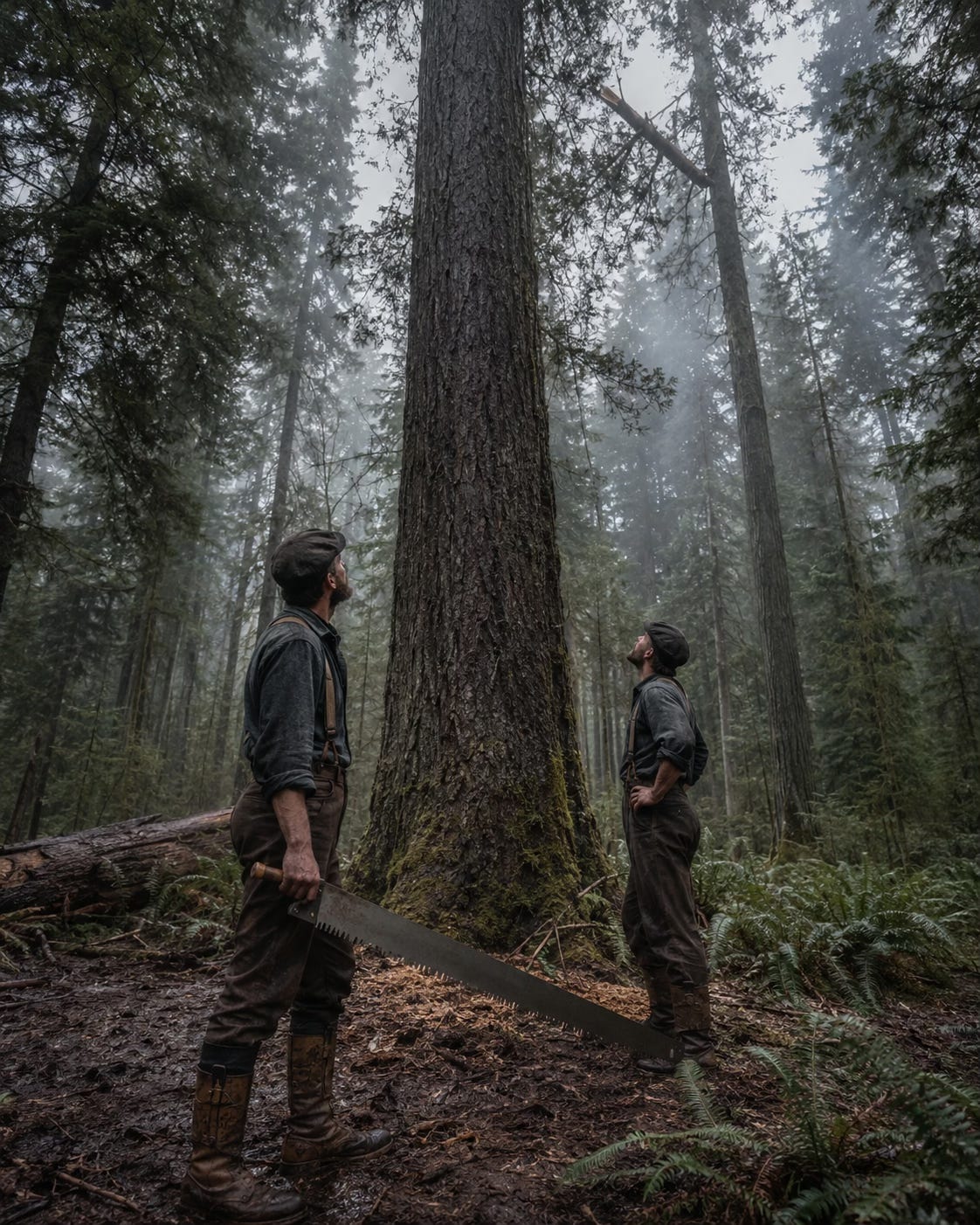
Welcome back to Words from the Woods — a Timberline series about the old terms, hard lessons, and dangerous wisdom hidden in the language of the logging camps. The old woods had their own language. Timberline: Lessons from the Mountain is a reader-supported publication. To receive new posts and support my work, consider becoming a free or paid subscriber. Some words named tools.Some words named weather.Some words named the thing overhead that had not fallen yet. Widow-maker was one of those. In a logging camp, danger did not only wait in the mud. Sometimes it waited above a man’s hat. A dead limb caught high in the branches.A broken top lodged where no one was looking.A splintered piece of tree held by bark, luck, or one last stubborn fiber.A thing already dead, still waiting to fall. That was a widow-maker. The name did not soften anything. It told the truth. A widow-maker was any dead limb, broken top, or loose piece of timber hanging above the work. It might sit quiet through rain, wind, shouted orders, and saw work. It might look settled. It might look harmless. But the woods were full of things that had not moved yet. A shift in wind.A jar from an ax.A tree beginning to lean.One wrong step beneath it. Then gravity made its claim. That is why Jack Mercer looks up before he lets a man look down. Before an ax is set.Before the saw bites wood.Before pride tells a greenhorn he is ready. Jack reads the canopy. Not because he fears the woods. Because he knows better than to trust silence. A widow-maker teaches one of the first hard lessons of timber: the danger above you may be quieter than the danger in front of you. Men notice noise. A cracking trunk.A shouted warning.A cable singing under load.The hard iron cough of the steam donkey. But a widow-maker does not need to announce itself. It waits. And in Timberline, waiting things matter. Grief can hang above a man.Debt can hang above a camp.A secret can lodge itself in the high branches of a story until one storm shakes it loose. By the time it falls, everyone below learns what was there all along. That is what I love about old woods language. The best terms do more than name a hazard. They teach a way of seeing. Widow-maker means look up. It means do not trust quiet just because it has not hurt you yet. It means the thing that has not fallen may still be the thing that changes the day. And in Jack Mercer’s camp, that lesson reaches further than timber. It reaches the greenhorn eager to prove himself.The faller too tired to make one more careful check.The brother carrying more than he says.The teacher who notices danger the men have stopped seeing. So when Jack says, “Widow-maker,” he is not only naming a dead limb. He is naming consequence. He is naming attention. He is naming the mercy of seeing danger before it drops. The old woods had a language. The men who lived learned to look up. Please follow our next episode of ‘Words of the Woods’ below: If Timberline has given you a good seat by the fire, would you mind helping another reader find the trail? Share this publication with someone who loves historical fiction, old woods, faithful friendships, stubborn hope, and stories where the Mountain keeps count. A good fire carries farther when someone helps the smoke rise. Timberline: Lessons from the Mountain is a reader-supported publication. To receive new posts and support my work, consider becoming a free or paid subscriber. Get full access to Timberline: Lessons by the Campfire at www.timberlinecampfire.com/subscribe
Embed this episode
Ready to play
Timberline Terms
No transcript for this episode yet
Similar Episodes
No similar episodes found.
Similar Podcasts
No similar podcasts found.