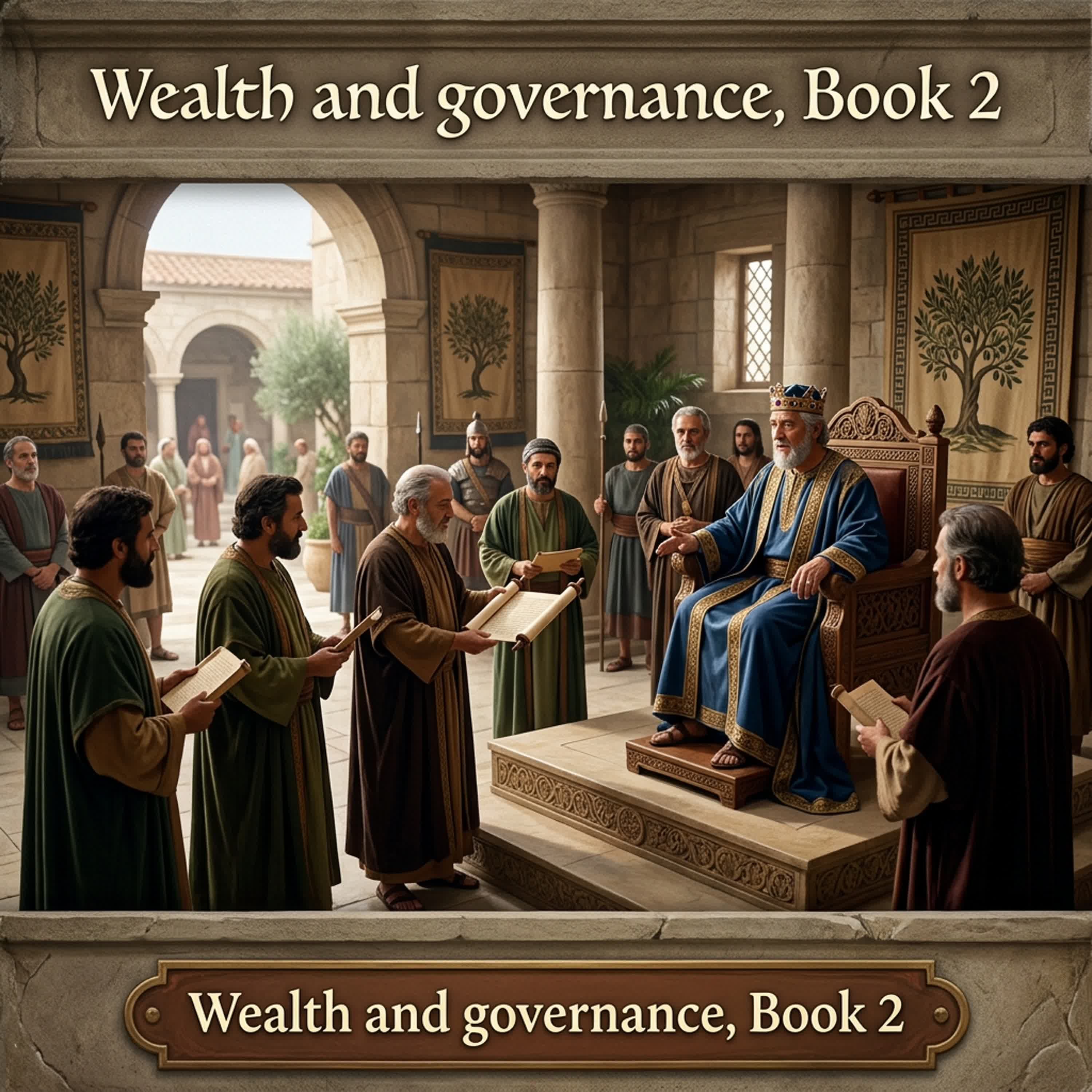
Tirukkural - 2 - Book 2
from Wisdom for the Present: Eastern Wisdom Literature Hosted by Kanu Emeruwa
What if an ancient text, rather than a Shakespearean drama, held the ultimate guide to surviving the modern corporate jungle? While we often expect ancient wisdom to offer an escape from reality through fasting, caves, and severe self-discipline, part two of the ancient Tamil classic, the Tirukkural (specifically the book known as Porul or "Wealth/Polity"), plunges us waste-deep into the mud of the real world. Written by the ancient sage Thiruvalluvar not for hermits but for sovereigns, ministers, and everyday citizens, this fiercely observant and pragmatic manual outlines the brutal mechanics of power, money, and survival that remain completely unchanged in the 21st century. At the heart of the text is a balanced ecosystem of power, structured around the "six pillars" of a leader's resources: an army, people, wealth, ministers, friends, and a fortress. In modern terms, this translates directly to your workforce, customer base, capital, trusted advisors, strategic alliances, and market moat. But holding these resources carries a heavy moral weight, represented by the conflict between the "right scepter" of justice and the "cruel scepter" of tyranny. Thiruvalluvar pulls no punches, comparing an unjust leader who extracts resources unfairly through bad policy to a highway robber holding a weapon and shouting "give". How does a leader avoid becoming "a thug with better branding"? By resisting the insulating effects of power, which neurological studies show can actively diminish empathy. The Tirukkural requires leaders to welcome bitter feedback and remain "easy of access" to break their cognitive bubbles. Furthermore, it teaches a brilliant strategy for energy conservation in a crowded world: "stucco white" silence. When standing before the "dull" or toxic, we must conserve our intellectual "ambrosia" rather than spilling it in the "sewer" of closed minds, utilizing strategic silence to protect our most valuable ideas. Success is never just about raw capability; it is a calculation of environmental alignment. The text warns of the chaos that ensues when we ignore our terrain, using vivid natural metaphors: a crow can conquer a superior owl in broad daylight, and a fearsome crocodile becomes a slow, vulnerable lizard the moment it leaves its deep water. If you fight a political battle on hostile ground—such as engaging in a highly emotional debate in a social media comment section designed for outrage—you will be torn apart. Similarly, procrastination, sloth, and sleep are exposed as an insidious "pleasure boat" that feels comfortable in the moment but quietly sails us to the shores of ruin. To reclaim our agency, we must audit our human connections and our economic systems. The Tirukkural warns of the "anvil" of false friends who hold us in place for the hammer of circumstance to crush us, and the "snake in the shed" of hidden, internal hostility. This demand for reality-testing culminates in a blistering defense of the dignity of labor, positioning the farmer as the "lynchpin of the world". By contrasting the absolute tranquility of honest work with the soul-crushing anxiety of systemic poverty, Thiruvalluvar leaves us with a profound, final challenge: true wealth is measured not by hoarded coins, but by our active commitment to the dignity of other human beings. In This Episode * The Six Pillars of Leadership: Discover how Thiruvalluvar’s ancient framework of resource management maps directly onto modern corporate structures. * The "Right Scepter" vs. Tyranny: Why ethical governance is a survival necessity, and why unjust extraction is just "robbery with better branding". * The Importance of Bitter Words: How welcoming constructive criticism and 360-degree feedback shatters the empathy-diminishing bubble of high authority. * Stucco White Discretion: The art of practicing strategic silence to protect your most valuable insights ("ambrosia") from toxic or closed-minded environments. * Mastery of Terrain and Timing: Why raw capability fails when you fight on the wrong ground, illustrated through the crocodile and heron metaphors. * The Illusion of the "Pleasure Boat": How procrastination, sloth, and sleep act as comfortable vessels quietly carrying you toward destruction. * The Dignity of the Lynchpin: Why true societal value is anchored in honest labor, and why systemic inequality represents a catastrophic moral failure of the collective "kingdom". Practical Reflection Who in your life or organization is empowered to tell you the bitter truth when you are wrong, or is your "kingdom" built on rotten pillars of sycophancy? Are you wasting your "ambrosia" in the "sewers" of online comments or toxic boardrooms, or are you conserving your energy by acting as "stucco white" mortar until you are among the bright? If you experienced ruin tomorrow, who in your life would reflexively reach out to save you like a hand catching a slipping garment, and who is simply acting as a silent, supportive "anvil"? Suggested Substack Excerpt A deep dive into the Tirukkural, a 2,000-year-old Tamil classic on wealth and power that shatters modern illusions about ancient wisdom. Discover why true leadership requires strategic silence, bitter feedback, and a ruthless commitment to human dignity. AI Disclosure This episode was created using Google NotebookLM Audio Overview, based on human-curated source material, structured guidance, and editorial review. AI is used as a tool for clarity and delivery, not as a replacement for thoughtful study or engagement with the original texts. Copyright © 2026 Wisdom for the Present / Kamashcu Production Studios. All rights reserved. This is a public episode. If you would like to discuss this with other subscribers or get access to bonus episodes, visit wisdomforthepresent.substack.com
Embed this episode
No transcript yet.