
EPISODE · Apr 26, 2026 · 14 MIN
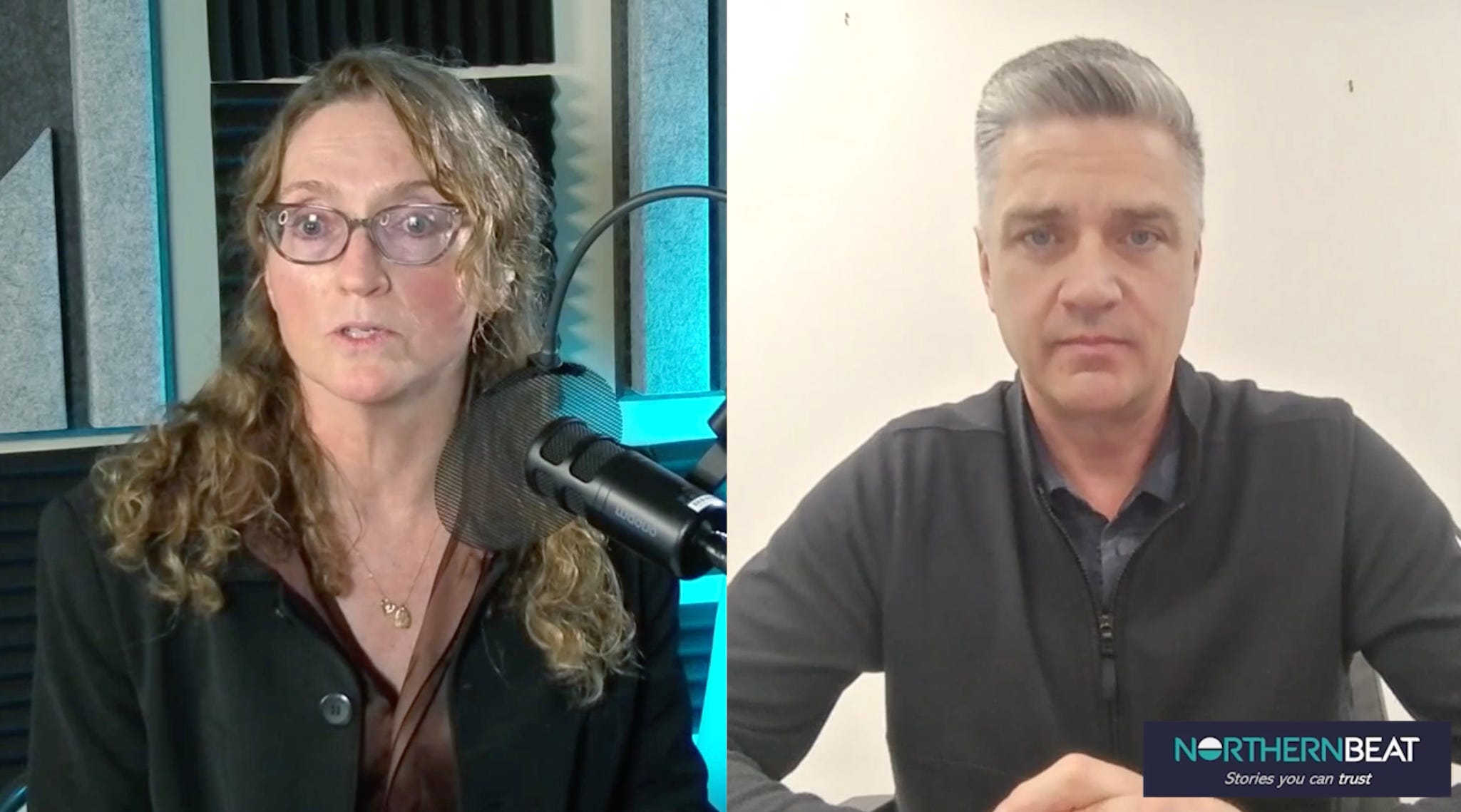
Todd Stone: 'We need some leadership'
from Northern Beat News Podcast · host Fran Yanor
Listen to the audio highlight reel (above) or scroll to the bottom to watch the full podcastTodd Stone is speaking for an embattled industry.The CEO and president of the Association of Mineral Exploration joined our podcast to share how his members are faring under BC Premier David Eby’s handling of the Declaration on the Rights of Indigenous Peoples Act (DRIPA).In a couple of words: not good.Despite Prime Minister Mark Carney and Premier Eby identifying critical mineral development as a key priority, BC’s mineral prospectors report permitting processes mired in delays, Indigenous consultations without a clear beginning or end, project requirements that keep expanding, with no one apparently in charge.Prospectors, or junior mining companies, are the ones who spend months and sometimes years searching the hills and valleys for gold, silver, copper and more. They are often only a one or two-person, self-financed operation. They have high hopes and shallow pockets. Without them, major deposits would never get found, let alone developed.Podcast excerpt: ‘Everyone’s best interest’In BC, prospectors’ anecdotes reveal permitting processes mired in indecision and confusion, largely stemming from how the Eby government is interpreting two recent court cases and implementing DRIPA.The first court ruling in 2023 stated Crown breached its duty under Section 35 of the constitution by not consulting with First Nations at the time a claim was staked. Since implementing the new consultation framework a year ago, 85 per cent of claims were not completed within the government’s promised maximum of 120 days. Previously, anyone could instantaneously stake a claim on Crown land as long as the area hadn’t already been claimed. In the second case, the 2025 Gitxaala decision in the BC Court of Appeal ruled that DRIPA, which basically channels the United Nations Declaration on the Rights of Indigenous Peoples (UNDRIP) into BC law, is not just an inspirational framework, but an enforceable law.“This would make British Columbia the only jurisdiction in the entire world that has ceded authority from the Crown and the elected representatives of the BC legislature to a set of principles from the United Nations,” says Stone.[Upgrade to paid]The Appeal Court did as instructedThe court basically did as David Eby instructed when he was attorney general, since he introduced DRIPA in 2019 and the Interpretation Act in 2021. The latter directs “every Act and regulation must be construed as being consistent with [DRIPA].”“This was never, ever, ever the intention of the DRIPA legislation. It certainly was not sold to British Columbians on that basis,” says Stone, who was a BC Liberal MLA when legislators unanimously passed DRIPA.“What this decision therefore opens the province up to is a massive amount of potential litigation from First Nations on almost any law or any regulation in the province of British Columbia,” says Stone. “They [can] bring forward a case and say, ‘Well, the Appeals Court of British Columbia said that this particular law must be in alignment with UNDRIP. It’s not. We would like a ruling.’”The Premier denounced the Gitxaala decision, saying the court was “confused” and had misinterpreted his one-line instruction in the Interpretation Act. He later defended his plan to amend DRIPA, saying the ruling had created “significant legal liabilities” for the province. He’s since publicly brainstormed multiple fixes to the Gitxaala decision, including suspending DRIPA provisions for three years. Then last week, he abandoned amending the law at all, following threats by Indigenous chiefs of mass protests and major project blockades if so much as a word was altered in DRIPA.“He has changed his mind a number of times as he’s gone through this process to the point where it almost feels like whiplash and no one really knows what the road map ahead looks like,” says Stone.Confusion among government decision-makersIn the midst of the Premier’s successive positions on the DRIPA amendments, federal government Indigenous rights agreements, BC land agreements and trilateral treaties have continued adopting UNDRIP principles as the “minimum standards” and the “authoritative source” for implementing Aboriginal rights.Just days before Eby abandoned his power struggle with Indigenous leaders to amend DRIPA, he said provisions needed to be paused to provide clarity to statutory decision-makers trying to interpret how to apply DRIPA and UNDRIP in areas such as permitting and regulations.“DRIPA was never intended to be driven deep, deep, deep, deep down into the regulatory requirements and processes that involve mineral exploration… permits that now take months and months and months and months to be approved,” Stone says.UNDRIP not compatible with Canadian lawAdding to the mounting perplexity in the permitting process, are the provisions in UNDRIP that are incompatible with Canadian constitutional law.One UNDRIP provision recognizes all territory claimed by Indigenous groups must be treated as territory owned, without any need for legal proof, as required under Section 35 and Canadian constitutional law. As owners of whatever territory they claim, Indigenous communities then also have the inherent right to decide how that land is used. Another section of UNDRIP stipulates this right must be free, prior, informed consent over land use, aka, a veto.From this perspective, nearly all of BC is “owned” by First Nations. UNDRIP also has no provision for overlapping claims, and in BC, there are many.All of which has created a regulatory nightmare for statutory decision-makers.“We shouldn’t leave it people to guess because when you do, most people are going to not want to get it wrong,” Stone says. “They’re not going to want to make a mistake. They’re not going to want to take a risk. And so what are they going to do as a default? They’re going to default to more consent, deeper consent, more frequent consent.”All this and more in my conversation with Todd Stone.If you work in a business that requires engaging in government regulatory or permitting processes, reach out, we’d appreciate hearing about your experience.Thanks for listening and supporting independent journalism.—FranWatch the full podcast:Podcast producers: Rob Shaw and Zach ProulxFeedback: [email protected] more BC politics: NorthernBeat.ca This is a public episode. If you'd like to discuss this with other subscribers or get access to bonus episodes, visit northernbeatnews.substack.com/subscribe
Embed this episode
NOW PLAYING
Todd Stone: 'We need some leadership'
No transcript for this episode yet
Similar Episodes
No similar episodes found.
Similar Podcasts
No similar podcasts found.