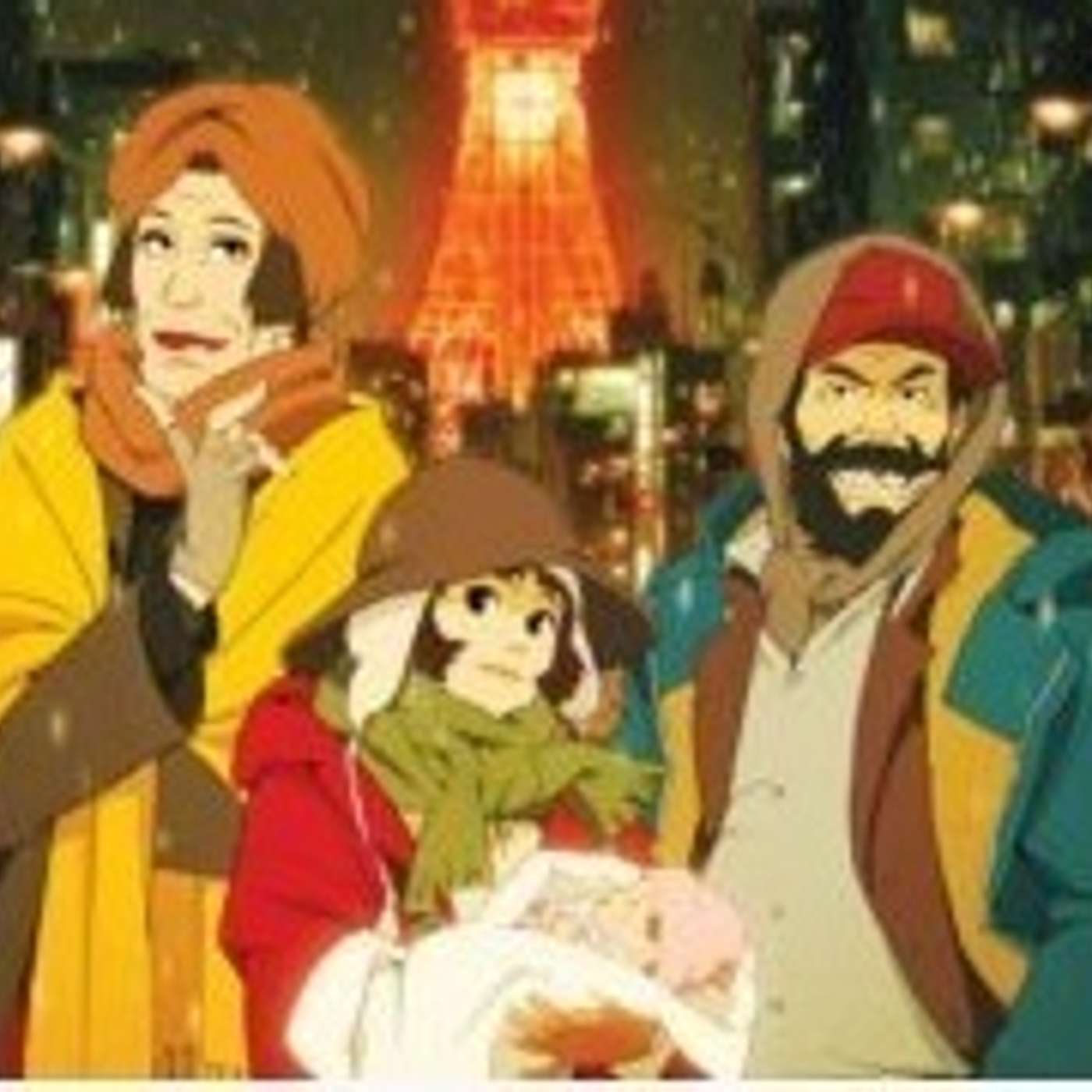
Tokyo Godfathers
from Philosophy at the Movies Hosted by Stockdale Center - Shaun Baker, PhD.
What does this Japanese animated film, set during the Christmas season, tell us about family? How does the character arc of the ersatz family of homeless individuals who have found an abandoned infant illustrate the sometimes highly frictional dynamics of family interaction, and the respect and love that families also instantiate? What message about family and society is contained in the story of their discovery and the search for the parents of the child? How does each character’s reunification with their own biological families figure into the message? How does the film capitalize on setting the story in the Christmas season in order to lead the viewer into meditation on the distinction between merely meaningful coincidence and deliberate arrangement of meaningful events? How can you use the film to illustrate the difference between two concepts in information theory; so called ‘Shannon information’ and ‘specified complexity’? How does the film make use of theistic implications in the latter, by setting things in the Christmas season? How does the film work with the conception of redemption for flawed dysfunctional humanity by way of moral service to others? How does it raise questions about the power of extended family and community?
Embed this episode
No transcript yet.