
EPISODE · Apr 2, 2026 · 34 MIN
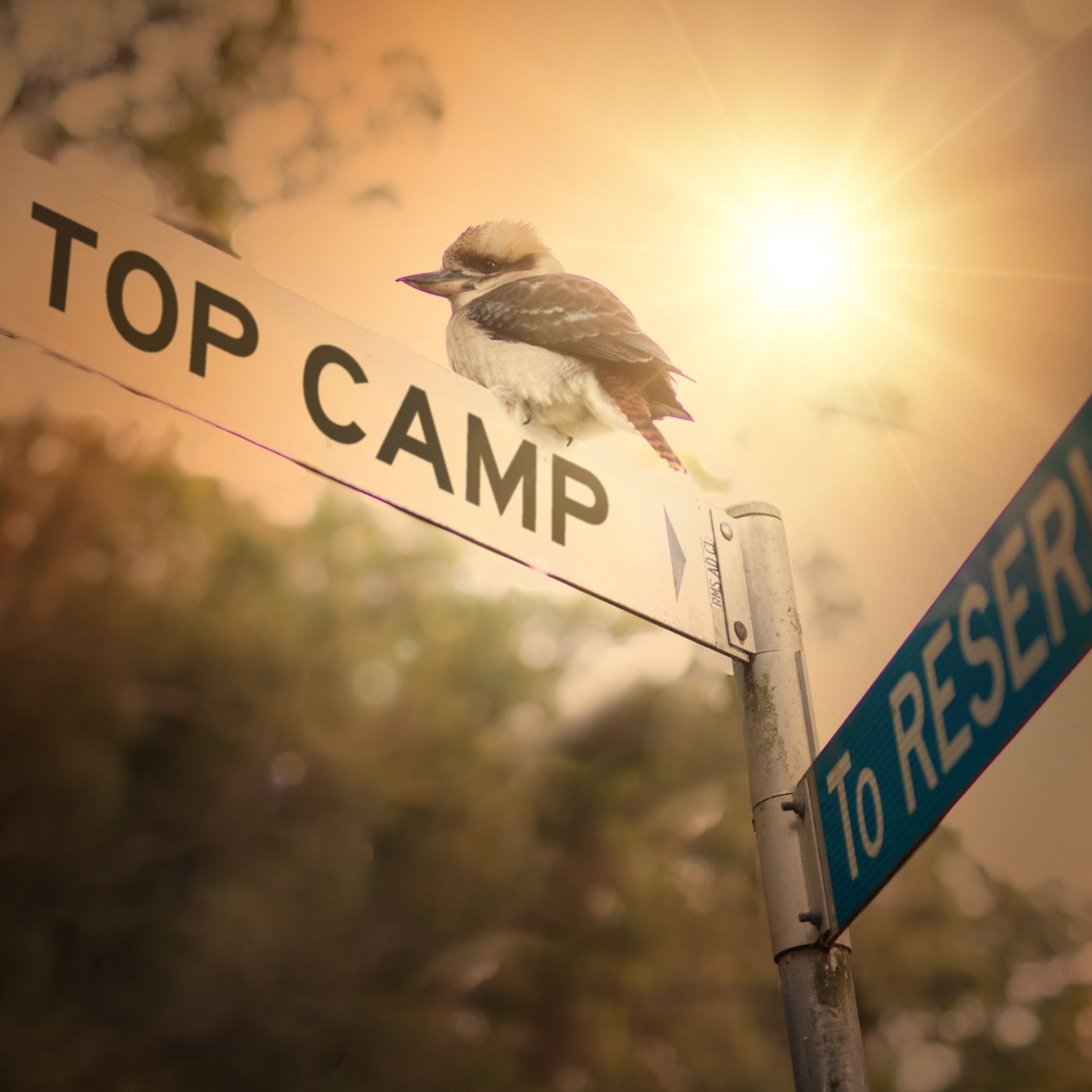
Top Camp: Wirilla Part 3
from A Good Mind To · host Coequal
In Part 3 Top Camp we follow Matthew's river of story into lived memory, tracing segregation, survival and the struggle for rights.This podcast has been informed by the historical work of Aunty Noelene Briggs, and particularly her books Winanga-li and Burrul Wallaay. To find out more about Aunty Noelene's books click hereDetailed Music Credits"Dramatic Violin and Didgeridoo" by Studio FLG, "Another One" by Mirko Sosai, "Omen" by Richard Johnson, "Tranquility Base" by Chill Factor, "Quirky Play" by Marco Pesci, "Porch Blues" by Kevin MacLeod, "Running South" by Score Wizards, "Hurt Track 13" by Philip Okerstrom, Damian Mason and Symon Aytonn, "Slow Burn" by Kevin MacLeod, "Didgeridoo Night" by All Stars.This podcast was made with funding from Create NSW.A podcast from Matthew Priestley supported by Third Space Ventures and Coequal.To contact Coequal and find out more, check out our Patreon page, click hereContent Description: This episode contains references to forced child removal, segregation, racism, and violence against Aboriginal peopleSetting: Moves between river Country (Mehi and Gwydir), Dreaming story, lived memory of segregation in Moree, and the emergence of Stanley Village.🪶 STRUCTURE AND CONTENT BREAKDOWNOpening: Listening, Dreaming and Becoming Speaker: Matthew PriestleyMatthew opens with a reflection on listening (Gunnai Binna) — urging people to be still, to hear beyond themselves.Frames life as “magic” and existence as part of Dreaming — not past, but ongoing.Positions Stanley Village as a place that holds beginning, middle and end — a site of layered meaning.🌀 Themes introduced:Listening as knowledge · Dreaming as present · Story as lived reality · Place as continuum.Storytelling as Continuation of Culture Speaker: Matthew PriestleyReflects on becoming a storyteller through guidance of Elders.Frames storytelling as a modern continuation of song and dance — a vehicle for Dreaming in contemporary form.🎙️ Themes:Cultural continuity · Responsibility of storytelling · Old knowledge in new forms.At the Rivers: Mehi and Gwydir Speakers: Dante, MatthewMatthew and Kim travel to where the Mehi and Gwydir rivers meet.Matthew describes the density of stories connected to the Mehi — too many to hold at once.🌊 Themes:River as archive · Story embedded in landscape · Overlapping knowledge systems.Dreaming Story: The Dinewan and the Mehi River Narrator: DanteA drought forces animals to uncover how Dinewan (the emu) controls water.A small bird follows and discovers the hidden rock controlling water flow.When the bird attempts to replicate it, the water cannot be contained — forming the Mehi River.🌌 Themes:Creation through imbalance · Knowledge and consequence · Animal agency · Water as life force.Matthew: Water, Identity and Connection Speaker: MatthewDescribes being inseparable from the river — water as bloodline, identity, and living connection.Rejects ownership in favour of belonging within the system.💧 Themes:Relational identity · Water as kin · Embodied connection to Country.Water, Purity and Culture Speaker: MatthewExtends the metaphor: humans are like water — connected but often forgetting.Names Aboriginal culture as the “purest” surviving system of knowledge.✨ Themes:Purity as continuity · Cultural endurance · Philosophical ecology.The Great Artesian Basin and Hidden Systems Speakers: HostsExplains the underground water system sustaining inland Australia.Highlights how Gomeroi people relied on natural springs long before colonial extraction.Settler use transforms water into an economic resource.🌏 Themes:Hidden infrastructure of life · Indigenous knowledge vs extraction · Environmental change.Segregation at the Moree Baths Speakers: HostsAboriginal people were banned from accessing the artesian baths.Reinforces the contradiction: exclusion from resources on their own Country.🏚️ Themes:Segregation · Denial of access · Everyday racism.Bottom Camp Becomes a Reserve Speakers: HostsBottom Camp formalised as a reserve in the late 1920s.Stark inequality between white staff housing and Aboriginal living conditions.🏘️ Themes:Institutional inequality · Spatial segregation · Infrastructure as control.Stanley Family Movement and Fear of Removal Speakers: HostsAlexander and Rachel Stanley move to the mission.Some families follow; others remain in camps to avoid child removal.🪶 Themes:Family decision-making under threat · Protection vs safety · Survival strategies.Assimilation Policies Intensify Speakers: HostsShift from “protection” to assimilation in the 1930s.Continued control through new language and policy frameworks.⚖️ Themes:Policy evolution masking continuity · Cultural erasure · State control.William Stanley and “Little Boy Lost” Speakers: HostsWilliam Stanley works as a tracker in a high-profile search.Popular retellings erase Aboriginal contribution.Juxtaposed with simultaneous forced removals of Aboriginal children.🪞 Themes:Erasure of contribution · Selective national memory · Parallel injustices.Life Under Segregation Speaker: Medina, Valmay, Nab, Roy, Matthew and HostsShares her story: removal from family, growing up on the mission.Describes surveillance, restrictions, and strategies to avoid welfare officers.Recounts the use of passes/dog tags to enter town.Separate hospitals, cinemas, cemeteries.Social rules enforcing inferiority and control.Personal memory of being refused entry as a child.Long-term emotional impact — never returning.🚧 Themes:Stolen Generations · Surveillance · Everyday resistance · Lived testimony. Total system segregation · Social conditioning · Structural racism · Intergenerational trauma · Personal impact of systemic racism · Memory as evidence. Freedom Ride – 1965 Speakers: HostsStudent activists challenge segregation in Moree.Initial success overturned, followed by protest, violence, and eventual change.🔥 Themes:Activism · Public confrontation of racism · Youth-led change.1967 Referendum and Housing Change Speakers: Hosts and Roy, Median and ValmayReferendum marks a national shift in recognition.New housing established — Stanley Village.Describes moving into Stanley Village as transformative — running water, electricity, dignity.A rare moment of relief and hope.🏠 Themes:Legal change vs lived reality · Symbolic vs material progress. Improved living conditions · Joy amid struggle · Community rebuilding.Matthew: Story Lives in the Body Speaker: MatthewExplains that trauma and story are held physically.Healing requires moving through pain to reach deeper cultural knowledge.🌀 Themes:Embodied memory · Healing through truth · Story as process.Ongoing Racism and Violence Speakers: HostsPost-reform racism persists: threats, violence, intimidation.⚠️ Themes:Continuity of racism · Limits of reform · Community resilience.Cheeky McIntosh Shooting and Aftermath Speakers: Roy and HostsKilling of Ronald “Cheeky” McIntosh sparks community unrest.Media and police responses reinforce systemic bias.🕯️ Themes:Police violence · Grief and anger · Narrative control.Closing Reflection Speaker: MatthewAcknowledges anger as a sacred force.Points toward another story still to be told.💬 Themes:Hope · Narrative choice · Continuation.Outro and Forward Look Speakers: Khalani, DanteReflect on how recent this history is.Preview Episode 4: School.
Embed this episode
What this episode covers
In Part 3 Top Camp we follow Matthew's river of story into lived memory, tracing segregation, survival and the struggle for rights. This podcast has been informed by the historical work of Aunty Noelene Briggs, and particularly her books Winanga-li and Burrul Wallaay. To find out more about Aunty Noelene's books click here Detailed Music Credits "Dramatic Violin and Didgeridoo" by Studio FLG, "Another One" by Mirko Sosai, "Omen" by Richard Johnson, "Tranquility Base" by Chill Factor, "Quirky Play" by Marco Pesci, "Porch Blues" by Kevin MacLeod, "Running South" by Score Wizards, "Hurt Track 13" by Philip Okerstrom, Damian Mason and Symon Aytonn, "Slow Burn" by Kevin MacLeod, "Didgeridoo Night" by All Stars. This podcast was made with funding from Create NSW. A podcast from Matthew Priestley supported by Third Space Ventures and Coequal. To contact Coequal and find out more, check out our Patreon page, click here Content Description: This episode contains references to forced child removal, segregation, racism, and violence against Aboriginal people Setting: Moves between river Country (Mehi and Gwydir), Dreaming story, lived memory of segregation in Moree, and the emergence of Stanley Village. 🪶 STRUCTURE AND CONTENT BREAKDOWN Opening: Listening, Dreaming and Becoming Speaker: Matthew Priestley Matthew opens with a reflection on listening ( Gunnai Binna ) — urging people to be still, to hear beyond themselves. Frames life as “magic” and existence as part of Dreaming — not past, but ongoing. Positions Stanley Village as a place that holds beginning, middle and end — a site of layered meaning. 🌀 Themes introduced: Listening as knowledge · Dreaming as present · Story as lived reality · Place as continuum. Storytelling as Continuation of Culture Speaker: Matthew Priestley Reflects on becoming a storyteller through guidance of Elders. Frames storytelling as a modern continuation of song and dance — a vehicle for Dreaming in contemporary form. 🎙️ Themes: Cultural continuity · Responsibility of storytelling · Old knowledge in new forms. At the Rivers: Mehi and Gwydir Speakers: Dante, Matthew Matthew and Kim travel to where the Mehi and Gwydir rivers meet. Matthew describes the density of stories connected to the Mehi — too many to hold at once. 🌊 Themes: River as archive · Story embedded in landscape · Overlapping knowledge systems. Dreaming Story: The Dinewan and the Mehi River Narrator: Dante A drought forces animals to uncover how Dinewan (the emu) controls water. A small bird follows and discovers the hidden rock controlling water flow. When the bird attempts to replicate it, the water cannot be contained — forming the Mehi River. 🌌 Themes: Creation through imbalance · Knowledge and consequence · Animal agency · Water as life force. Matthew: Water, Identity and Connection Speaker: Matthew Describes being inseparable from the river — water as bloodline, identity, and living connection. Rejects ownership in favour of belonging within the system. 💧 Themes: Relational identity · Water as kin · Embodied connection to Country. Water, Purity and Culture Speaker: Matthew Extends the metaphor: humans are like water — connected but often forgetting. Names Aboriginal culture as the “purest” surviving system of knowledge. ✨ Themes: Purity...
NOW PLAYING
Top Camp: Wirilla Part 3
No transcript for this episode yet
Similar Episodes
No similar episodes found.
Similar Podcasts
No similar podcasts found.