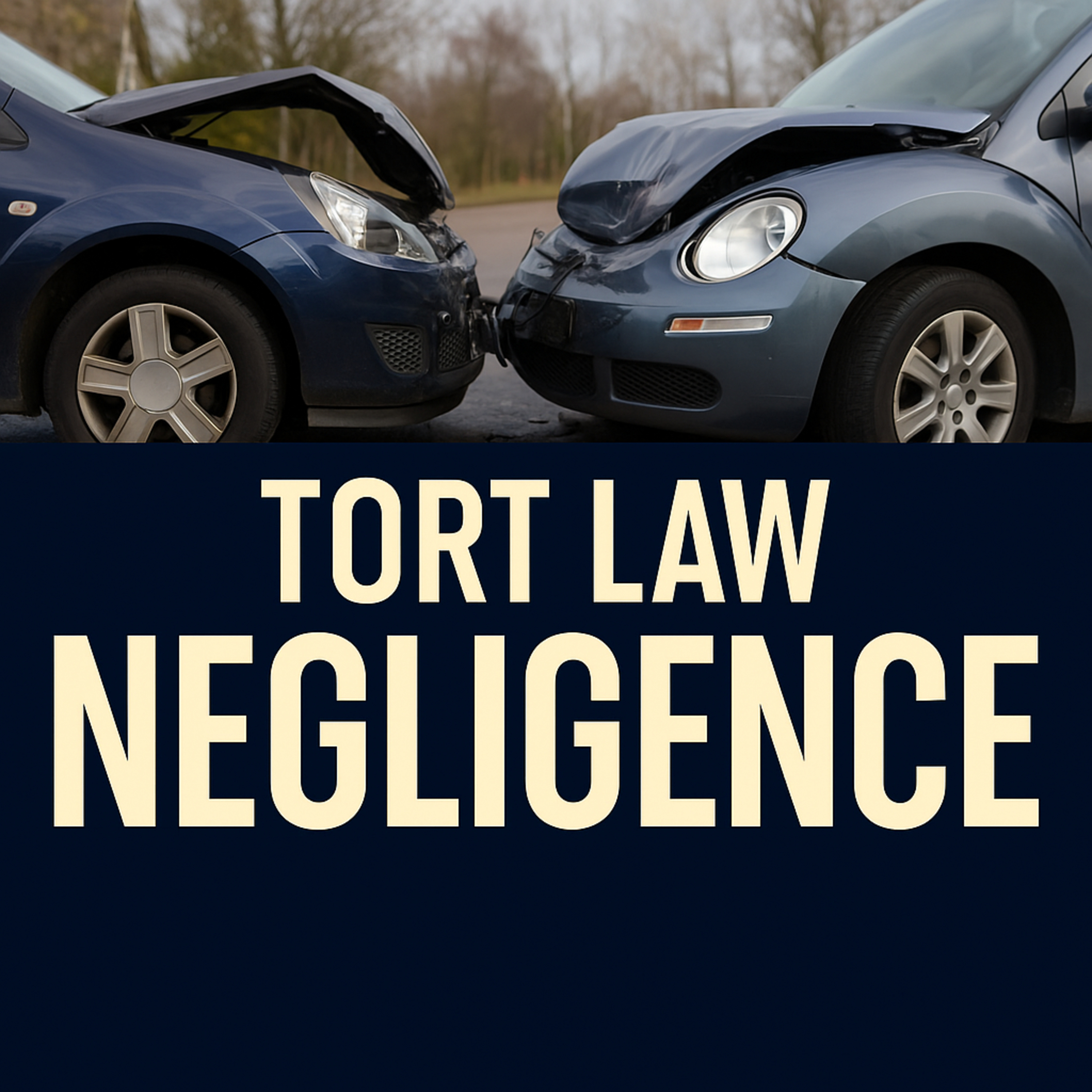
Tort Law (Part 3 of 7): Negligence episode artwork

EPISODE · Oct 8, 2025 · 41 MIN

Tort Law (Part 3 of 7): Negligence

from Law School · host The Law School of America

This conversation provides a comprehensive overview of the tort of negligence, focusing on its four essential pillars: duty of care, breach of duty, causation, and damages. The discussion delves into the nuances of each pillar, including the standards of care, the importance of foreseeability, and the various doctrines that assist in proving negligence. Additionally, it covers defenses against liability, such as contributory and comparative negligence, and the concept of assumption of risk. The conversation concludes with reflections on the balance between legal standards and human judgment in achieving justice.In the realm of civil law, negligence stands as a cornerstone, where carelessness meets legal accountability. Whether you're preparing for a torts exam or simply curious about legal frameworks, understanding the four pillars of negligence—duty, breach, causation, and damages—is essential.Duty: The Foundation of Responsibility The first pillar, duty, asks whether the defendant owed the plaintiff a legal obligation. This duty is often broad, requiring individuals to act as a reasonably prudent person would under similar circumstances. However, the standard can shift dramatically based on specific roles or relationships, such as those of professionals or landowners.Breach: Falling Short of Standards Once duty is established, the next question is whether the defendant breached that duty. This involves comparing the defendant's actions to those of a hypothetical "reasonably prudent person." The breach is determined by whether the defendant's conduct fell below this standard, often using tools like the Hand Formula to assess reasonableness.Causation: Linking Actions to Harm Causation connects the defendant's breach to the plaintiff's injury and is divided into two parts: actual cause and proximate cause. Actual cause, or "but-for" causation, asks if the injury would have occurred without the defendant's actions. Proximate cause limits liability to foreseeable consequences, ensuring the harm was a direct result of the breach.Damages: Quantifying Harm Finally, for a negligence claim to succeed, the plaintiff must have suffered legally recognized damages. These can be economic, such as medical expenses and lost wages, or non-economic, like pain and suffering. In some cases, punitive damages may be awarded to punish particularly egregious conduct.The four pillars of negligence provide a structured approach to understanding and analyzing legal accountability. By methodically examining duty, breach, causation, and damages, one can navigate even the most complex legal scenarios. As you delve deeper into the intricacies of negligence law, remember that these pillars are not just legal concepts but tools for achieving justice and accountability.Subscribe Now: Stay informed and deepen your understanding of legal principles by subscribing to our blog for more insights and analyses.TakeawaysNegligence is foundational in civil law.The four pillars of negligence are duty, breach, causation, and damages.Duty of care establishes legal obligations to prevent harm.Breach of duty is measured against the standard of a reasonably prudent person.Causation includes both actual and proximate cause.Damages must be legally recognized losses for a claim to succeed.Res ipsa loquitur allows for inferring negligence without direct evidence.Negligence per se simplifies proving breach when a statute is violated.Comparative negligence reduces damages based on the plaintiff's fault.Assumption of risk can bar recovery if the plaintiff knowingly accepted the risk.negligence, tort law, duty of care, breach of duty, causation, damages, res ipsa loquitur, negligence per se, defenses, assumption of risk

This conversation provides a comprehensive overview of the tort of negligence, focusing on its four essential pillars: duty of care, breach of duty, causation, and damages. The discussion delves into the nuances of each pillar, including the standards of care, the importance of foreseeability, and the various doctrines that assist in proving negligence. Additionally, it covers defenses against liability, such as contributory and comparative negligence, and the concept of assumption of risk. The conversation concludes with reflections on the balance between legal standards and human judgment in achieving justice.In the realm of civil law, negligence stands as a cornerstone, where carelessness meets legal accountability. Whether you're preparing for a torts exam or simply curious about legal frameworks, understanding the four pillars of negligence—duty, breach, causation, and damages—is essential.Duty: The Foundation of Responsibility The first pillar, duty, asks whether the defendant owed the plaintiff a legal obligation. This duty is often broad, requiring individuals to act as a reasonably prudent person would under similar circumstances. However, the standard can shift dramatically based on specific roles or relationships, such as those of professionals or landowners.Breach: Falling Short of Standards Once duty is established, the next question is whether the defendant breached that duty. This involves comparing the defendant's actions to those of a hypothetical "reasonably prudent person." The breach is determined by whether the defendant's conduct fell below this standard, often using tools like the Hand Formula to assess reasonableness.Causation: Linking Actions to Harm Causation connects the defendant's breach to the plaintiff's injury and is divided into two parts: actual cause and proximate cause. Actual cause, or "but-for" causation, asks if the injury would have occurred without the defendant's actions. Proximate cause limits liability to foreseeable consequences, ensuring the harm was a direct result of the breach.Damages: Quantifying Harm Finally, for a negligence claim to succeed, the plaintiff must have suffered legally recognized damages. These can be economic, such as medical expenses and lost wages, or non-economic, like pain and suffering. In some cases, punitive damages may be awarded to punish particularly egregious conduct.The four pillars of negligence provide a structured approach to understanding and analyzing legal accountability. By methodically examining duty, breach, causation, and damages, one can navigate even the most complex legal scenarios. As you delve deeper into the intricacies of negligence law, remember that these pillars are not just legal concepts but tools for achieving justice and accountability.Subscribe Now: Stay informed and deepen your understanding of legal principles by subscribing to our blog for more insights and analyses.TakeawaysNegligence is foundational in civil law.The four pillars of negligence are duty, breach, causation, and damages.Duty of care establishes legal obligations to prevent harm.Breach of duty is measured against the standard of a reasonably prudent person.Causation includes both actual and proximate cause.Damages must be legally recognized losses for a claim to succeed.Res ipsa loquitur allows for inferring negligence without direct evidence.Negligence per se simplifies proving breach when a statute is violated.Comparative negligence reduces damages based on the plaintiff's fault.Assumption of risk can bar recovery if the plaintiff knowingly accepted the risk.negligence, tort law, duty of care, breach of duty, causation, damages, res ipsa loquitur, negligence per se, defenses, assumption of risk

NOW PLAYING

Tort Law (Part 3 of 7): Negligence

0:00 41:53

No transcript for this episode yet

We transcribe on demand. Request one and we'll notify you when it's ready — usually under 10 minutes.

The Small Business Startup School – Business Notes | Financial Literacy | Retail Psychology – For Professionals & Entrepreneurs The Small Business Startup School Inc. Starting or buying a small business? While personal circumstances may vary, business patterns remain timeless. On The Small Business Startup School, we explore strategies, insights, and practical solutions to help entrepreneurs confidently navigate their journey.Hosted by Ola Williams—a retail entrepreneur, fintech founder, and financial coach with over two decades of experience—this podcast marries financial awareness and retail psychology with optimism to deliver actionable takeaways.Join us to learn, grow, and connect as we uncover the keys to business success.Let’s continue to learn together and be encouraged to keep on connecting! The 48 Laws of Power by Robert Greene (Full Audiobook) Robert Greene Amoral, cunning, ruthless, and instructive, this multi-million-copy New York Times bestseller is the definitive manual for anyone interested in gaining, observing, or defending against ultimate control – from the author of The Laws of Human Nature.In the book that People magazine proclaimed “beguiling” and “fascinating,” Robert Greene and Joost Elffers have distilled three thousand years of the history of power into 48 essential laws by drawing from the philosophies of Machiavelli, Sun Tzu, and Carl Von Clausewitz and also from the lives of figures ranging from Henry Kissinger to P.T. Barnum.Some laws teach the need for prudence (“Law 1: Never Outshine the Master”), others teach the value of confidence (“Law 28: Enter Action with Boldness”), and many recommend absolute self-preservation (“Law 15: Crush Your Enemy Totally”). Every law, though, has one thing in common: an interest in t Guardians Of Innocence Guardians Of Innocence Guardians of Innocence is a powerful and informative podcast designed to equip parents, teachers, and communities with the knowledge and tools needed to protect children from the growing threat of trafficking. Each episode dives deep into the tactics traffickers use to target vulnerable children—both online and in real life—and provides actionable advice on how to recognize the warning signs.Through expert interviews with cyber safety professionals, law enforcement, and survivors, we uncover the latest grooming methods, share real-world stories, and empower listeners to become vigilant guardians of innocence in their own families and communities.Guardians of Innocence is more than just a podcast; it’s a call to action to safeguard our children, raise awareness, and foster a united front against trafficking.Listen. Learn. Protect. The Laura Ingraham Show Laura Ingraham The most-watched woman in the history of cable news brings her no-holds-barred political and cultural commentary to podcasting with The Laura Ingraham Show. A bestselling author, breast cancer survivor, and mother of three internationally adopted children, Laura was the most listened-to woman in talk radio before launching her own podcast. A trailblazer across media platforms, she brings a unique perspective to this twice-weekly show, drawing on her experience as a white-collar criminal defense litigator and a Supreme Court law clerk.New episodes drop twice a week—delivering the clarity, courage, and common sense America needs.

Frequently Asked Questions

How long is this episode of Law School?

This episode is 41 minutes long.

When was this Law School episode published?

This episode was published on October 8, 2025.

What is this episode about?

This conversation provides a comprehensive overview of the tort of negligence, focusing on its four essential pillars: duty of care, breach of duty, causation, and damages. The discussion delves into the nuances of each pillar, including the...

Can I download this Law School episode?

Yes, you can download this episode by clicking the download button on the episode player, or subscribe to the podcast in your preferred podcast app for automatic downloads.
URL copied to clipboard!