
EPISODE · Feb 11, 2026 · 15 MIN
Toyota's Solid-State Evolution: 1,000 Kilometers of Electric Innovation
from eMotors: Electric Revolution · host eMotors Electric Revolution
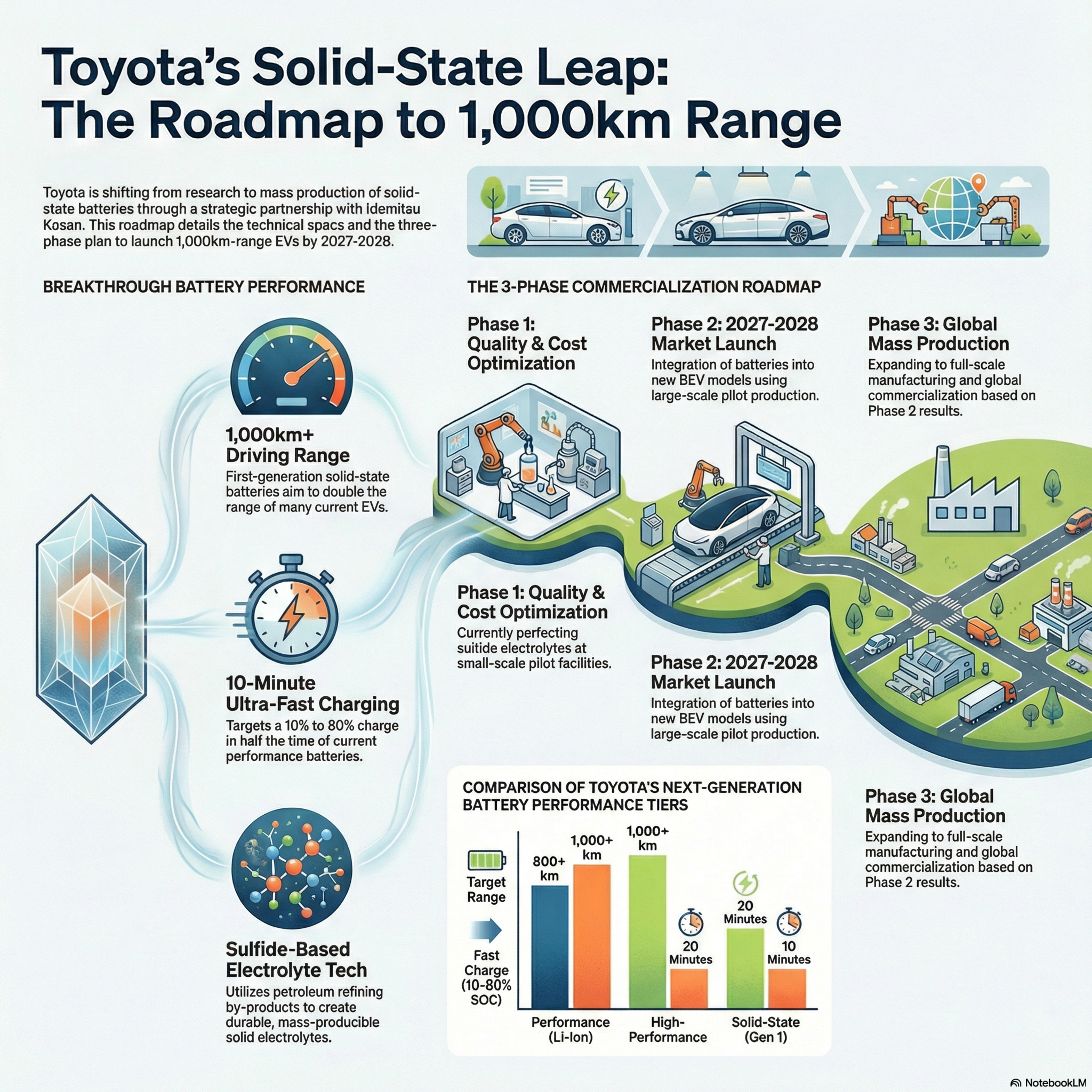
Solid-state batteries are poised to redefine the global electric vehicle (EV) market by addressing the primary barriers to widespread adoption: range anxiety, charging times, and vehicle design constraints. Often referred to as the "holy grail" of the industry, this technology represents a fundamental shift from current liquid lithium-ion systems to a more stable, efficient, and high-performance alternative.Solid-state technology could eliminate the logistical hurdles of long-distance EV travel. Toyota's first-generation solid-state batteries are targeting a cruising range of 1,000 km (approx. 621 miles), with a second generation already in development aiming for 1,200 km.Furthermore, these batteries redefine the "refueling" experience:Ultra-Fast Charging: They are expected to charge from 10% to 80% in 10 minutes or less.Stability: The solid electrolyte allows for a greater tolerance of high voltages and temperatures, making them safer and more reliable under high-performance conditions.Durability: Previous challenges with battery life—specifically cracks forming in the electrolyte during charging—have reportedly been overcome through the development of flexible, highly adhesive sulfide-based solid electrolytes.The physical characteristics of solid-state batteries allow for radical changes in how EVs are built:Compact Form Factor: These batteries deliver power in a smaller form, allowing for more efficient use of vehicle space.Aerodynamic Optimization: Toyota is focusing on reducing battery height (from the current 150mm down to 120mm or even 100mm for sports models). Thinner batteries allow for a lower vehicle profile, which reduces the drag coefficient and further extends driving range.Versatility: The stable performance under high stress makes these batteries suitable for everything from high-performance sports cars to heavy-duty commercial vehicles that require frequent quick charging.The transition to solid-state batteries could also redefine the relationship between the energy and automotive sectors. A strategic partnership between Toyota and the oil refiner Idemitsu Kosan aims to produce lithium sulfide—a key intermediate material for electrolytes—by utilizing by-products from the petroleum refining process. This turns what was once considered "waste" into a critical component for clean energy, potentially lowering costs and securing the supply chain.The global market is expected to see the first commercial applications of this technology around 2027-2028. While other manufacturers like Mercedes-Benz and MG are also exploring solid-state and semi-solid variants, the large-scale commitment to production facilities (such as Idemitsu's pilot plant) suggests a shift from theoretical research to genuine production readiness.
Embed this episode
NOW PLAYING
Toyota's Solid-State Evolution: 1,000 Kilometers of Electric Innovation
No transcript for this episode yet
Similar Episodes
No similar episodes found.
Similar Podcasts
No similar podcasts found.