
EPISODE · Aug 12, 2025 · 11 MIN
Tracing a Prehistoric Plague Through the Pastures of the Eurasian Steppe
from Evolutionary Insights by Anthropology.net · host Anthropology.net
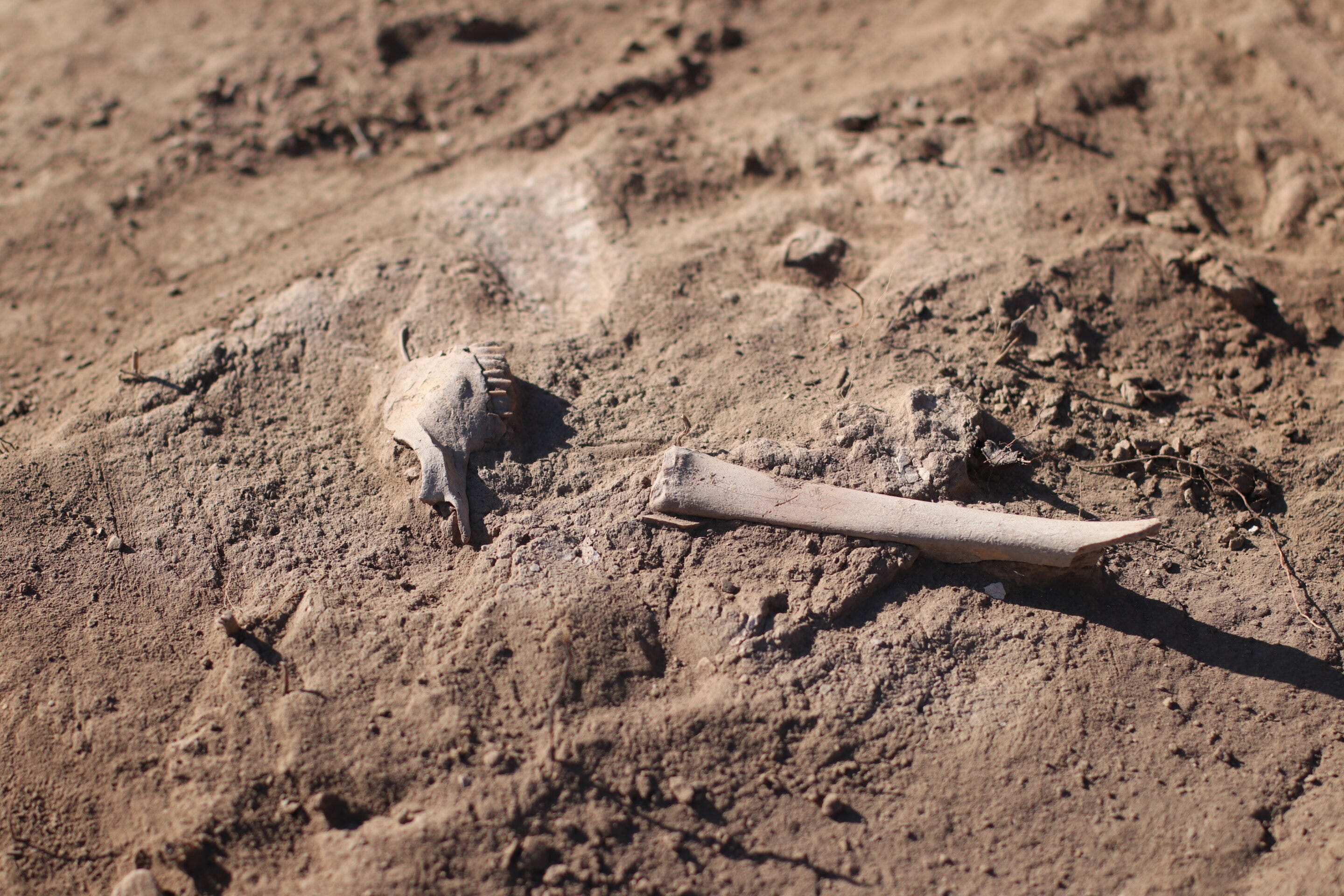
Around 5,000 years ago, a mysterious form of plague spread across Eurasia. This “Late Neolithic Bronze Age” (LNBA) lineage of Yersinia pestis infected human communities for nearly 3,000 years before disappearing without a trace. Unlike the later medieval plague that killed millions, the LNBA strain lacked the genetic machinery for flea-borne transmission, leaving researchers puzzled about how it spread.A recent study published in Cell offers an unexpected lead. For the first time, scientists have identified the LNBA plague in an animal—a 4,000-year-old domesticated sheep from the pastoralist site of Arkaim in the Western Eurasian Steppe."We have over 200 Y. pestis genomes from ancient humans, but humans aren’t the natural host," said Ian Light-Maka, the study’s lead author. "Finding it in livestock changes how we think about the ecology of this ancient disease."Sheep in the crosshairs of plague transmissionArkaim belonged to the Sintashta-Petrovka cultural complex, known for its innovations in horse and livestock management. These pastoralists did not store large quantities of grain that could attract rats, making the classic rat–flea–human transmission model unlikely. The new finding raises the possibility that domesticated animals played a central role in sustaining and transmitting the plague.When researchers compared the sheep’s Y. pestis genome to others from the same period, they found it was nearly identical to one recovered from a human burial site nearby."If we didn’t know it was from a sheep, everyone would have assumed it came from a human," said Christina Warinner of Harvard University. "This suggests livestock and people were sharing the same pathogen population."In regions where plague persists today, sheep can contract the disease from infected wild rodents. Handling or consuming these sheep can then transmit the infection to humans. The Bronze Age steppe, with its expansive herding practices and close contact between humans, animals, and wildlife, may have created similar conditions.The missing reservoirThe researchers suspect both human and sheep infections were spillovers from a still-unidentified wild reservoir. Genetic evidence shows the LNBA lineage remained remarkably uniform across nearly 6,000 kilometers—very different from the more diverse plague strains seen today."The ancient lineage evolved under elevated pressure," said Felix M. Key of the Max Planck Institute for Infection Biology. "This is in contrast to modern Y. pestis. These infections were likely isolated spillovers from a reservoir we still haven’t found."Finding that reservoir remains a challenge. Sheep and humans were probably not the main drivers of the plague’s vast spread, given how quickly nearly identical strains appear in far-flung locations.Bones in storage, answers in waitingThe researchers believe the search for answers may lie in archaeological storerooms. Excavations often yield thousands of animal bones, most of which have never been tested for ancient pathogens."There will be more and more interest in analyzing these collections," Key said. "They give us insights that no human sample can."If more infected animal remains are found, it could reshape our understanding of how pathogens moved through ancient ecosystems—offering a glimpse into the web of relationships between humans, their animals, and the microbes that traveled alongside them.Related research:* Rascovan, N., Sjögren, K. G., Kristiansen, K., Nielsen, R., Willerslev, E., Desnues, C., & Rasmussen, S. (2019). Emergence and spread of basal lineages of Yersinia pestis during the Neolithic decline. Cell, 176(1-2), 295–305.e10. https://doi.org/10.1016/j.cell.2018.11.005* Andrades Valtueña, A., Neumann, G. U., Spyrou, M. A., Musralina, L., Aron, F., Beisenov, A., ... & Krause, J. (2022). Stone Age Yersinia pestis genomes shed light on the early evolution, diversity, and ecology of plague. Proceedings of the National Academy of Sciences, 119(44), e2209813119. https://doi.org/10.1073/pnas.2209813119* Valtueña, A. A., Mittnik, A., Key, F. M., Haak, W., Allmäe, R., Belinskij, A., ... & Krause, J. (2017). The Stone Age plague and its persistence in Eurasia. Current Biology, 27(23), 3683–3691.e8. https://doi.org/10.1016/j.cub.2017.10.025 This is a public episode. If you'd like to discuss this with other subscribers or get access to bonus episodes, visit www.anthropology.net/subscribe
Embed this episode
NOW PLAYING
Tracing a Prehistoric Plague Through the Pastures of the Eurasian Steppe
No transcript for this episode yet
Similar Episodes
No similar episodes found.
Similar Podcasts
No similar podcasts found.