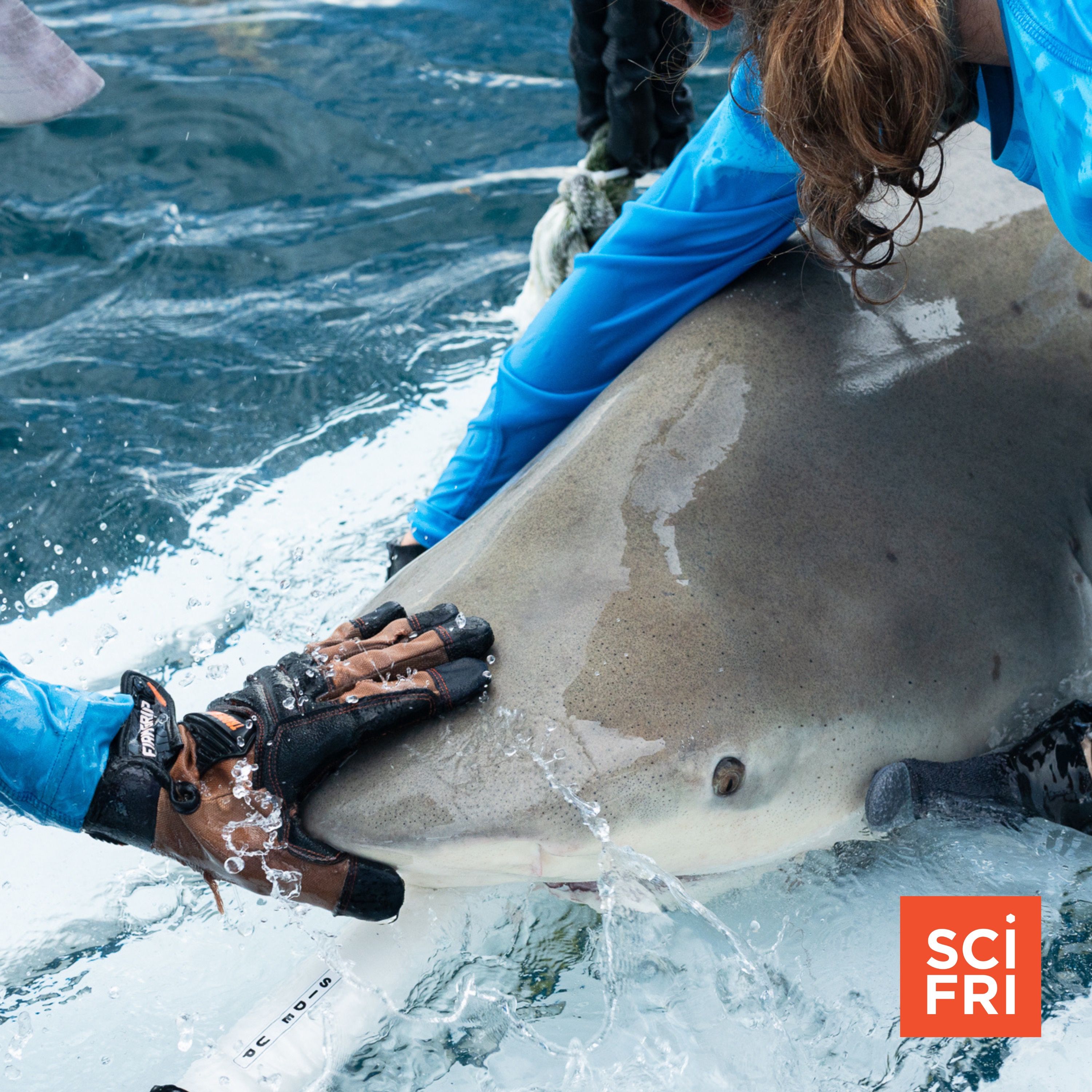
Tracking shark populations, one shark at a time
from Science Friday Hosted by Flora Lichtman, Catherine Macdonald, Charles Bergquist
About 130 days a year, a research vessel leaves Miami and sets out to catch, measure, sample, tag, and release sharks in Florida’s coastal waters. Over the course of a year, they’ll encounter about 600 animals in a process called “fisheries independent monitoring,” an effort to gather data on sea creatures that isn’t skewed by changes in fishing procedures, equipment, or regulations. Marine conservation biologist Catherine Macdonald leads the lab behind that effort. She joins Host Flora Lichtman to talk about shark conservation, share stories from her research, and spread shark joy. Guest: Dr. Catherine Macdonald is a marine conservation biologist and director of the Shark Research and Conservation Program, part of the Rosenstiel School of Marine, Atmospheric, and Earth Science at the University of Miami. Other episodes you may enjoy: What Greenland Sharks Are Teaching Us About Aging Eyes Fishing For—And Saving—Sharks off the Jersey Shore Transcripts for each episode are available within 1-3 days at sciencefriday.com. Subscribe to this podcast or become a member. Follow us on socials @ scifri on YouTube, Instagram, Facebook, TikTok, and Bluesky and sign up for our newsletters. Got a science question that’s keeping you up at night? Call us: 877-472-4374
Embed this episode
What this episode covers
A Florida research team catches and releases about 600 sharks a year to monitor their populations and study the health of marine ecosystems.
No transcript yet.