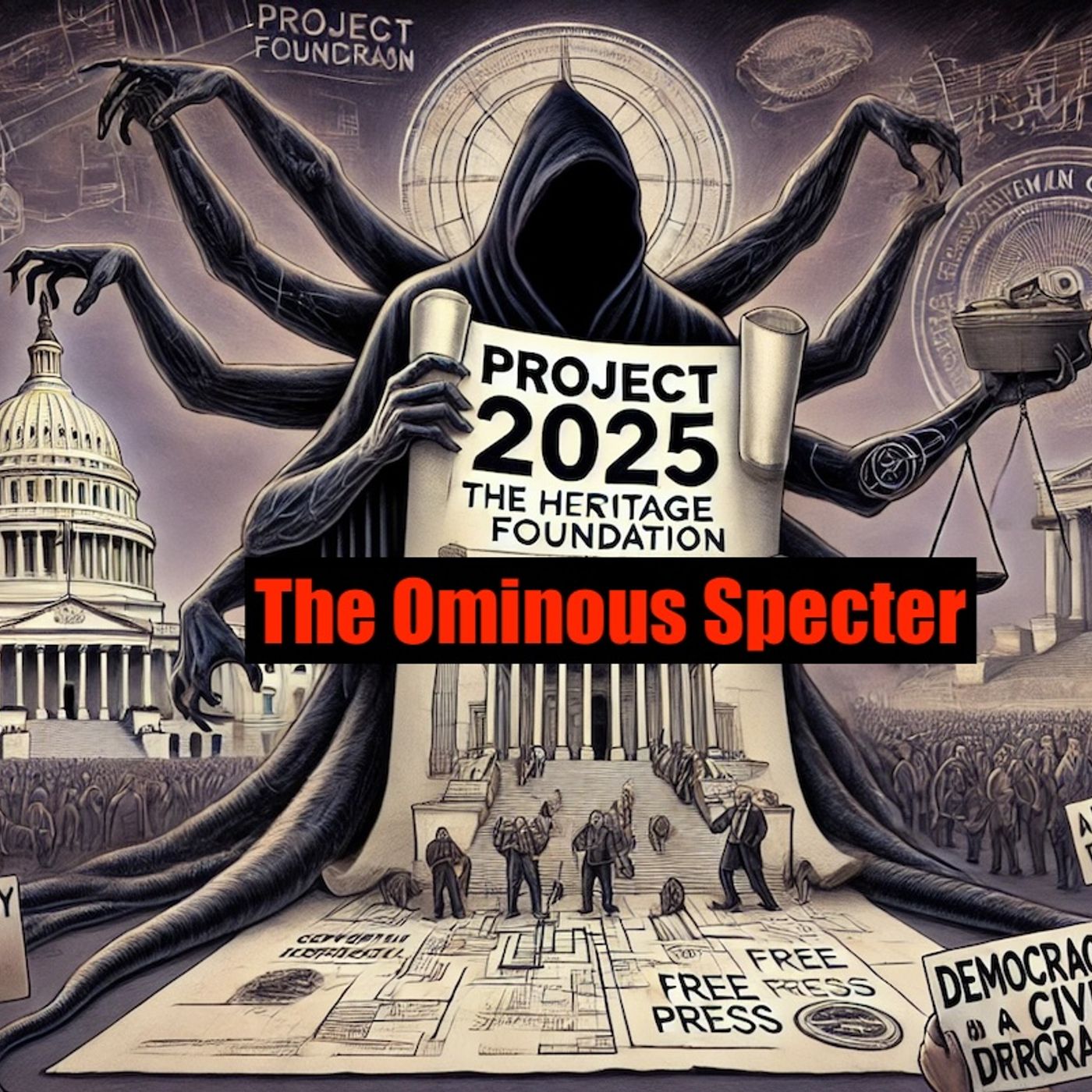
Transformative Vision or Dangerous Overreach? Exploring Project 2025's Ambitious Plans for American Governance episode artwork

EPISODE · Jan 18, 2025 · 6 MIN

Transformative Vision or Dangerous Overreach? Exploring Project 2025's Ambitious Plans for American Governance

from Project 2025: The Ominous Specter · host Inception Point AI

As I delve into the intricacies of Project 2025, a sweeping initiative crafted by the Heritage Foundation, I am struck by the sheer breadth and ambition of its proposals. This project, unveiled in April 2023, is more than just a policy guide; it is a comprehensive blueprint for a radical overhaul of American governance, economic policies, and social structures. At its core, Project 2025 is the brainchild of over 400 scholars and policy experts from the conservative movement. It is led by figures such as Paul Dans, former chief of staff at the Office of Personnel Management, and Spencer Chretien, a former special assistant to President Trump. The project's advisory board includes more than 100 conservative groups, lending it significant weight within Republican circles[2][4]. One of the most striking aspects of Project 2025 is its vision for the federal government's executive branch. The project advocates for a unitary executive theory, which centralizes greater control over the government in the White House. This means eliminating the independence of key agencies like the Department of Justice (DOJ), the Federal Bureau of Investigation (FBI), the Federal Communications Commission (FCC), and the Federal Trade Commission (FTC). As Heritage Foundation President Kevin Roberts puts it, "The notion of independent federal agencies or federal employees who don't answer to the president violates the very foundation of our democratic republic"[1]. This centralization of power extends to the Department of State, where Project 2025 proposes dismissing all leadership employees by January 20, 2025, and replacing them with "acting" roles that do not require Senate confirmation. Kiron Skinner, who authored the State Department chapter, believes most current employees are too left-wing and should be replaced by those more loyal to a conservative president[1]. The project's economic and social policy proposals are equally far-reaching. It calls for significant tax cuts, though its authors are divided on the issue of protectionism. Medicare and Medicaid would face substantial cuts, and the government would be urged to explicitly reject abortion as healthcare. The plan also seeks to eliminate coverage of emergency contraception and to use the Comstock Act to prosecute those who send and receive contraceptives and abortion pills. Additionally, it proposes criminalizing pornography and removing legal protections against discrimination based on sexual orientation and gender identity[1]. Environmental and climate policies are another critical area of focus. Project 2025 recommends repealing the Inflation Reduction Act, which allocated $370 billion for clean technology, and closing key offices at the Department of Energy focused on climate change mitigation. The plan supports Arctic drilling, blocks the expansion of the national electrical grid, and stymies the transition to renewable energy. Mandy Gunasekara, a contributor to the project, acknowledges climate chang This content was created in partnership and with the help of Artificial Intelligence AI.

As I delve into the intricacies of Project 2025, a sweeping initiative crafted by the Heritage Foundation, I am struck by the sheer breadth and ambition of its proposals. This project, unveiled in April 2023, is more than just a policy guide; it is a comprehensive blueprint for a radical overhaul of American governance, economic policies, and social structures. At its core, Project 2025 is the brainchild of over 400 scholars and policy experts from the conservative movement. It is led by figures such as Paul Dans, former chief of staff at the Office of Personnel Management, and Spencer Chretien, a former special assistant to President Trump. The project's advisory board includes more than 100 conservative groups, lending it significant weight within Republican circles[2][4]. One of the most striking aspects of Project 2025 is its vision for the federal government's executive branch. The project advocates for a unitary executive theory, which centralizes greater control over the government in the White House. This means eliminating the independence of key agencies like the Department of Justice (DOJ), the Federal Bureau of Investigation (FBI), the Federal Communications Commission (FCC), and the Federal Trade Commission (FTC). As Heritage Foundation President Kevin Roberts puts it, "The notion of independent federal agencies or federal employees who don't answer to the president violates the very foundation of our democratic republic"[1]. This centralization of power extends to the Department of State, where Project 2025 proposes dismissing all leadership employees by January 20, 2025, and replacing them with "acting" roles that do not require Senate confirmation. Kiron Skinner, who authored the State Department chapter, believes most current employees are too left-wing and should be replaced by those more loyal to a conservative president[1]. The project's economic and social policy proposals are equally far-reaching. It calls for significant tax cuts, though its authors are divided on the issue of protectionism. Medicare and Medicaid would face substantial cuts, and the government would be urged to explicitly reject abortion as healthcare. The plan also seeks to eliminate coverage of emergency contraception and to use the Comstock Act to prosecute those who send and receive contraceptives and abortion pills. Additionally, it proposes criminalizing pornography and removing legal protections against discrimination based on sexual orientation and gender identity[1]. Environmental and climate policies are another critical area of focus. Project 2025 recommends repealing the Inflation Reduction Act, which allocated $370 billion for clean technology, and closing key offices at the Department of Energy focused on climate change mitigation. The plan supports Arctic drilling, blocks the expansion of the national electrical grid, and stymies the transition to renewable energy. Mandy Gunasekara, a contributor to the project, acknowledges climate chang This content was created in partnership and with the help of Artificial Intelligence AI.

NOW PLAYING

Transformative Vision or Dangerous Overreach? Exploring Project 2025's Ambitious Plans for American Governance

0:00 6:12

No transcript for this episode yet

We transcribe on demand. Request one and we'll notify you when it's ready — usually under 10 minutes.

Frequently Asked Questions

How long is this episode of Project 2025: The Ominous Specter?

This episode is 6 minutes long.

When was this Project 2025: The Ominous Specter episode published?

This episode was published on January 18, 2025.

What is this episode about?

As I delve into the intricacies of Project 2025, a sweeping initiative crafted by the Heritage Foundation, I am struck by the sheer breadth and ambition of its proposals. This project, unveiled in April 2023, is more than just a policy guide; it is...

Can I download this Project 2025: The Ominous Specter episode?

Yes, you can download this episode by clicking the download button on the episode player, or subscribe to the podcast in your preferred podcast app for automatic downloads.
URL copied to clipboard!