
EPISODE · Jan 7, 2025 · 6 MIN
Transforming America: Project 2025's Sweeping Conservative Agenda Unveiled
from Project 2025: The Ominous Specter · host Inception Point AI
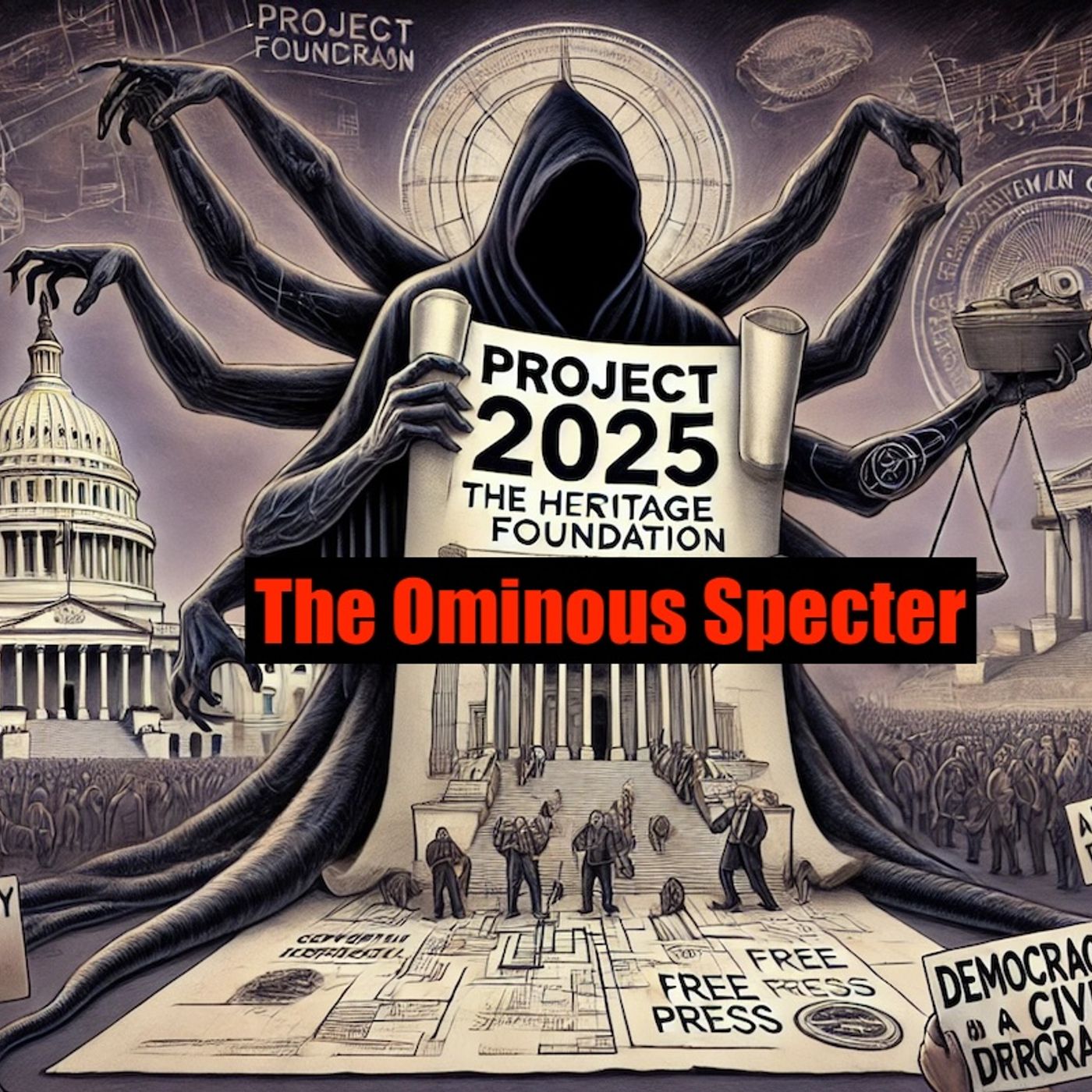
As I delve into the intricacies of Project 2025, a sweeping initiative crafted by the Heritage Foundation, I am struck by the sheer breadth and ambition of its proposals. This 900-page blueprint, released in April 2022, is more than just a policy document; it is a vision for a radically restructured federal government, aligned closely with conservative ideals and tied intimately to the orbit of former President Donald Trump. At its core, Project 2025 aims to transform the executive branch, bringing it under tighter control of the president and reshaping various federal agencies to conform to conservative principles. The project's authors, many of whom are veterans of Trump's first administration or closely associated with his inner circle, have outlined a comprehensive agenda that touches nearly every aspect of American life. One of the most striking aspects of Project 2025 is its proposal to dismantle or significantly alter several key federal agencies. For instance, the Department of Education would be abolished, with its programs either transferred or terminated, in a bid to promote school choice and increase parental control over education[1][3][5]. The Department of Homeland Security would also be dismantled, reflecting a broader skepticism towards the administrative state and a desire to streamline government operations[1][3]. The project also targets the Department of Justice, the Federal Bureau of Investigation, and other independent agencies, seeking to bring them under more direct presidential control. This aligns with the "unitary executive theory," which advocates for placing the entire federal bureaucracy under the president's direct authority, eliminating civil service protections for thousands of government employees and replacing them with political appointees[3][4]. In the realm of economic policy, Project 2025 proposes significant changes, including tax cuts and the abolition of the Consumer Financial Protection Bureau. It also recommends shrinking the role of the National Labor Relations Board, which protects employees' rights to organize and fight unfair labor practices, and eliminating the Federal Trade Commission, a key enforcer of antitrust laws[1][4]. The project's stance on environmental and climate policies is particularly contentious. It advocates for reducing environmental regulations to favor fossil fuels, repealing the Inflation Reduction Act, and closing offices focused on energy technology development and climate change within the Department of Energy. Diana Furchtgott-Roth, the Heritage Foundation's energy and climate director, suggests that the EPA should support the consumption of more natural gas, despite concerns from climatologists about the potential increase in methane leaks[1][2]. Project 2025 also delves into the realm of science policy, prioritizing fundamental research over deployment and restricting academic and technology exchanges with countries labeled as adversaries, particularly China. The r This content was created in partnership and with the help of Artificial Intelligence AI.
Embed this episode
Ready to play
Transforming America: Project 2025's Sweeping Conservative Agenda Unveiled
No transcript for this episode yet
Similar Episodes
No similar episodes found.
Similar Podcasts
No similar podcasts found.