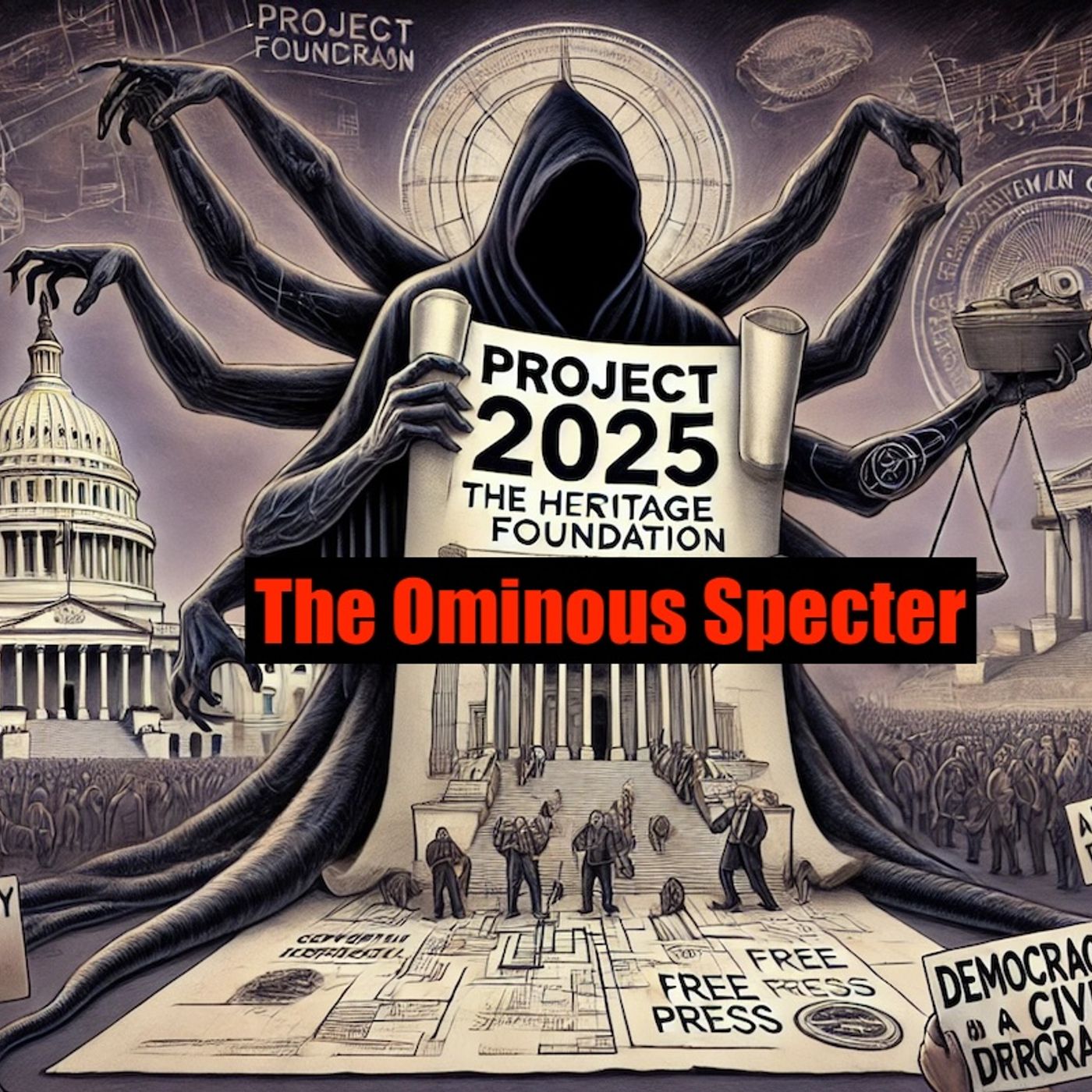
"Transforming the Federal Government: Project 2025's Controversial Vision for Consolidated Executive Power" episode artwork

EPISODE · May 29, 2025 · 4 MIN

"Transforming the Federal Government: Project 2025's Controversial Vision for Consolidated Executive Power"

from Project 2025: The Ominous Specter · host Inception Point AI

As I delve into the intricacies of Project 2025, a sense of profound transformation and controversy envelops me. This initiative, backed by influential conservative think tanks such as the Heritage Foundation, is nothing short of a revolutionary blueprint aimed at reshaping the federal government of the United States. At its core, Project 2025 seeks to consolidate executive power in the White House, fundamentally altering the balance of American governance. The project's architects, including figures like Kiron Skinner, who briefly led the State Department's office of policy planning during the Trump administration, envision a government where the entire executive branch is under direct presidential control. This vision is rooted in the unitary executive theory, an expansive interpretation of presidential power that has been gaining traction since the Reagan era. Kevin Roberts, a key proponent, succinctly captures this ambition: "all federal employees should answer to the president."[4] One of the most striking aspects of Project 2025 is its proposal to dismantle the independence of critical federal agencies. The Department of Justice, the FBI, the Federal Communications Commission, and the Federal Trade Commission are all targeted for greater presidential oversight. This centralization of power is not merely a bureaucratic reshuffle; it represents a seismic shift in how the U.S. government operates. For instance, the project advocates for the dismissal of all Department of State employees in leadership roles before January 20, 2025, to be replaced by ideologically vetted appointees who do not require Senate confirmation. Skinner's perspective on this is telling: she believes most State Department employees are too left-wing and need to be replaced by those more loyal to a conservative president[4]. The 900-page policy proposal is replete with specific reforms and policy objectives that paint a picture of a significantly streamlined and ideologically aligned federal workforce. The elimination of entire agencies, such as the Consumer Financial Protection Board and USAID, is a stark example of the project's scope. These actions are part of a broader effort to cut back on civil servants' powers and reduce what the project's backers see as inefficiencies across the federal government. As reported, the Trump administration, aided by Elon Musk's Department of Government Efficiency (DOGE), has already begun implementing these plans, albeit in a manner described as chaotic and legally questionable[5]. The numbers are staggering: the Trump administration has either laid off or plans to lay off 280,253 federal workers and contractors, impacting 27 agencies. This purge is not just about reducing the federal workforce; it is about reshaping the government's ideological landscape. The project's proponents argue that this will lead to greater efficiency and alignment with conservative values, but critics see it as a dangerous erosion of institutional indep This content was created in partnership and with the help of Artificial Intelligence AI.

As I delve into the intricacies of Project 2025, a sense of profound transformation and controversy envelops me. This initiative, backed by influential conservative think tanks such as the Heritage Foundation, is nothing short of a revolutionary blueprint aimed at reshaping the federal government of the United States. At its core, Project 2025 seeks to consolidate executive power in the White House, fundamentally altering the balance of American governance. The project's architects, including figures like Kiron Skinner, who briefly led the State Department's office of policy planning during the Trump administration, envision a government where the entire executive branch is under direct presidential control. This vision is rooted in the unitary executive theory, an expansive interpretation of presidential power that has been gaining traction since the Reagan era. Kevin Roberts, a key proponent, succinctly captures this ambition: "all federal employees should answer to the president."[4] One of the most striking aspects of Project 2025 is its proposal to dismantle the independence of critical federal agencies. The Department of Justice, the FBI, the Federal Communications Commission, and the Federal Trade Commission are all targeted for greater presidential oversight. This centralization of power is not merely a bureaucratic reshuffle; it represents a seismic shift in how the U.S. government operates. For instance, the project advocates for the dismissal of all Department of State employees in leadership roles before January 20, 2025, to be replaced by ideologically vetted appointees who do not require Senate confirmation. Skinner's perspective on this is telling: she believes most State Department employees are too left-wing and need to be replaced by those more loyal to a conservative president[4]. The 900-page policy proposal is replete with specific reforms and policy objectives that paint a picture of a significantly streamlined and ideologically aligned federal workforce. The elimination of entire agencies, such as the Consumer Financial Protection Board and USAID, is a stark example of the project's scope. These actions are part of a broader effort to cut back on civil servants' powers and reduce what the project's backers see as inefficiencies across the federal government. As reported, the Trump administration, aided by Elon Musk's Department of Government Efficiency (DOGE), has already begun implementing these plans, albeit in a manner described as chaotic and legally questionable[5]. The numbers are staggering: the Trump administration has either laid off or plans to lay off 280,253 federal workers and contractors, impacting 27 agencies. This purge is not just about reducing the federal workforce; it is about reshaping the government's ideological landscape. The project's proponents argue that this will lead to greater efficiency and alignment with conservative values, but critics see it as a dangerous erosion of institutional indep This content was created in partnership and with the help of Artificial Intelligence AI.

NOW PLAYING

"Transforming the Federal Government: Project 2025's Controversial Vision for Consolidated Executive Power"

0:00 4:46

No transcript for this episode yet

We transcribe on demand. Request one and we'll notify you when it's ready — usually under 10 minutes.

Frequently Asked Questions

How long is this episode of Project 2025: The Ominous Specter?

This episode is 4 minutes long.

When was this Project 2025: The Ominous Specter episode published?

This episode was published on May 29, 2025.

What is this episode about?

As I delve into the intricacies of Project 2025, a sense of profound transformation and controversy envelops me. This initiative, backed by influential conservative think tanks such as the Heritage Foundation, is nothing short of a revolutionary...

Can I download this Project 2025: The Ominous Specter episode?

Yes, you can download this episode by clicking the download button on the episode player, or subscribe to the podcast in your preferred podcast app for automatic downloads.
URL copied to clipboard!