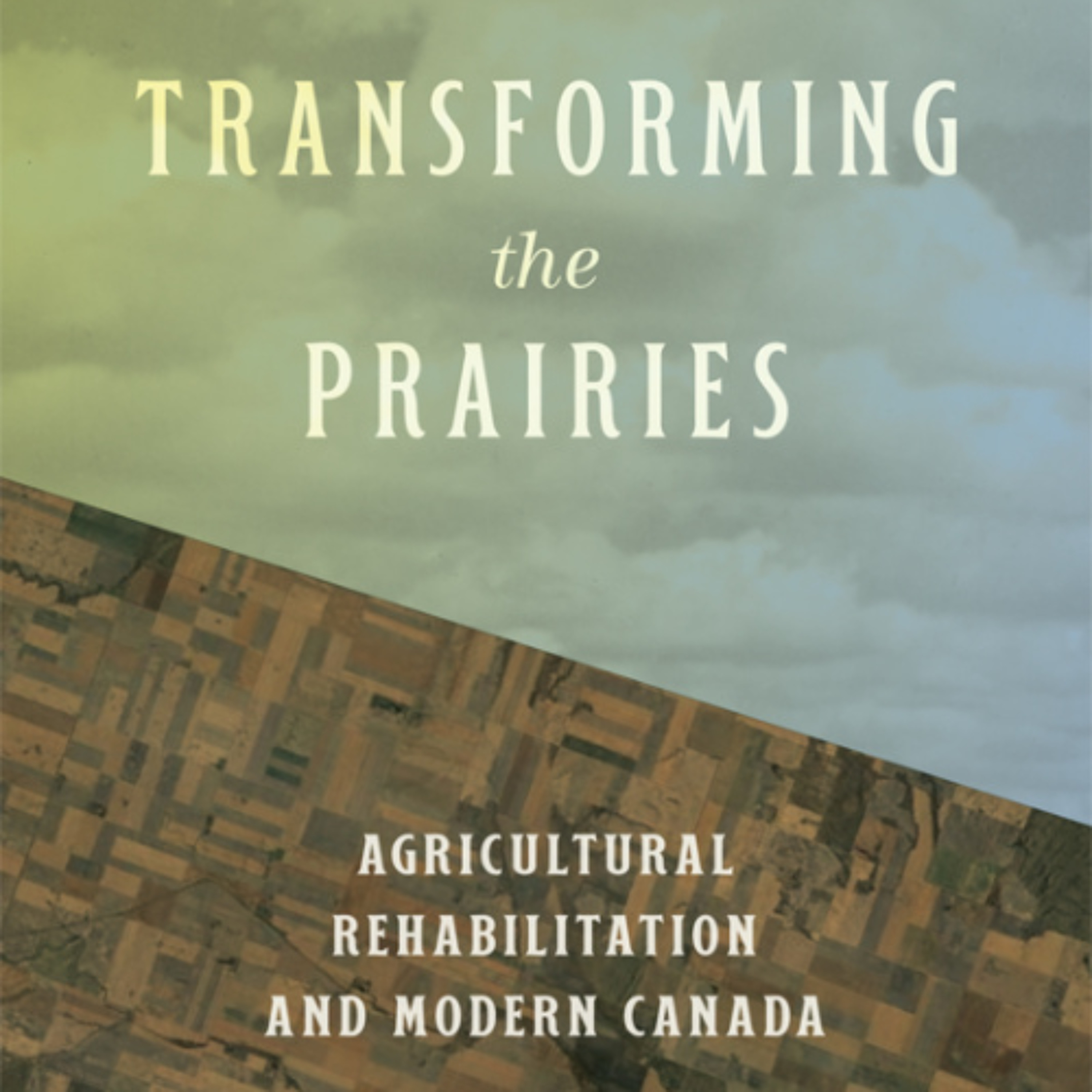
Transforming the Prairies: Agricultural Rehabilitation and Modern Canada episode artwork

EPISODE · May 30, 2025 · 31 MIN

Transforming the Prairies: Agricultural Rehabilitation and Modern Canada

from Witness to Yesterday (The Champlain Society Podcast on Canadian History) · host The Champlain Society

Greg Marchildon speaks with Shannon Stunden Bower about her book, Transforming the Prairies: Agricultural Rehabilitation and Modern Canada. Created in 1935, the Prairie Farm Rehabilitation Administration (PFRA) was a Canadian federal agency active for over 70 years, often praised as a model of effective environmental management. Transforming the Prairies challenges this view, highlighting the mixed results of its agricultural rehabilitation efforts in Canada and abroad. Historian Shannon Stunden Bower critiques the PFRA’s initiatives, revealing their unintended ecological and social consequences. For instance, while promoting strip farming for soil conservation, the agency inadvertently increased crop vulnerability to pests like the sawfly. In Ghana, PFRA-led irrigation projects heightened the risk of illness among locals. In Canada, infrastructure development ignored the rights and interests of Indigenous peoples. Stunden Bower argues that the PFRA, as a high modernist agency, often reinforced colonial and racist systems while producing uneven environmental outcomes. This book urges a rethinking of the PFRA’s legacy, both to deepen our understanding of Canadian and environmental history and to inform more just and sustainable environmental policies today. It is especially relevant to scholars and students of Canadian, environmental, and agricultural history, as well as those interested in the modern state and the Prairie West. Policymakers and Prairie residents familiar with the PFRA will also find it insightful. Shannon Stunden Bower is an associate professor in the Department of History, Classics, and Religion at the University of Alberta. She is the author of Wet Prairie: People, Land, and Water in Agricultural Manitoba, which won the Canadian Historical Association Clio Prize for the Prairies and the Manitoba Day Award from the Association for Manitoba Archives. She has also published articles in journals such as Environmental History and Agricultural History. Image Credit: UBC Press If you like our work, please consider supporting it: bit.ly/support_WTY. Your support contributes to the Champlain Society’s mission of opening new windows to directly explore and experience Canada’s past.

Greg Marchildon speaks with Shannon Stunden Bower about her book, Transforming the Prairies: Agricultural Rehabilitation and Modern Canada. Created in 1935, the Prairie Farm Rehabilitation Administration (PFRA) was a Canadian federal agency active for over 70 years, often praised as a model of effective environmental management. Transforming the Prairies challenges this view, highlighting the mixed results of its agricultural rehabilitation efforts in Canada and abroad. Historian Shannon Stunden Bower critiques the PFRA’s initiatives, revealing their unintended ecological and social consequences. For instance, while promoting strip farming for soil conservation, the agency inadvertently increased crop vulnerability to pests like the sawfly. In Ghana, PFRA-led irrigation projects heightened the risk of illness among locals. In Canada, infrastructure development ignored the rights and interests of Indigenous peoples. Stunden Bower argues that the PFRA, as a high modernist agency, often reinforced colonial and racist systems while producing uneven environmental outcomes. This book urges a rethinking of the PFRA’s legacy, both to deepen our understanding of Canadian and environmental history and to inform more just and sustainable environmental policies today. It is especially relevant to scholars and students of Canadian, environmental, and agricultural history, as well as those interested in the modern state and the Prairie West. Policymakers and Prairie residents familiar with the PFRA will also find it insightful. Shannon Stunden Bower is an associate professor in the Department of History, Classics, and Religion at the University of Alberta. She is the author of Wet Prairie: People, Land, and Water in Agricultural Manitoba, which won the Canadian Historical Association Clio Prize for the Prairies and the Manitoba Day Award from the Association for Manitoba Archives. She has also published articles in journals such as Environmental History and Agricultural History. Image Credit: UBC Press If you like our work, please consider supporting it: bit.ly/support_WTY. Your support contributes to the Champlain Society’s mission of opening new windows to directly explore and experience Canada’s past.

NOW PLAYING

Transforming the Prairies: Agricultural Rehabilitation and Modern Canada

0:00 31:56

No transcript for this episode yet

We transcribe on demand. Request one and we'll notify you when it's ready — usually under 10 minutes.

Frequently Asked Questions

How long is this episode of Witness to Yesterday (The Champlain Society Podcast on Canadian History)?

This episode is 31 minutes long.

When was this Witness to Yesterday (The Champlain Society Podcast on Canadian History) episode published?

This episode was published on May 30, 2025.

What is this episode about?

Greg Marchildon speaks with Shannon Stunden Bower about her book, Transforming the Prairies: Agricultural Rehabilitation and Modern Canada. Created in 1935, the Prairie Farm Rehabilitation Administration (PFRA) was a Canadian federal agency active...

Can I download this Witness to Yesterday (The Champlain Society Podcast on Canadian History) episode?

Yes, you can download this episode by clicking the download button on the episode player, or subscribe to the podcast in your preferred podcast app for automatic downloads.
URL copied to clipboard!