
EPISODE · Aug 6, 2025 · 6 MIN
Trauma Bonding
from Negative Philosophy · host Deborah Butler
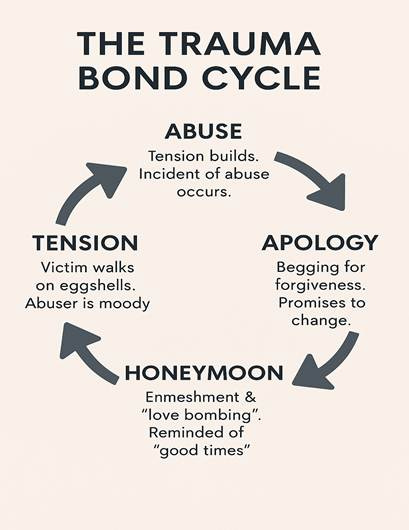
Trauma BondingTrauma bonding is one of those psychological concepts that sounds dramatic but is actually quite subtle and insidious in real life.At its core, trauma bonding is a strong emotional attachment formed between a victim and an abuser, often in relationships marked by cycles of intermittent abuse and intermittent affection. It’s not about “liking” the abuser — it’s about the brain and nervous system adapting to a rollercoaster of fear, relief, hope, and dependency.How It Works1. Intermittent reinforcement– Just like gambling rewards keep people at the slot machine, occasional kindness in a harmful relationship creates hope.– The brain thinks: “If I just try harder, I can get back to the ‘good times’.”2. Survival wiring kicks in– In unsafe relationships, the body goes into fight-flight-freeze-fawn mode.– To survive, the victim often suppresses anger, minimizes danger, and bonds to the abuser in a way that feels like safety, even though it’s not.3. Identity erosion– Over time, self-worth is replaced by the need to maintain the connection.– The victim may start believing the abuser’s view of them.Why It Feels So Strong• Neurochemistry: Dopamine from small “wins” + cortisol from stress + oxytocin from moments of closeness creates a biochemical cocktail of attachment.• Fear of loss: The thought of leaving often triggers more fear than staying — because the relationship has become the “known world.”• Shame: Victims may feel trapped by self-blame (“I chose this,” “I can’t leave now”) which keeps the bond intact.Common Signs• You rationalize or excuse abusive behavior.• You feel loyal to someone who repeatedly hurts you.• You fear losing them more than you fear being harmed.• You keep hoping the “good” version of them will return.• You feel like only they truly understand you — even though they cause much of your pain.Breaking a Trauma Bond• Recognize the cycle: Seeing the abuse → apology → affection → tension → abuse loop is key.• Reduce contact: Grey rock method, no-contact, or strong boundaries disrupt the reinforcement cycle.• Support network: Friends, therapists, or survivors’ groups help counter isolation.• Self-trust: Rebuild your ability to trust your own perceptions and feelings.• Grief work: Letting go isn’t just about leaving the person — it’s mourning the fantasy of what you hoped they could be.How Does someone get into a trauma bond?Trauma bonding often occurs because of the intense emotional rollercoaster that comes with abusive relationships. It’s not just about love or connection — it's a survival mechanism. Here's a breakdown of why people may form these bonds and why they end up staying:1. The Cycle of Abuse Feels FamiliarPeople who have experienced childhood trauma or dysfunctional family dynamics might subconsciously seek relationships that mirror those earlier experiences, even if they’re unhealthy. Familiarity breeds comfort, even if that comfort comes from chaos or pain. For instance, if someone grew up in an environment where love and affection were tied to tension or emotional highs and lows, they might be drawn to relationships where these same patterns play out.2. Intermittent ReinforcementThe brain thrives on intermittent reinforcement — getting occasional rewards (like love, affection, or positive attention) amid a chaotic environment. This keeps people hooked, similar to gambling addiction. They stay in the relationship because they remember the "good times" and hope for more of them. The abusive partner might promise change or behave kindly for short bursts, reinforcing the idea that things will get better.3. Fear of Abandonment or RejectionAbusive partners often make victims feel isolated, dependent, or incapable of finding someone better. Over time, the victim might start to believe they won’t be able to survive without the abuser, so they cling to the relationship out of fear of rejection or being alone.4. Love-Bombing and GaslightingAbusers sometimes engage in love-bombing — overwhelming the victim with affection and praise at the start of the relationship, creating a feeling of intense connection. When they later start to mistreat the victim, the contrast makes the victim more confused, believing they did something wrong. The abuser might use gaslighting to distort the victim's sense of reality, making them question their own perceptions, which keeps them trapped in the cycle.5. The Need for ValidationMany people in trauma-bonded relationships are seeking validation or approval that they didn’t receive in childhood. Abusers can exploit this vulnerability by giving moments of praise or affection, leading the victim to feel worthy, especially when they’re starved for love or approval from others. The victim often believes that if they just work harder, they’ll get the attention or validation they crave.6. Low Self-EsteemThe victim’s self-worth often becomes entwined with the abuser’s behavior. Over time, the victim may start to feel they don’t deserve better or that no one else would want them. The toxic relationship may become their "comfort zone", even though it’s harmful, because it feels familiar and "safe" in its own twisted way.7. Emotional DependencyTrauma bonding also comes from emotional dependency — the victim may rely on the abuser for emotional support, and the abuser plays on that by creating emotional chaos. When there’s little stability or balance in the relationship, it becomes harder to break free.Why do we stay in these relationships?• Hope: The belief that things will improve or that the partner will change, based on past apologies and promises.• Gaslighting: The manipulation of reality that causes self-doubt.• Fear: Fear of being alone or that they won’t survive without the abuser.Breaking free from trauma bonding can be incredibly challenging because it requires recognizing these patterns, seeking help, and learning to rebuild a sense of self-worth outside of the relationship. Therapy, support groups, and emotional healing are vital in breaking these cycles.Why do we pair with someone in a trauma bond?Trauma bonding happens when an emotional attachment forms between a victim and their abuser. It often occurs in abusive relationships, where the cycle of mistreatment alternates with moments of affection, creating a distorted sense of connection. Here’s why this happens and why we might pair with people who abuse us:1. Familiarity and Childhood PatternsIf a person has experienced dysfunctional or abusive relationships early in life, especially with caregivers, they may subconsciously seek out similar dynamics later on. This pattern feels familiar and can even feel “safe,” despite being harmful. The brain associates chaos with comfort, and this comfort becomes deeply ingrained.2. The Power of Intermittent ReinforcementWhen an abuser mixes occasional affection with cruelty, it creates an addictive loop in the victim’s brain. The brain thrives on intermittent reinforcement—like a gambler pulling a lever, hoping for a reward. The victim is caught in this cycle of abuse and “good times,” making it hard to leave, because they’re always waiting for the next "good" moment.3. Fear of Abandonment or Feeling UnworthyA victim might stay with an abuser because they’re terrified of being alone. The fear of abandonment and feeling unworthy of better treatment can make someone cling to an unhealthy relationship. Abusers often capitalize on this fear by isolating the victim, making them feel as though they have no other options or that they’re unlovable.4. Emotional Manipulation and GaslightingAbusers frequently engage in gaslighting, making the victim doubt their own perceptions of reality. This psychological manipulation can confuse the victim into believing they’re the problem, not the abuser. The abuser may also apologize and promise to change, which makes the victim hold onto the belief that the relationship could improve.5. Love BombingIn the beginning stages of the relationship, an abuser might love-bomb the victim — overwhelming them with attention, affection, and validation. This intense, almost intoxicating connection can make the victim feel special and deeply bonded. When the abuser later becomes cruel, the victim might hold onto the idea that this person truly loves them, even though the behavior is inconsistent.6. Validation and Low Self-EsteemPeople with low self-esteem or emotional wounds from the past may find themselves staying in abusive relationships because the abuser’s attention or approval temporarily fills an emotional void. The victim may seek validation from the abuser, even when it’s given inconsistently or conditionally. Over time, they believe they’re only worthy of this kind of treatment, leading them to stay.7. The Role of Trauma and DependencyIn some cases, the victim develops emotional dependency on the abuser, where they come to rely on the abuser for validation, emotional support, or even survival. The victim may feel that leaving the abuser would mean losing their only source of connection or emotional stability.8. Cognitive DissonanceThere’s a phenomenon called cognitive dissonance, where the brain struggles to reconcile the truth (that the person is abusive) with the emotional attachment (that the abuser sometimes shows love). To reduce this uncomfortable tension, the victim may justify the abuse or minimize the severity, continuing to stay in the relationship.The reason people pair with abusers isn't that they want to be abused — it’s because emotional and psychological dynamics can distort their perception of what’s normal, and they get trapped in cycles of hope, confusion, and dependency. These patterns often reflect deeper needs for validation, safety, and love, but they manifest in the wrong ways.Escaping trauma bonds often requires breaking through this cycle of abuse and realizing that real love doesn’t involve manipulation, fear, or control. Healing is possible, but it often requires therapy, support networks, and time to rebuild one’s sense of self-worth.What Trauma Bonding IsTrauma bonding is what happens when your emotional attachment gets wired to someone who repeatedly hurts you. It isn’t about enjoying the abuse, and it’s not about weakness — it’s about how our brain and body respond to cycles of fear, relief, and connection.It’s a survival-based attachment that forms when a relationship alternates between:• Harm (criticism, control, neglect, violence)• Relief (affection, apology, kindness, intimacy)The unpredictable switch between the two creates a powerful, addictive emotional loop. You end up feeling deeply attached to the person even though they’re the source of your pain.Why We Bond This Way1. The Brain’s Reward System Gets HijackedWhen abuse is followed by affection, the brain gets flooded with dopamine (reward) and oxytocin (bonding hormone) right after stress hormones like cortisol. This combination creates a powerful craving for the next moment of “goodness,” even if you have to endure a lot of harm to get it.2. We’re Wired for Attachment, Even in DangerHumans are biologically driven to attach to people who meet our emotional needs — and in unsafe relationships, those needs can feel even more intense. It’s a little like being stuck on a sinking lifeboat with someone: your survival instinct says don’t let go, even if they’re the one poking holes in it.3. It Often Feels FamiliarIf you grew up in a home where love and safety were inconsistent — a parent was warm sometimes, cold or critical other times — your nervous system may have learned that love feels like instability. As an adult, the “push-pull” of an abusive relationship can feel oddly normal.4. Intermittent Reinforcement Is AddictiveIt’s the same principle as gambling. If a slot machine paid out every time, you’d get bored; if it never paid out, you’d walk away. But if it pays sometimes, you keep pulling the lever. Abusive partners give affection just enough to keep you invested.5. Fear and Dependence Keep You StuckAbusers often:• Undermine your confidence• Isolate you from support• Make you feel like no one else would want you Over time, this creates dependence — leaving feels more frightening than staying.6. Cognitive DissonanceYour brain struggles to reconcile two opposing truths:• They hurt me• They say they love me and sometimes treat me well To resolve the discomfort, many people minimize the abuse and cling to the good moments.Why We Pair With Abusers• Early conditioning — relationships mirror what’s familiar from childhood.• Unresolved trauma — we unconsciously seek situations that re-enact old wounds, hoping for a different ending.• Need for validation — abusive people sometimes offer intense validation at the start (“love bombing”), which feels intoxicating if you’ve been starved of it.• The illusion of safety — chaos may feel safer than the vulnerability of real, stable intimacy. This is a public episode. If you'd like to discuss this with other subscribers or get access to bonus episodes, visit deborahbutler.substack.com/subscribe
NOW PLAYING
Trauma Bonding
No transcript for this episode yet
Similar Episodes
Apr 23, 2026 ·62m
Mar 19, 2026 ·75m
Mar 12, 2026 ·67m
Mar 2, 2026 ·65m