Trauma Surgeons and Controlled Stress Inoculation Before Shift
from Performance Under High-Stakes Pressure Hosted by Podyzer
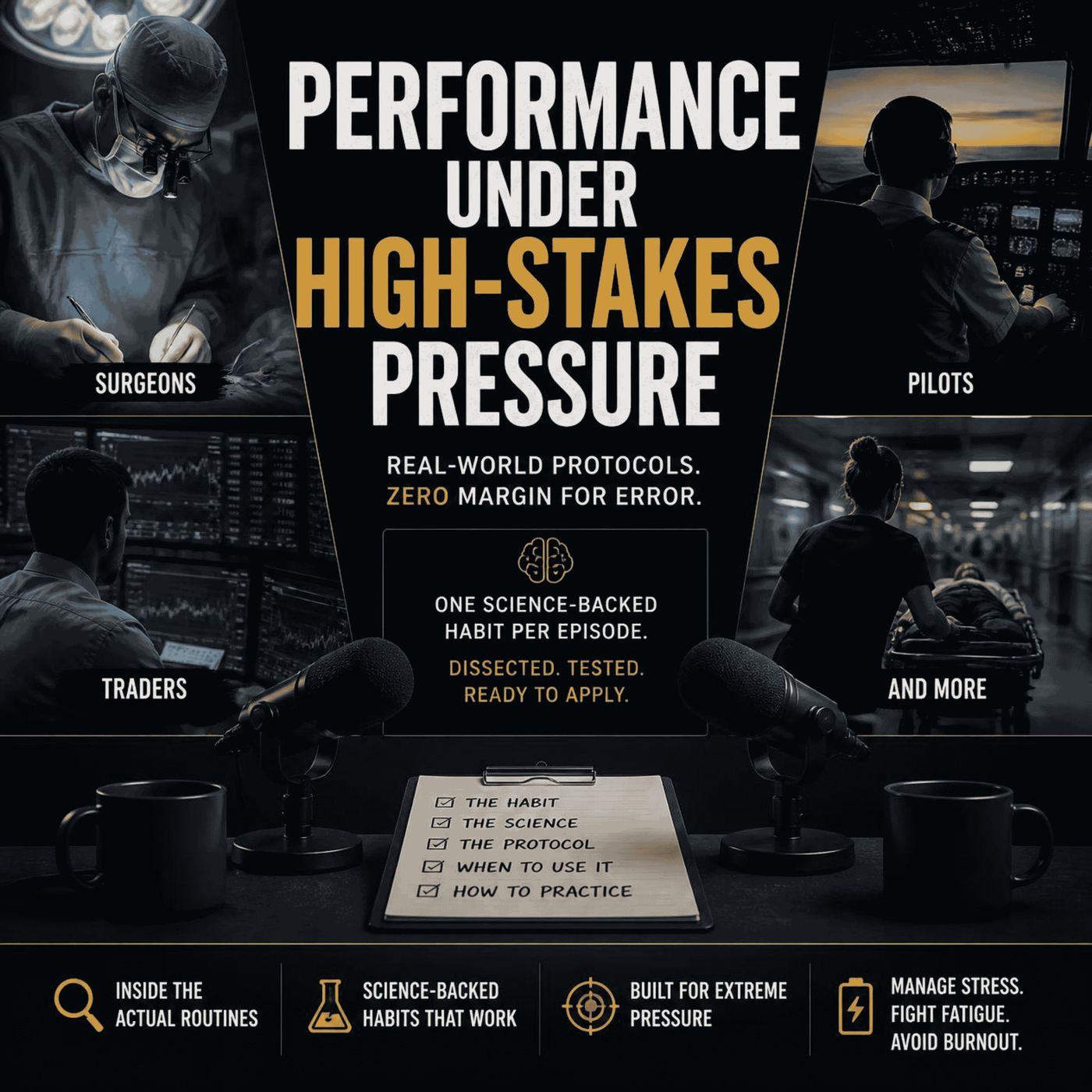
A trauma surgeon never knows when a multi-casualty incident will arrive, yet must perform at peak capacity the moment it does. Unlike cardiac surgeons with scheduled cases, trauma teams face unpredictable chaos—and the best performers don't wait for the crisis to practice their stress response. This episode reveals the pre-shift stress inoculation protocols that Level 1 trauma centers use, including controlled exposure to high-intensity scenarios, specific visualization techniques, and the physiological priming routines that keep surgeons from being ambushed by adrenaline when the emergency actually hits. The hosts explain why traditional 'mental rehearsal' is vague and often ineffective, then present the exact protocol: the specific scenarios trauma surgeons visualize, the precise moment they trigger this visualization (typically 30 minutes before shift), and how they calibrate the intensity to match real-world chaos without overshooting into anxiety. You'll learn about stress inoculation theory, the role of predictive coding in the brain, and why surgeons who practice this protocol show measurably lower cortisol spikes during actual trauma activations. The episode includes the one-page pre-shift routine that trauma teams use before their highest-risk shifts.
Embed this episode
No transcript yet.