
EPISODE · Sep 22, 2026 · 17 MIN
Trinity, Episode 1: How Did the Trinity Develop?
from Theophilus Podcast
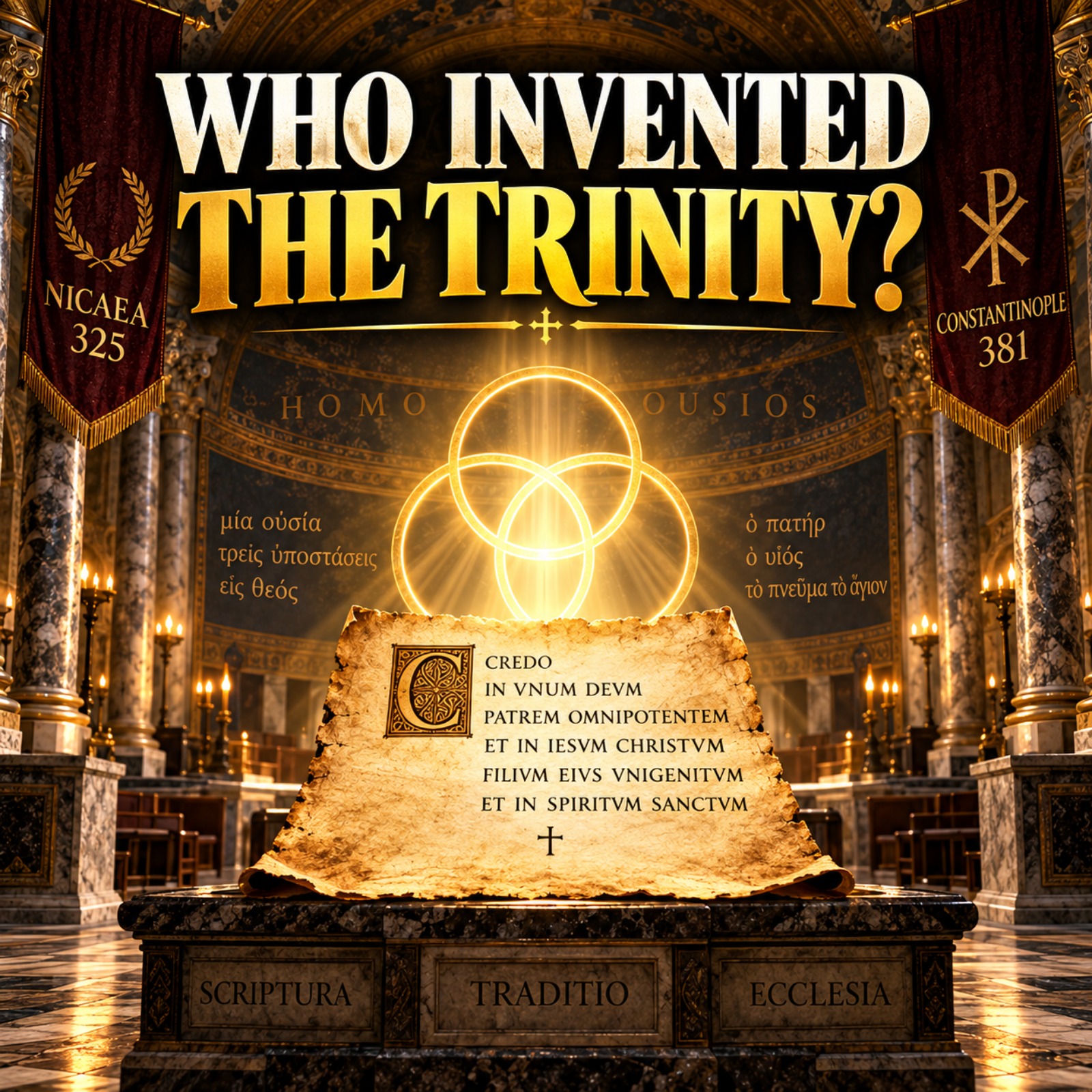
Got something to say to this podcast? Send a voicemail, and you might hear yourself on the next episode! Did the early Church invent the Trinity at the Council of Nicaea, or was the doctrine already developing within the earliest Christian understanding of God? This episode explores the biblical foundations and historical development of Trinitarian theology, tracing how early Christians understood the Father, Son, and Holy Spirit within the framework of Jewish monotheism. We examine the contributions of Ignatius of Antioch, Justin Martyr, Irenaeus, Theophilus of Antioch, and Tertullian, exploring how theological language developed as Christians sought to explain what Scripture revealed about God's nature. We then consider the Arian controversy, the Council of Nicaea in AD 325, the significance of homoousios, and the Council of Constantinople in AD 381, where the Church further clarified its confession of the Holy Spirit's divinity. We also explore perichoresis, the mutual indwelling of the divine persons, and the distinction between the development of theological terminology and the invention of theological belief. The central argument is that the Trinity was not simply invented by a fourth century council. Rather, the councils provided increasingly precise language to articulate and defend convictions already rooted in Scripture and the worship of the early Church. Ultimately, understanding the Trinity requires distinguishing the historical development of doctrine from the biblical truths that doctrine seeks to preserve.
Embed this episode
Ready to play
Trinity, Episode 1: How Did the Trinity Develop?
No transcript for this episode yet
Similar Episodes
No similar episodes found.
Similar Podcasts
No similar podcasts found.