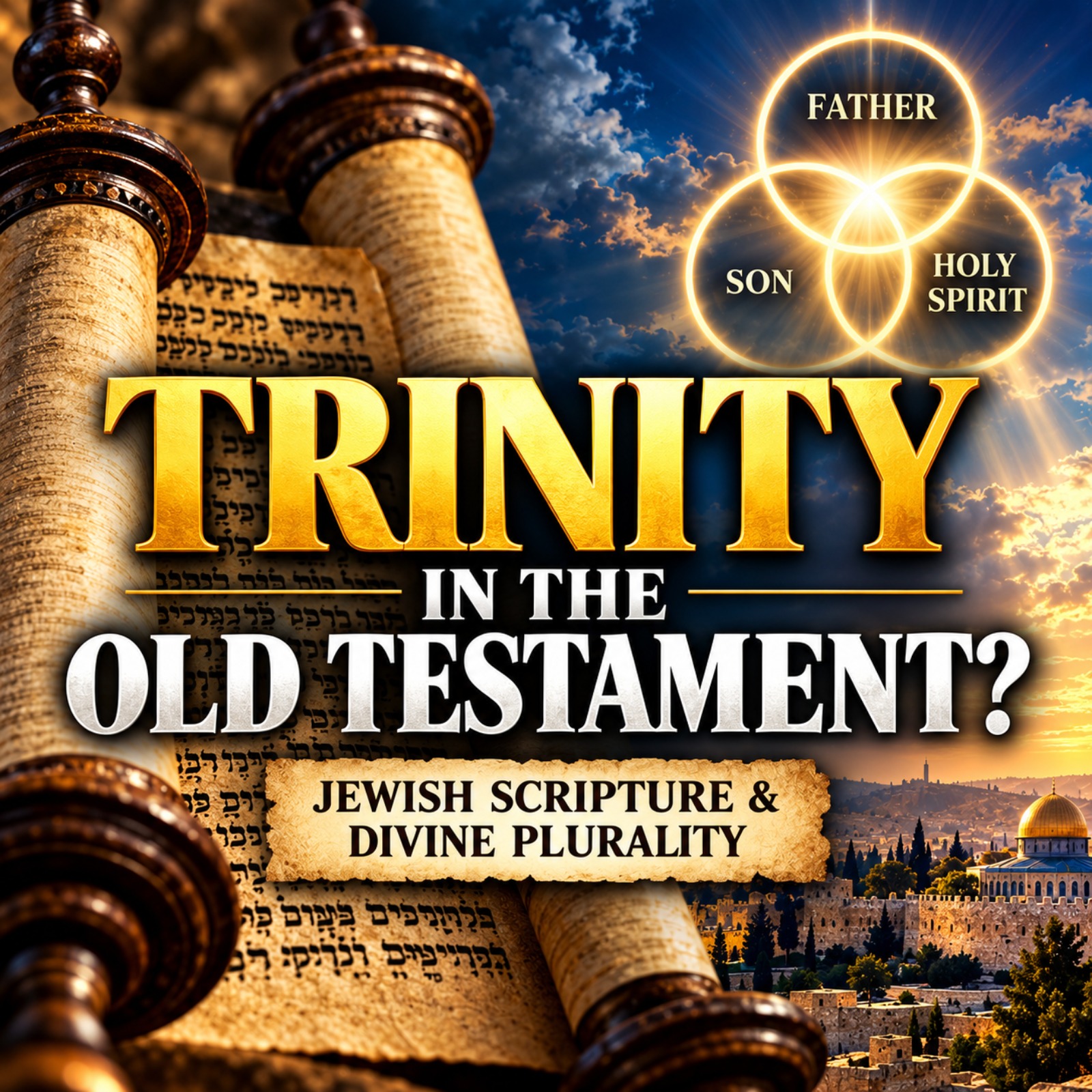
Trinity, Episode 3: Trinity in Jewish Scripture
from Theophilus Podcast
Got something to say to this podcast? Send a voicemail, and you might hear yourself on the next episode! Is the Trinity a later Christian invention, or does the Hebrew Bible already contain categories that make a triune understanding of God possible? This episode explores the relationship between Jewish monotheism and Christian Trinitarian theology, examining whether personal distinction within the divine identity is genuinely foreign to ancient Jewish Scripture. We begin with the Shema in Deuteronomy 6:4 and consider the mysterious Angel of the LORD, the divine Wisdom of Proverbs 8, the Memra or Word of God, and the Spirit of God throughout the Hebrew Bible. Particular attention is given to Genesis 1:26 and the Divine Council worldview, distinguishing the original context of the passage from later Trinitarian interpretations. We then examine Isaiah 48, Zechariah 12, the Jewish tradition known as Two Powers in Heaven, and later mystical reflections found in the Zohar. Along the way, we distinguish what these ancient texts explicitly teach from what later Christian theology may reasonably infer. The central argument is not that the Hebrew Bible already contains the fully developed doctrine of the Trinity, but that Jewish Scripture provides conceptual foundations for understanding divine distinction within the one God's identity. Ultimately, the Christian confession of Father, Son, and Holy Spirit can be examined as a theological development rooted in biblical monotheism rather than an idea entirely foreign to Israel's Scriptures.
Embed this episode
No transcript yet.