
EPISODE · Feb 12, 2025 · 1H 20M
Trump Historical Comparisons. What Is Going On With Nancy Mace? (with Kirk Bado)
from Politics Politics Politics · host Justin Robert Young
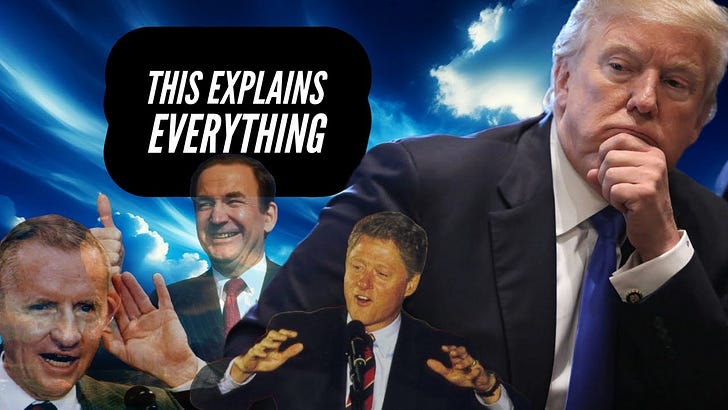
Donald Trump's second term does not look like his first. In his Super Bowl interview with Brett Baier, Trump admitted that back in 2017, he was a New York guy, a novice to Washington, D.C., and all but confessed that he stepped on every rake in sight. He appointed the wrong people, got caught up in the wrong traps, and was unable to effectively govern. To the casual observer, it may seem like not much has changed—Trump was causing chaos then, and he's causing chaos now. But this show understands the difference: Previously, chaos happened to him; now, he is the one orchestrating it. His agenda is taking direct aim at the centers of government he believes he was sent back to reform. Agencies long targeted by conservatives are now being affected—slashed, possibly shuttered. This is a direct assault on the structure of the federal government as it has been known, something many have promised but only Trump has aggressively pursued. If we can’t compare what we’ve seen over the last month to any prior sitting president, what historical precedents can we look to? I submit to you the year 1992 and three figures whose political strategies echo what we see in Trump today: Pat Buchanan, Ross Perot, and Bill Clinton. First, Buchanan. No one brought the conversation about immigration into the modern presidential sphere quite like him. Though his 1992 challenge to incumbent George H.W. Bush was short-lived, his influence endured. Buchanan’s rhetoric on immigration laid the groundwork for the hardline stance Trump would take in 2016. One of his biggest issues was the interpretation of the 14th Amendment regarding birthright citizenship, arguing that the phrase "under the jurisdiction thereof" meant only legal citizens should have offspring automatically granted citizenship. Now, Trump is doing something Buchanan only talked about: actively challenging birthright citizenship. Next, Ross Perot. If there is one historical figure whose message about government size and spending echoes through Trump’s current actions, it is Perot. Running as an independent in 1992, Perot famously railed against the national debt, which then stood at $4 trillion—a fraction of today’s $34 trillion. His colorful metaphors, like calling the debt a "crazy aunt we keep in the basement," helped him connect with voters who felt Washington was bloated and inefficient. He championed the idea of running the government like a business—sound familiar? Both men also shared a deep distrust of federal agencies. Perot famously quit his campaign in 1992, alleging that the CIA had infiltrated his operation, convinced that President George H.W. Bush, a former CIA director, was behind it. One can only imagine a President Perot would have pursued intelligence reforms as aggressively as Trump is now targeting the Justice Department and FBI. Perot, however, never won. Nor did Buchanan. But one man did in 1992: Bill Clinton. Initially, I planned to focus on just Buchanan and Perot, but our friend Michael Cohen recently made a compelling case for why Trump’s current approach also parallels Clinton. While Clinton focused on large-scale economic policies, he also knew how to capture public attention with wedge issues—ones that were more symbolic than substantive but extremely popular. In 1996, he championed the V-chip, a device to block violent content on TV, and pushed for school uniforms to combat youth violence. Neither policy had a significant impact, but they polled above 70%, making them politically beneficial. Trump is using a similar playbook. His recent executive orders—banning men from women’s sports and bringing back plastic straws—affect relatively few people in practical terms, yet they are wildly popular. These 70-30 issues serve as the sugar that makes the medicine go down, keeping the public engaged while larger, more complex reforms take shape. They also bait his political opponents into fighting battles where he holds the high ground— Obi-Wan style. At its core, Trump’s approach today mirrors Clinton’s in how it connects emotionally with voters. Is there really much of a difference between “Make America Great Again” and “I feel your pain”? Chapters 00:00:00 – Intro 00:02:17 – Trump's Second Term: Chaos or Competence? 00:04:12 – 1992 as a Parallel to Trump’s 47th Presidency 00:15:30 – Update 00:17:53 – Judicial Roadblocks Against Trump’s Agenda 00:21:31 – International News: Ukraine and Gaza Updates 00:26:12 – Guest Interview: Kirk Bado from National Journal 00:31:36 – The Looming Government Shutdown 00:39:52 – The Media’s Role and Chilling Effects 00:46:07 – Nancy Mace: Political Calculations or Genuine Outcry? 01:16:45 – Closing Remarks This is a public episode. If you'd like to discuss this with other subscribers or get access to bonus episodes, visit www.politicspoliticspolitics.com/subscribe
Embed this episode
Ready to play
Trump Historical Comparisons. What Is Going On With Nancy Mace? (with Kirk Bado)
No transcript for this episode yet
Similar Episodes
No similar episodes found.