Trump's appalling rampage forced even quivering C-SPAN to bite back
from Systemic Error Podcast Hosted by Paulo Santos
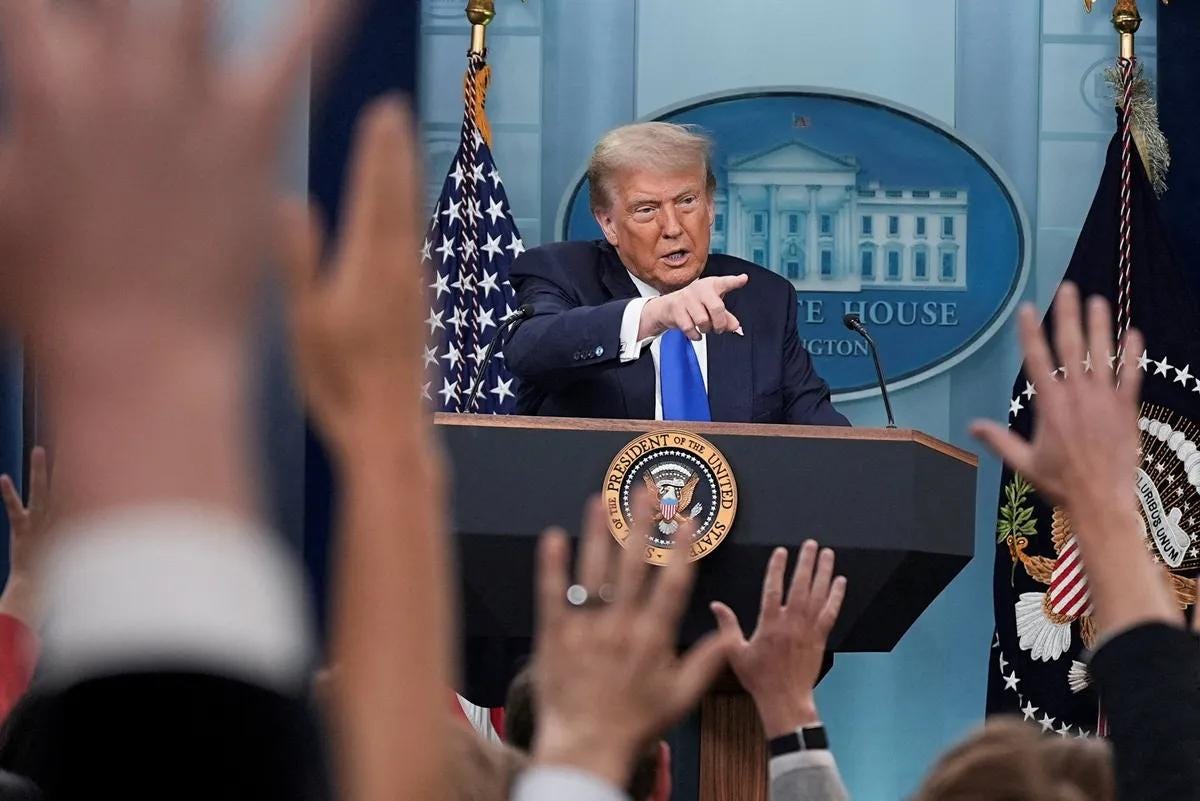
U.S. President Donald Trump speaks to the media in the Press Briefing Room at the White House in Washington D.C., June 27, 2025. REUTERS/Ken Cedeno The White House Used Access as a Weapon. The Press Answered With a Request. The Decision Came From the Top According to the reporting, the White House barred CNN, MS NOW, and Politico from its premises on September 18 after the president accused them of publishing “FAKE NEWS.” By the next morning, reporters from all three organizations were being denied entry, with credentials disabled or confiscated. C-SPAN expressed solidarity and appealed for a “rational resolution.” The essential fact is not that another dispute erupted between a president and the press. The White House controlled access, and the White House used that control against organizations the president publicly condemned. The excluded reporters did not create an abstract controversy over civility. Executive power produced a concrete consequence. Help fuel the work. Independent analysis doesn’t fund itself:☕ Buy us a coffee Access Is Institutional Leverage A White House credential is not a presidential endorsement. It enables journalists to observe an institution exercising public power. When an administration withdraws that access following unfavorable coverage, it turns a government-controlled resource into leverage over the press. The reported sequence matters: denunciation on September 18, exclusion the following morning. That timing does not independently establish every motive behind the decision, but it makes the administration’s stated grievance impossible to separate from the penalty imposed. Calling the outlets “FAKE NEWS” supplies no transparent standard, formal finding, or reported security justification. It supplies a political label followed by institutional punishment. That is the power structure. The president attacks credibility; the White House enforces exclusion; journalists absorb the cost. Treating this as a quarrel among equally situated antagonists obscures who possesses the gate, the credentialing machinery, and the authority to deploy both. C-SPAN’s Statement Was Necessary—and Insufficient C-SPAN was right to stand with the barred organizations. Solidarity matters because selective exclusion is easier to sustain when unaffected outlets continue as if access were merely a private privilege. But an appeal for rational resolution is not a strategy. It does not identify what standards should govern credentialing, what consequences should follow retaliatory exclusion, or what other news organizations will do if the ban remains. It places the next move back in the hands of the institution that imposed the penalty. Politeness is not complicity by itself, and the reporting does not establish that C-SPAN enabled the ban. The sharper criticism is institutional: a response confined to respectful persuasion leaves the White House’s leverage intact. Civility can describe the tone of an objection. It cannot substitute for collective action, legal scrutiny, or enforceable rules. The Source Weakens Its Own Case The underlying commentary is strongest when it focuses on access, retaliation, and institutional passivity. It becomes weaker when it reaches for Hitler, sexual assault, and movie-villain analogies. Those comparisons are not supported by the reported facts and do not clarify the mechanism at work. They inflate a specific abuse of administrative power into historical and fictional spectacle. That is not sharper analysis; it is misdirection of another kind. The facts already carry the argument. A president condemned named outlets, and the White House then reportedly disabled or confiscated their credentials. No fascist analogy is needed to explain why punishment tied to hostile coverage deserves scrutiny. The Press Cannot Negotiate Away a Power Imbalance The larger pattern is an asymmetry that political coverage routinely disguises. Officials exercise coercive institutional authority; journalists issue statements; coverage then presents the collision as another cycle of “tensions” between adversaries. But the parties are not interchangeable. CNN, MS NOW, Politico, and C-SPAN cannot revoke presidential access to government. The White House can revoke theirs. When reporting flattens that imbalance into a personality conflict, it converts an exercise of state power into theater about manners. The relevant questions are therefore concrete: Who authorized the exclusions? What credentialing rule was invoked? Was that rule applied consistently? What process exists to challenge the decision? And will other outlets treat access denied to competitors as an institutional problem rather than somebody else’s inconvenience? A System Built on Discretion Invites Punishment This episode exposes a structural weakness larger than one statement or one set of credentials. When access to public officials depends heavily on executive discretion, an administration can make proximity conditional on tolerance for its attacks. The danger lies in the incentive created for everyone still inside: antagonize the administration and access may disappear; remain compliant and the door stays open. The source does not establish that any outlet altered its reporting under that pressure. It does, however, describe the machinery capable of producing such pressure. That is the systemic error. An institution wielded access against disfavored press organizations, while much of the available response remained rhetorical and voluntary. Power acted. Its critics asked it to reconsider. Thanks to Raw Story Source: Trump’s appalling rampage forced even quivering C-SPAN to bite back Systemic Error is a reader-supported publication. To receive new posts and support my work, consider becoming a free or paid subscriber. We warned them.We told them.We shouted from the rooftops.We plead.We begged.They didn’t listen.Now, we all will suffer.Y’all know what to do, right?VOTE BLUE! 💙Vote as if your life — nay, our country — depend on it.Because, this time, and every time, it does. This is a public episode. If you would like to discuss this with other subscribers or get access to bonus episodes, visit paulstsmith.substack.com
Embed this episode
No transcript yet.