
EPISODE · Sep 20, 2026 · 5 MIN
Trump's favorite midterm candidate
from Systemic Error Podcast · host Paulo Santos
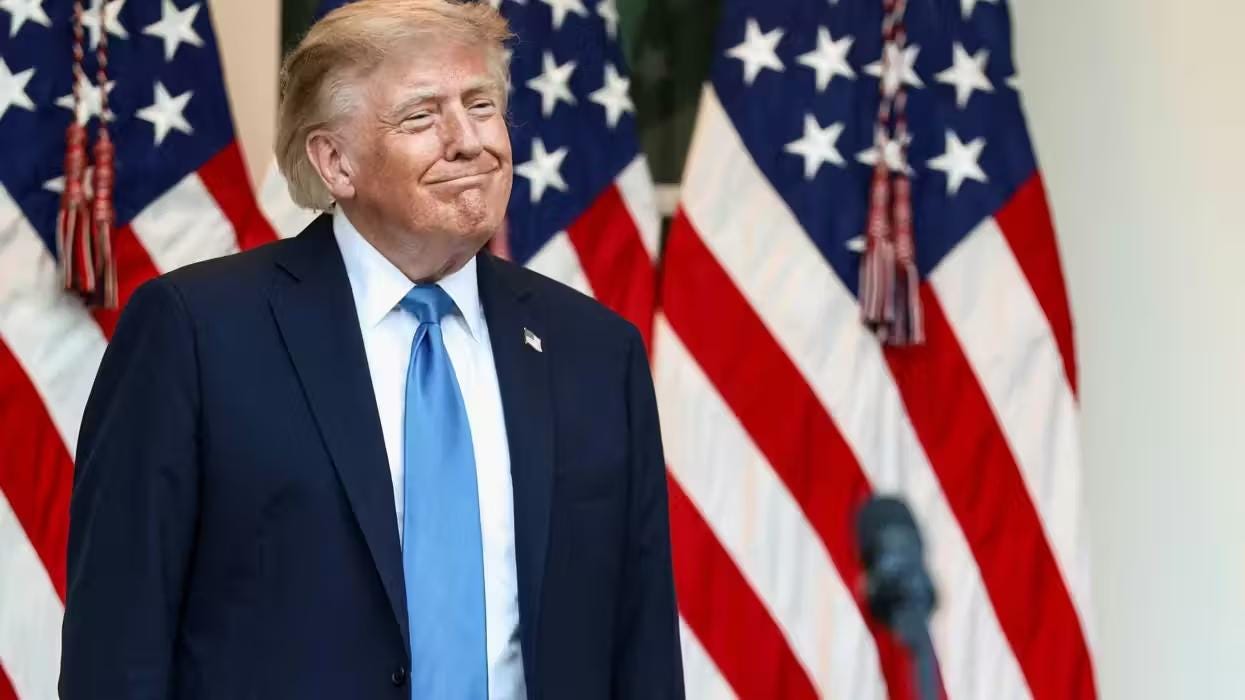
REUTERS/Evelyn Hockstein The Republican Party Built a Machine It Cannot Command The Money Is the Power MAGA Inc. holds more than $400 million—more cash than any major party committee—while Republican candidates enter the midterms needing support. Yet the money has barely moved. The relevant fact is not Donald Trump’s psychology but the power structure: the party’s largest political war chest belongs to an operation organized around one man, not around the candidates whose victories would determine control of Congress. A Party Reduced to Petitioners Republican officials cannot direct this money. They can flatter Trump, advise him, or ask him to behave differently. Karl Rove can urge him to spend on competitive races. Candidates can quietly request that he stay away. Pollsters can recommend mentioning him less. None of them controls the cash, the rallies, or the message. Help fuel the work. Independent analysis doesn’t fund itself:☕ Buy us a coffee That is the consequence of years spent concentrating Republican fundraising, media attention, and voter loyalty around Trump. Party professionals now complain that he may use those assets for self-promotion, as though they discovered his incentives last week. They helped construct a system in which access to resources runs through personal allegiance. Their present weakness is not an accident inflicted upon them. It is the result of choices they repeatedly enabled. “Narcissism” Is an Alibi The source frames Trump’s likely conduct primarily as malignant narcissism. That may describe his motives, but it also lets the Republican institution escape scrutiny. A personality disorder does not accumulate $400 million, subordinate party committees, or make candidates afraid of their own leader’s campaign appearances. Donors supplied the money. Operatives built the apparatus. Republican politicians accepted a hierarchy in which Trump’s prominence mattered more than their institutional autonomy. Calling this merely ego turns organized political dependence into one man’s character flaw. The more important story is that the GOP transferred strategic capacity to a personal vehicle and now lacks any mechanism to reclaim it. The Ads Reveal the Real Constituency Securing American Greatness has already spent about $1 million on national advertising centered on Trump’s claims about tax breaks, egg prices, and prescription drugs. The reported plans for extensive October travel and a Dallas convention focused on his accomplishments point in the same direction: the operation’s first responsibility is maintaining Trump’s image. That does not prove exactly how the remaining money will be spent. It does reveal whose reputation the existing machinery is designed to protect. Republican candidates are useful when they reinforce Trump’s standing; their races become secondary when their political needs conflict with his preferred spectacle. Cowardice Disguised as Strategy Battleground Republicans reportedly want Trump kept out of some districts, while party pollsters advise candidates to limit references to him. But these objections are being routed through anonymous operatives and private conversations. The candidates fear the electoral cost of association without openly challenging the arrangement that makes that association unavoidable. This is institutional cowardice with a polling memo attached. They want distance from Trump’s unpopularity while retaining access to his voters, money, and protection. That bargain leaves them with no authority to set the party’s direction—and no credible claim to victimhood when Trump sets it for them. Personal Rule Consumes the Party The larger pattern is not simply that Trump may spend badly or campaign recklessly. It is that a major political party has allowed collective resources to become instruments of personal rule. Money that could determine congressional races can instead be reserved for reputation management, loyalty enforcement, or future succession politics because the institution has made one person’s interests indistinguishable from its own. Trump holds the leverage. Republican donors, officials, and candidates helped give it to him. Now they are discovering the obvious consequence: a party organized around one man cannot compel that man to care whether the party survives his appetite. Thanks to Alter Net Source: Trump’s favorite midterm candidate Systemic Error is a reader-supported publication. To receive new posts and support my work, consider becoming a free or paid subscriber. We warned them.We told them.We shouted from the rooftops.We plead.We begged.They didn’t listen.Now, we all will suffer. This is a public episode. If you'd like to discuss this with other subscribers or get access to bonus episodes, visit paulstsmith.substack.com/subscribe
Embed this episode
Ready to play
Trump's favorite midterm candidate
No transcript for this episode yet
Similar Episodes
No similar episodes found.
Similar Podcasts
No similar podcasts found.