Trump’s going to hate his 'new normal': military veteran
from Systemic Error Podcast Hosted by Paulo Santos
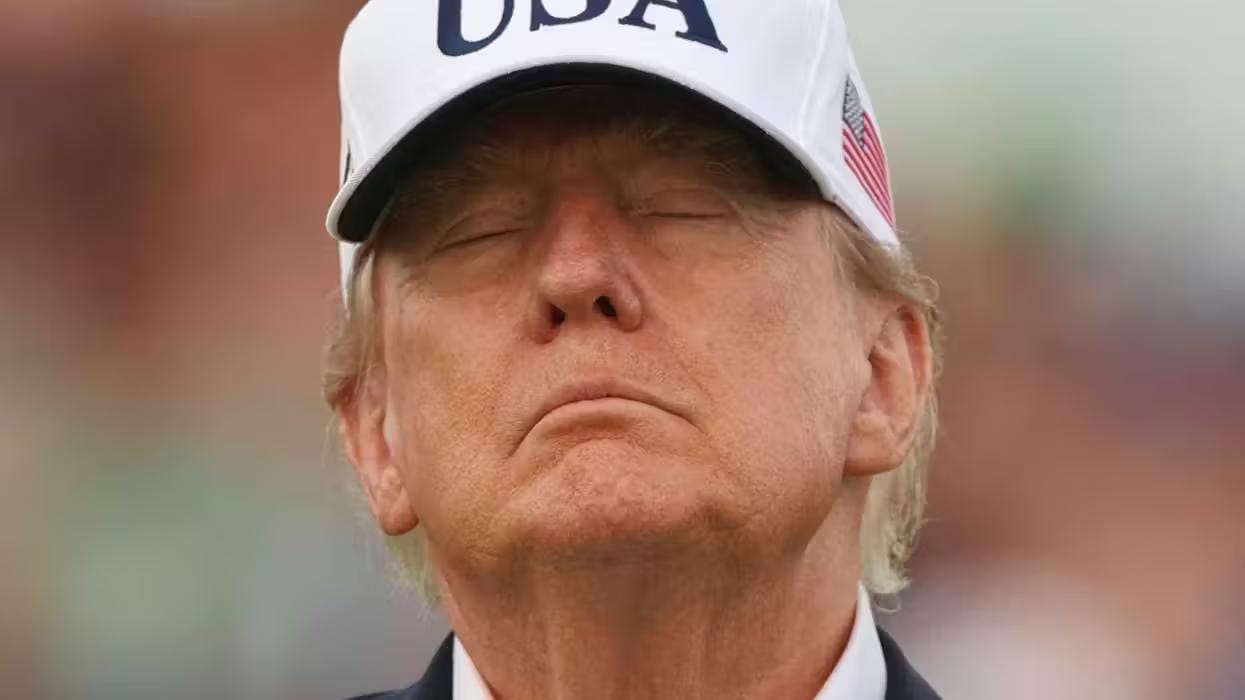
U.S. President Donald Trump reacts at the Amgen Irish Open 2026, at Trump International Golf Links in Doonbeg, County Clare, Ireland, September 13, 2026. REUTERS/Cathal McNaughton Trump’s Loss of Control Is Not the Same as Institutional Recovery The Machinery Is Resisting Recent setbacks have narrowed Donald Trump’s room to maneuver. The Supreme Court rejected his effort to restrict mail voting. Congress passed sanctions against Russia. His own Federal Reserve chair, Kevin Warsh, backed an interest-rate increase. Representative Thomas Massie supported impeaching Trump’s defense secretary, while Speaker Mike Johnson moved to protect the administration. Meanwhile, war with Iran and rising oil prices are inflicting political and economic damage. That is evidence of resistance. It is not evidence that the system has healed. Help fuel the work. Independent analysis doesn’t fund itself:☕ Buy us a coffee Power Still Sits at the Top Trump remains president. His appointee leads the Federal Reserve. His party controls the House speakership. His defense secretary still benefits from Johnson’s institutional protection. The relevant question is therefore not whether Trump feels uncomfortable. It is whether officials with actual power will impose durable limits on him. A court ruling, a sanctions vote, and one Republican defection matter because institutions can obstruct presidential power. But describing these events as the body politic’s “white blood cells” risks converting ordinary checks into a heroic rescue narrative. Courts are supposed to reject unlawful executive action. Congress is supposed to exercise independent judgment. Officials performing their basic duties are not staging a miracle. Johnson’s Protection Racket The clearest exercise of agency in the story belongs to Mike Johnson. He is “circling the wagons” around the defense secretary because accountability would damage Trump. That is not confusion or procedural caution. It is a decision to subordinate congressional oversight to presidential protection. The fixation on whether Trump is “losing control” can obscure this enabling structure. He does not need total control when party leaders willingly absorb political costs for him. Institutional cowardice often looks less like surrender than delay, obstruction, and the quiet burial of consequences. Iran Is Not the Author of Trump’s Economy The source’s weakest framing casts Iran as an “underpowered nation” cleverly battering Trump’s economy through military attacks and higher oil prices. Iran may be an actor in the conflict, but this framing shifts attention away from the administration that holds vastly greater military, diplomatic, and economic power. Rieckhoff’s statement that Trump has “lost control of the war in Iran” implies that the administration owns consequential choices within that war. Treating the resulting economic pain chiefly as Iran’s tactical success launders presidential responsibility through the actions of a weaker adversary. Wars are not weather systems. Governments choose escalation, strategy, and the risks imposed on civilians, troops, and consumers. Defeat Can Produce Escalation Rieckhoff’s most important observation is also the least comforting: Trump may become more radical when he perceives his control slipping. That is an inference, not a confirmed plan. But it identifies the proper political problem. A cornered executive does not automatically become a constrained executive. Electoral anger, judicial resistance, and congressional dissent can limit a president. They can also create incentives for scapegoating, abrupt escalation, and increasingly aggressive attempts to dominate the public narrative. The administration’s claim that the Federal Reserve raised rates to hurt Trump already turns an independent policy decision into a personal conspiracy. That is propaganda’s familiar function: replace responsibility with persecution. A System Is Only as Strong as Its Enforcers This story is not fundamentally about Trump suffering a bad stretch. It is about institutions deciding, unevenly and belatedly, whether they will behave as institutions or as extensions of one man’s political needs. The Supreme Court resisted. Congress resisted in one arena. Massie broke ranks. Johnson rushed to contain the damage. These are not parts of a single awakening; they are competing exercises of power. The larger pattern is a government whose safeguards depend on officials choosing to use them while other officials work just as deliberately to neutralize them. A few defeats can restrain a president. Only sustained consequences can restrain the political system that enabled him. Thanks to Alter Net Source: Trump’s going to hate his ‘new normal’: military veteran Systemic Error is a reader-supported publication. To receive new posts and support my work, consider becoming a free or paid subscriber. We warned them.We told them.We shouted from the rooftops.We plead.We begged.They didn’t listen.Now, we all will suffer.Y’all know what to do, right?VOTE BLUE! 💙Vote as if your life — nay, our country — depend on it.Because, this time, and every time, it does. This is a public episode. If you would like to discuss this with other subscribers or get access to bonus episodes, visit paulstsmith.substack.com
Embed this episode
No transcript yet.