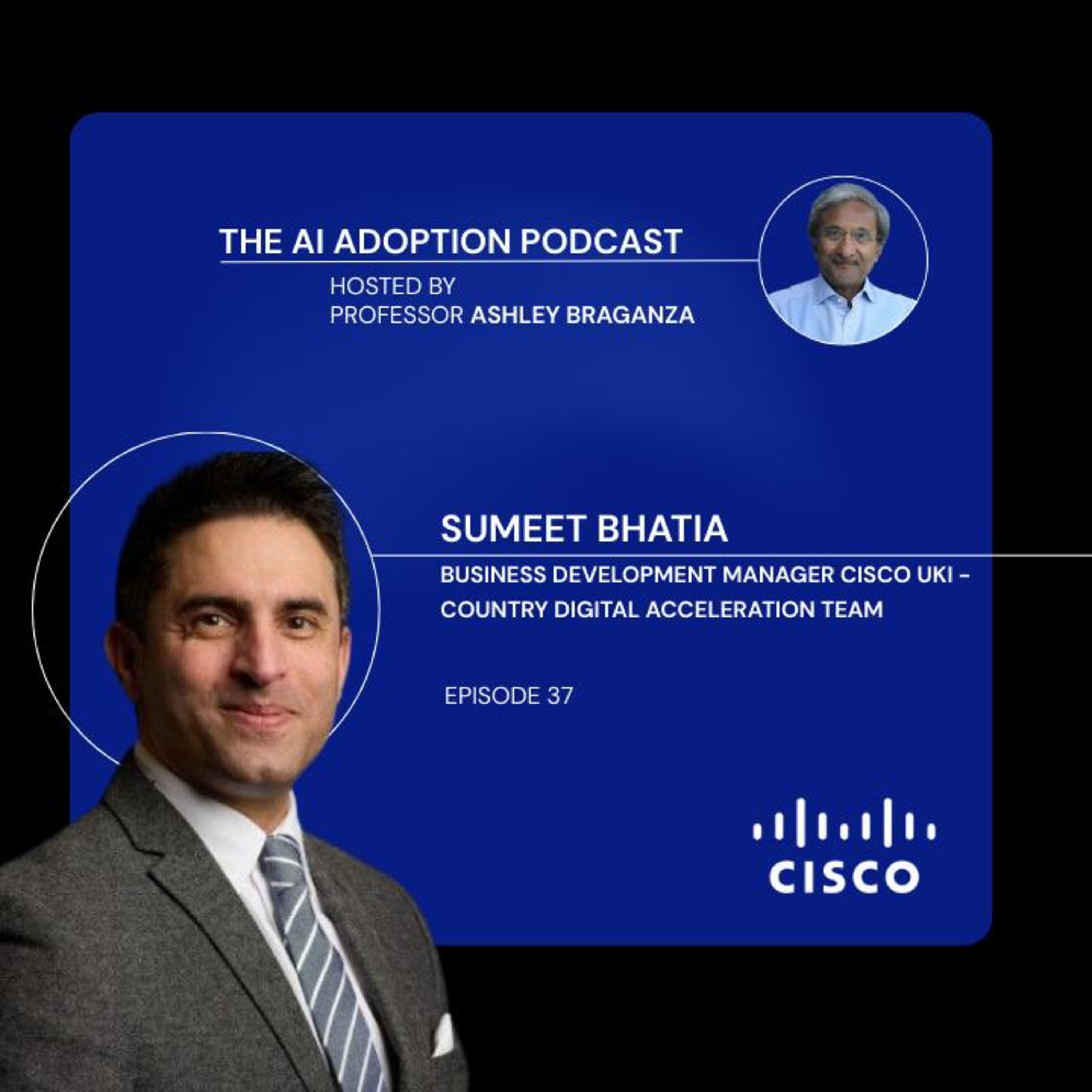
Trust, Explainability, and Human Oversight in AI Defence and Security Systems
from The AI Adoption Podcast Hosted by Professor Ashley Braganza
In this episode of The AI Adoption Podcast, I speak with Sumeet Bhatia from Cisco about the changing role of AI in defence and security. The discussion stays close to operational reality rather than abstract theory. We explore how AI now operates at a speed that humans cannot match. That speed allows threats to be detected earlier and systems to respond before damage spreads. At the same time, it creates new risks around trust and control. Sumeet explains that data purity, provenance, and governance are not technical hygiene issues but strategic and operational warfare necessities. Data integrity runs through the entire conversation. Poisoned data can quietly distort AI behaviour, while misinformation can undermine confidence in the information presented to human decision makers. In defence environments, that loss of confidence can be as damaging as the attack itself. Explainability becomes critical when decisions carry serious consequences. Opaque models make it difficult to understand how conclusions are reached. Without clear decision trails, accountability weakens and trust erodes under pressure. We also discuss the rise of multi-vector attacks. Disruption no longer arrives through a single route. Infrastructure, cyber systems, and information channels can all be targeted together. AI helps by recognising patterns across these fronts before instability escalates. The episode also looks at AI in operational contexts. Defence logistics faces challenges similar to large commercial supply chains. AI can support planning, predict failure points, and improve crisis response when conditions change quickly. Lessons from defence extend well beyond the military domain. The need for speed must be balanced with verification and human judgement. Policy continues to struggle to keep pace with technical capability and developments. Human oversight remains essential where lethal decisions are involved. Looking ahead, effective human–AI teaming will depend on new training approaches and a serious investment in skills. Chapters 00:00 The Rise of Autonomous Cyber Warfare 03:00 AI in Defence and Security 05:58 AI's Role in Threat Detection 08:57 Human-AI Collaboration in National Security 11:59 Data Integrity and Misinformation Challenges 14:50 The Explainability Crisis in AI 17:40 Multi-Vector Attacks and Their Implications 20:54 Operational Enhancements Through AI 23:59 Lessons from Defence for the Private Sector 27:02 Policy Considerations for AI in Defence 30:02 The Future of Human-AI Teaming
Embed this episode
No transcript yet.