
EPISODE · Dec 18, 2025 · 43 MIN
323 - Turn the Other Cheek, Smile — and Mean It – David Miller
from Paper Napkin Wisdom - Podcast for Entrepreneurs and Leaders · host Govindh Jayaraman
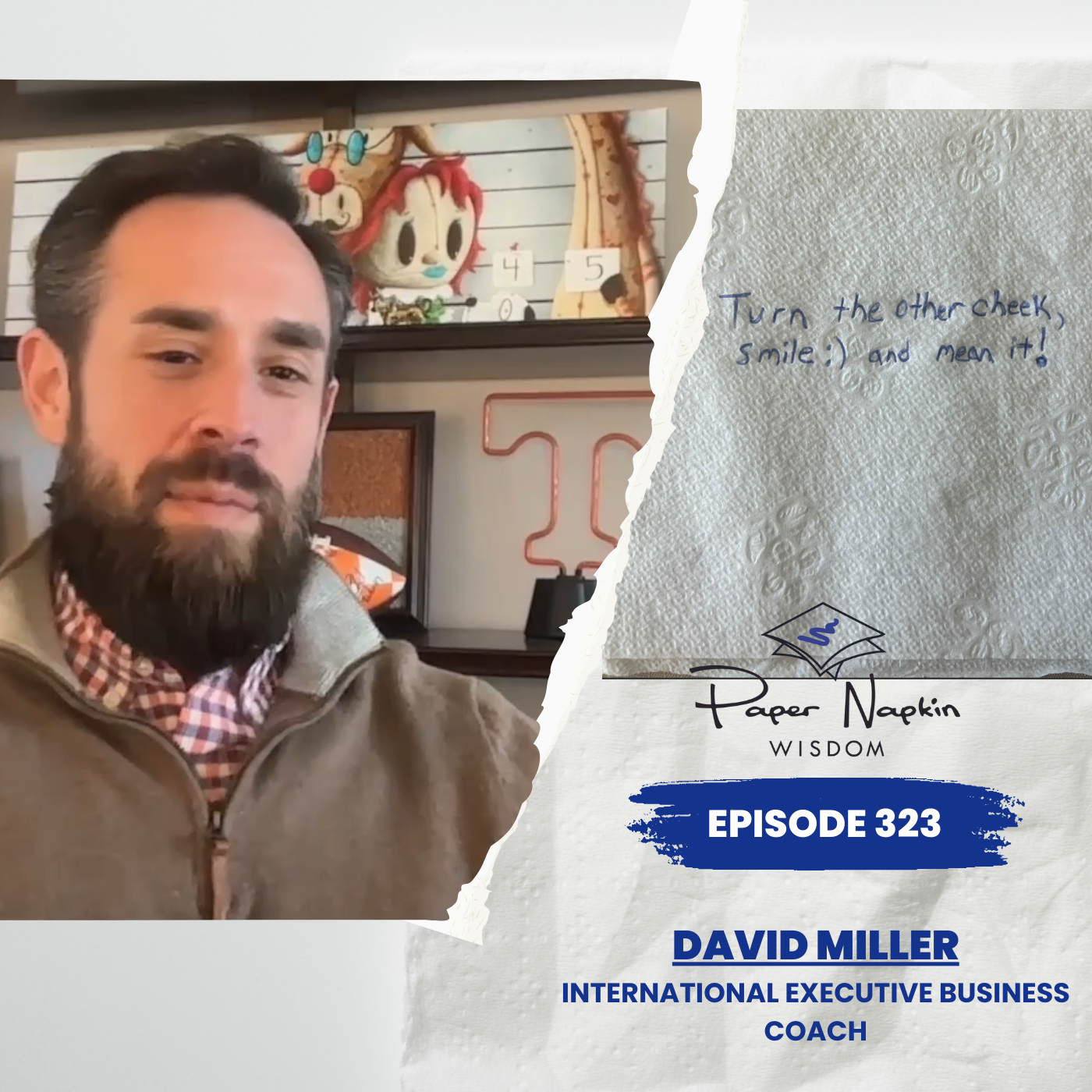
There's a particular kind of wisdom that doesn't shout. It doesn't posture. It doesn't try to win the room. It shows up quietly, often after experience has taken its toll, and says: this way works better. That's the kind of wisdom David Miller brought to this conversation. On his paper napkin, David wrote a deceptively simple line: "Turn the other cheek, smile :) and mean it!" At first glance, it sounds like something we've all heard before — maybe even dismissed. Too soft. Too passive. Too idealistic for the real world of business, leadership, and pressure. But as David's story unfolded, it became clear: this isn't about avoidance or weakness. It's about mastery. Emotional mastery. Leadership mastery. The discipline to respond instead of react. And that distinction matters more than ever. Where This Wisdom Comes From David's perspective isn't theoretical. It's shaped by a life of movement, risk, intensity, and responsibility — from aviation and air sports to entrepreneurship and leadership. He's spent years in environments where reactions are costly, composure is essential, and ego can get you hurt. Throughout the conversation, David keeps returning to one idea: how you respond when things don't go your way defines who you are — and how far you can go. Turning the other cheek, in his framing, isn't about letting people walk all over you. It's about refusing to let someone else's behavior hijack your internal state. Smiling — and meaning it — isn't performative. It's intentional. It's a signal to yourself first: I'm choosing how this moment affects me. The Cost of Reaction One of the undercurrents of this episode is how often leaders sabotage themselves not through bad strategy, but through unmanaged emotion. A sharp comment. A perceived slight. A deal that doesn't go as planned. A team member who disappoints. The instinctive response is to defend, correct, push back, or assert control. David's lived experience suggests something different: Every reactive moment taxes your energy, clarity, and credibility. Reaction feels powerful in the moment. But it's expensive over time. Turning the other cheek creates space. Space to see the bigger picture. Space to keep relationships intact. Space to remain aligned with who you want to be — not just what you want to win. Smiling — And Meaning It This is the hardest part of the napkin. Anyone can fake composure. Anyone can suppress frustration for a meeting or two. But David is talking about something deeper: genuine internal alignment. Smiling and meaning it requires you to let go of the need to be right. To let go of the need to score points. To let go of the story that says, "They shouldn't have done that." Instead, you choose a different internal posture: Curiosity over judgment Calm over control Long-term trust over short-term dominance That doesn't mean you don't address issues. It means you address them from a grounded place, not a triggered one. Leadership Isn't Loud A quiet theme running through this episode is that true leadership rarely looks dramatic. It looks like restraint. It looks like patience. It looks like someone who doesn't need to prove anything. David's napkin challenges a common leadership myth — that strength requires confrontation, force, or constant assertion. In reality, the leaders people trust most are the ones who are hardest to knock off center. Turning the other cheek isn't retreat. It's choosing not to escalate. And over time, that choice compounds. Five Key Takeaways from the Conversation 1. Emotional Control Is a Leadership Skill Your ability to regulate your response under pressure directly impacts trust, culture, and outcomes. Take Action: Notice your first reaction this week — and pause before acting on it. Choose your response deliberately. 2. Not Every Moment Requires a Counterpunch Just because you can respond doesn't mean you should. Take Action: Identify one recurring situation where you habitually push back. Experiment with restraint instead. 3. Strength Can Be Quiet Composure often communicates more authority than confrontation. Take Action: In your next tense interaction, focus on tone and presence rather than winning the point. 4. Internal Alignment Matters More Than External Optics Smiling only works if it's genuine. Otherwise, the cost gets paid internally. Take Action: Ask yourself: What am I holding onto that's preventing me from actually letting this go? 5. Long-Term Respect Beats Short-Term Satisfaction Turning the other cheek preserves relationships and momentum over time. Take Action: Make one decision this week based on long-term trust instead of immediate gratification. A Final Thought The napkin doesn't say avoid conflict. It doesn't say be passive. It says something far more demanding: Choose who you are — especially when it's hard. Turning the other cheek is a discipline. Smiling and meaning it is a practice. And together, they form a leadership posture that doesn't just get results — it earns respect.
Embed this episode
Ready to play
323 - Turn the Other Cheek, Smile — and Mean It – David Miller
No transcript for this episode yet
Similar Episodes
No similar episodes found.
Similar Podcasts
No similar podcasts found.