
EPISODE · Jun 20, 2021 · 12 MIN
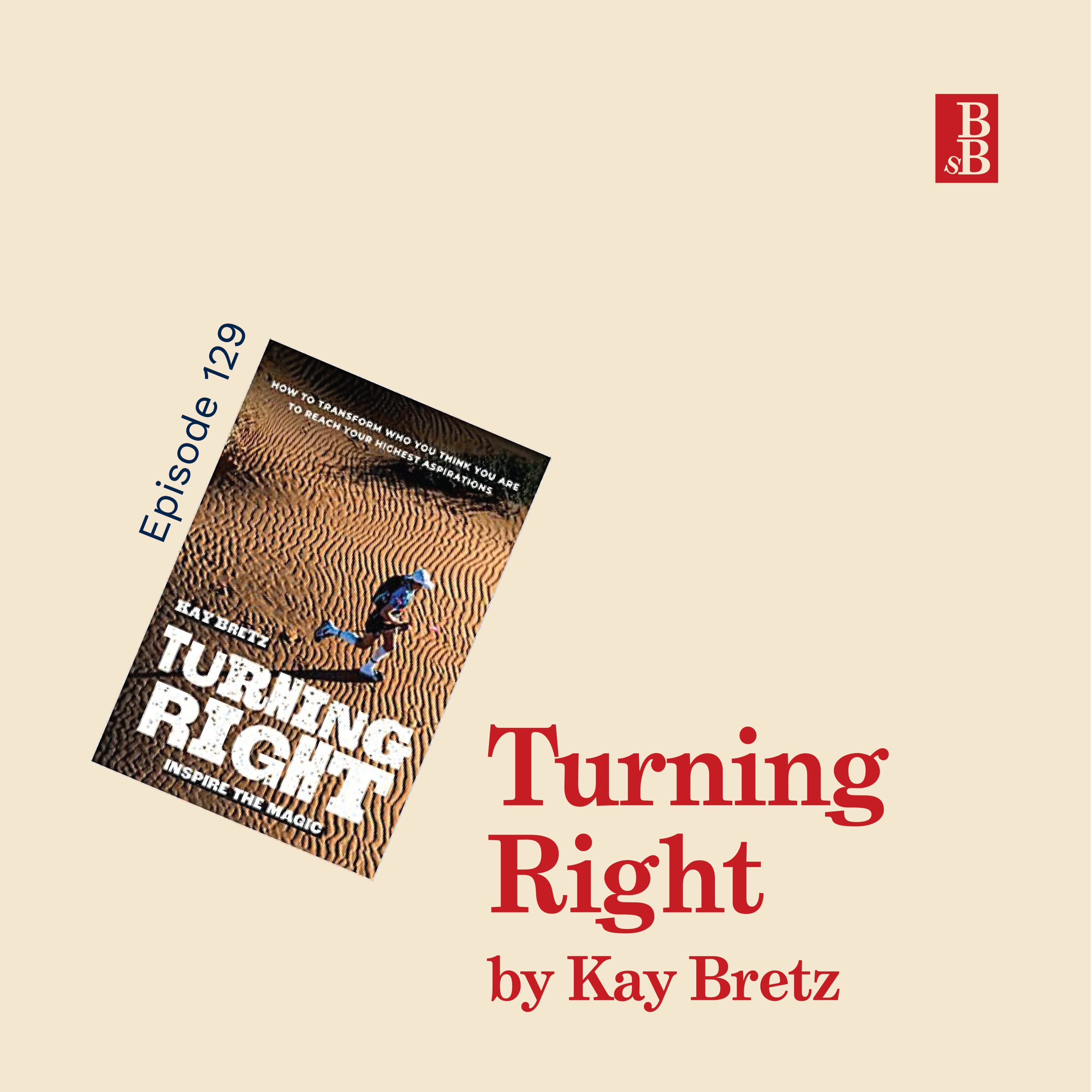
Turning Right by Kay Bretz: why you need to let go of success, in order to succeed
from Steph's Business Bookshelf Podcast · host Steph Clarke
About the book A compelling, un-put-downable account of recreational marathon runner Kay Bretz’s transformation into one of the best ultra runners in the world. The reader follows the author during his physical, mental and professional challenges and celebrates his hard-fought wins as he discovers the motivation to succeed, leaving behind his former motivation to avoid failure. It all started by turning right when his entire perspective on what he was capable of started to shift. Turning Right will inspire readers to find their own magic. Source: https://www.amazon.com.au/Turning-Right-Inspire-transform-aspirations/dp/0648980324/ref=sr_1_1?dchild=1&keywords=turning+right&qid=1624142447&sr=8-1 About the author Dr Kay Bretz, a 42-year-old German-Australian, lives in Melbourne, Australia, with his partner Rebecca. Kay is a corporate leader, elite athlete, and explorer. Since childhood, he felt the urge to explore the world. He spent a year in a Scottish boarding school, followed by three years at the University of Seville, Spain. After his Master’s Degree in International Business, he took what he would now call a right turn, and received a Doctorate in European Law. Kay has more than 15 years’ corporate leadership experience across the globe as an Associate Principal at McKinsey & Company and as a member of senior leadership teams in major Australian retailers. Source: https://www.amazon.com.au/Turning-Right-Inspire-transform-aspirations/dp/0648980324/ref=sr_1_1?dchild=1&keywords=turning+right&qid=1624142447&sr=8-1 Big idea #1 -Expect the unexpected One of the biggest lessons Kay grappled with was relinquishing control, something he’d used for years as a way of operating and achieving everything he had achieved. But at certain times, this desire for control had also been his downfall. Kay started working with Gavin Freeman after seeing Gavin speak at an event. Gavin’s first lesson to Kay was that he was too planned, something that Kay thought wasn’t even possible, let alone being a bad thing. One of the suggestions that Gavin had to start to wean Kay off of his need to plan everything, was to ask a friend to take him on mystery runs. So Kay asked his friend, Corey (who sounds like someone that everyone needs in their life) to take him on mystery runs. The idea of the mystery runs was Kay wouldn’t know where they were going, how long they were going out for, or what the route was. Making it impossible for him to plan. The first thing Corey did when he came to Kay’s house for the first mystery run, was to turn right at the end of Kay’s garden gate. Something that Kay had never actually done. He had always turned left out of his gate when he went for a run. This was enough to make Kay realize that he really needed to let go of some of his intensive planning. His training to let go of control was tested months later when flying to remote Australia for an ultra-marathon event, and being told that his bag wouldn’t make the flight, due to the small flight being overweight. The meticulous planning that Kay had done to make sure that his clothes, food, and other supplies were packed for the event, was out of the window, and he had to control what he could control. (Kay’s bag actually did make the flight when the crew realised that the passengers were almost all very slim ultra-maraton runners, and therefore the passenger weight was much lower than the typical flight, meaning there was weight for all the bags.) Ultimately, all of this was about recognizing the difference between technical challenges and adaptive challenges. Because ultra-marathon events are really adaptive challenges. Once you’ve got the baseline level of running, it’s really an adaptive challenge — can you react appropriately to the ever-changing situations, and the things that will happen over the multiple days. Big idea #2 — Manage your mindset A lot of this book is really around a change of mindset and a change of attitude. Some of the self-talk that Kay shares in the book is as relatable as it is brutal. And it was his mindset was what made him, but also what broke him at different times. In Berlin, whilst taking on the Berlin marathon, he felt unwell halfway through and nearly let the fear overcome him. But by practicing some of the techniques he’d been working with Gavin on, he ended up calming himself down and getting back into the rhythm of the race, even achieving a personal best of 2 hours and 44 minutes for the marathon. Later at the Big Red Run, a 250km run through the desert, he had built the self-awareness that allowed him to relax into the run over the multiple days, go with the flow, to trust himself and his methods. He was also able to hear when his ‘whingeing self’ was taking over and being able to work with it, rather than letting it take over, and get himself back into a different mindset and a different frame of self-talk. Big idea #3 — Let go of success One of the fantastic questions that Gavin asked Kay was ‘which part of your personality will you have to let go of in order to step up to the new challenges?’. Kay’s answer was his identification with success. It was this identification that had made him blow up in the Christchurch race. It held him back, took him over, given him negative self-talk, the need to win, and actually made him quite an unpleasant person to his support crew that were with him. He had this need to be the ‘successful ultra marathon runner’ and therefore couldn’t fail. Chasing this external validation was doing nothing for him. It would only emphasising this ‘need’ to only ever win, or successfully get through these races. The process of overcoming this identity with success also helped him to work through some childhood wounds, and see how ‘being good’ at things had protected him early on as it would maybe help avoid some of the problems at home. Ultimately he knew he needed to change himself, and accept the discomfort and the lows that he’d been avoiding. He realised that, like many of us, a lot of what he was doing was to help him avoid pain or discomfort or uncomfortable feelings. But if he was going to truly be successful and achieve bigger things, discomfort and was part of the deal. So he might as well get good at managing it! Support my book habit: https://www.buymeacoffee.com/stephsbookshelfSee omnystudio.com/listener for privacy information.
Embed this episode
NOW PLAYING
Turning Right by Kay Bretz: why you need to let go of success, in order to succeed
No transcript for this episode yet
Similar Episodes
No similar episodes found.
Similar Podcasts
No similar podcasts found.