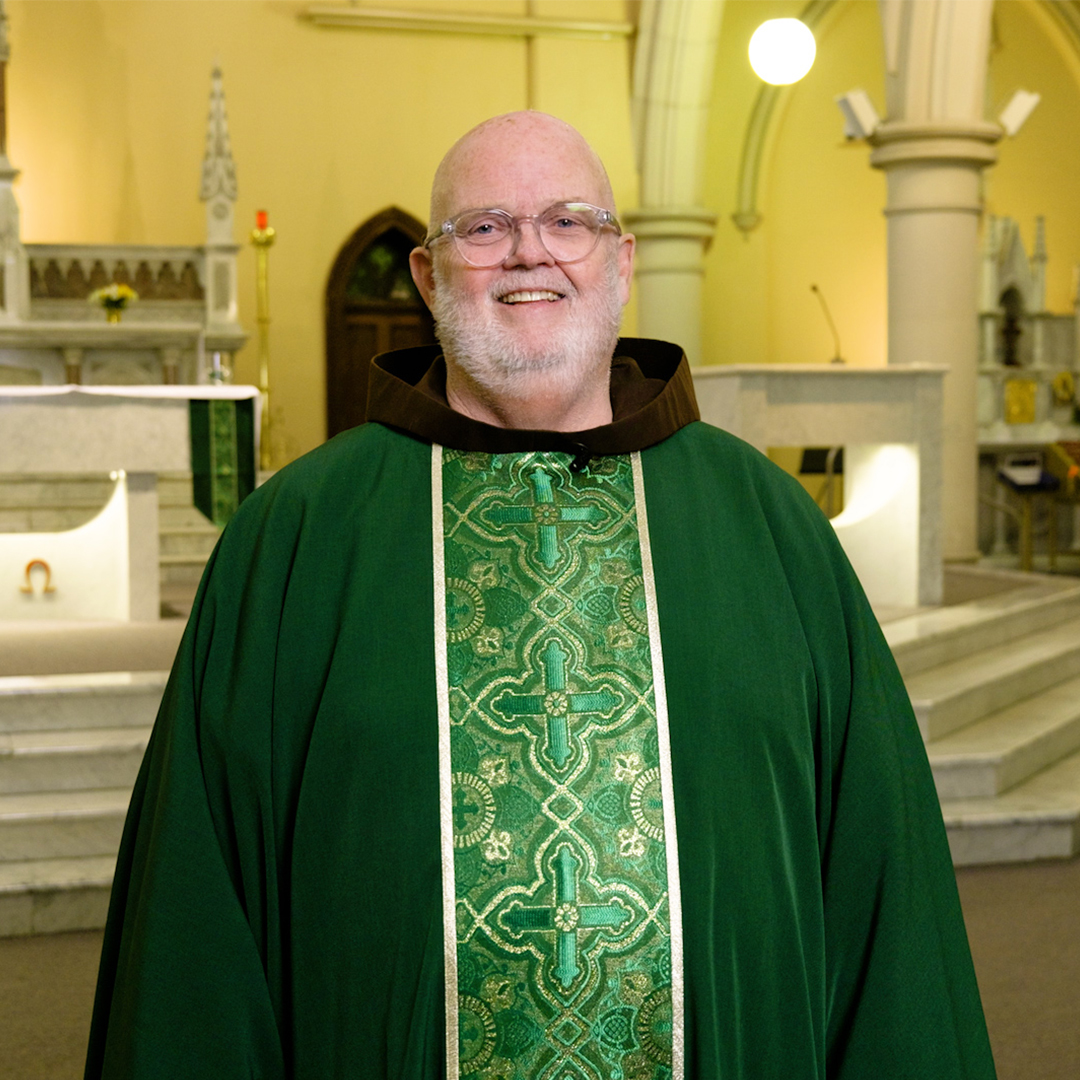
Twenty-Fourth Sunday in Ordinary Time episode artwork

EPISODE · Sep 12, 2024 · 3 MIN

Twenty-Fourth Sunday in Ordinary Time

from Archdiocese of Brisbane · host Archdiocese of Brisbane

Transcript ‘But you, who do you say I am?’ This would have to be one of the most powerful questions of the gospels. It echoes down the centuries and is just as relevant today as it ever was. ‘Who do you say I am?’ Our answer to that question is perhaps the most revealing statement of our faith. Our answer no doubt changes over time as we grow in understanding and as we experience the ups and downs of life. But nonetheless, like Saint Peter in the gospel passage we’ve listened to, our answer remains a clear statement of our faith. ‘Who do you say I am?’ Just a good guy who lived 2,000 years ago? A role model? A friend? God made flesh? The Word come down from heaven? Nobody? Everybody? Our saviour? An inspired man of God? The Messiah? Perhaps you’ve never tried to actually answer the question for yourself. It’s a confronting question, ‘Who do you say I am?’ It’s confronting because, as Christian people, we believe that our actions are a reflection of our beliefs and values. It’s confronting because whatever we say in answer to that question has implications for the way we live. ‘Who do you say I am?’ You see, the question is in the present tense, not in the past. It doesn’t ask ‘Who do you say I was?’; it asks, ‘Who do you say I am?’ The very question asks us to recognise that Jesus was not just some guy who lived 2,000 years ago, but rather someone who continues to be a presence in our lives today. As he stands before each and every one of us today and asks that same, demanding, confronting, purposeful question, ‘Who do you say I am?’ Like Saint Peter, I am sure many of us will say and use big concepts to describe who Christ is for us he is our Redeemer, our Saviour, our Lord, et cetera. We may start with big concepts, but eventually we each need to personally respond. To acknowledge our own weaknesses, and our own need for Jesus to understand the question and then begin to make the answer ours. Over the next few weeks, the Sunday gospel will call us into the ways of respect, of commitment, and of peaceful negotiation, to ever deeper insight into the ways of being part of God’s Kingdom. We will be reminded to reflect that you and I are the messengers, today. But today those beautiful words of Saint Peter never seem to get much of a focus, remember when Peter says; Lord you know everything; you know I love You. My friends, may Peter’s words to the Risen Christ be ours today. Lord, you know I love you! May we bring those words to life this week, Lord you know I love you!

Transcript ‘But you, who do you say I am?’ This would have to be one of the most powerful questions of the gospels. It echoes down the centuries and is just as relevant today as it ever was. ‘Who do you say I am?’ Our answer to that question is perhaps the most revealing statement of our faith. Our answer no doubt changes over time as we grow in understanding and as we experience the ups and downs of life. But nonetheless, like Saint Peter in the gospel passage we’ve listened to, our answer remains a clear statement of our faith. ‘Who do you say I am?’ Just a good guy who lived 2,000 years ago? A role model? A friend? God made flesh? The Word come down from heaven? Nobody? Everybody? Our saviour? An inspired man of God? The Messiah? Perhaps you’ve never tried to actually answer the question for yourself. It’s a confronting question, ‘Who do you say I am?’ It’s confronting because, as Christian people, we believe that our actions are a reflection of our beliefs and values. It’s confronting because whatever we say in answer to that question has implications for the way we live. ‘Who do you say I am?’ You see, the question is in the present tense, not in the past. It doesn’t ask ‘Who do you say I was?’; it asks, ‘Who do you say I am?’ The very question asks us to recognise that Jesus was not just some guy who lived 2,000 years ago, but rather someone who continues to be a presence in our lives today. As he stands before each and every one of us today and asks that same, demanding, confronting, purposeful question, ‘Who do you say I am?’ Like Saint Peter, I am sure many of us will say and use big concepts to describe who Christ is for us he is our Redeemer, our Saviour, our Lord, et cetera. We may start with big concepts, but eventually we each need to personally respond. To acknowledge our own weaknesses, and our own need for Jesus to understand the question and then begin to make the answer ours. Over the next few weeks, the Sunday gospel will call us into the ways of respect, of commitment, and of peaceful negotiation, to ever deeper insight into the ways of being part of God’s Kingdom. We will be reminded to reflect that you and I are the messengers, today. But today those beautiful words of Saint Peter never seem to get much of a focus, remember when Peter says; Lord you know everything; you know I love You. My friends, may Peter’s words to the Risen Christ be ours today. Lord, you know I love you! May we bring those words to life this week, Lord you know I love you!

NOW PLAYING

Twenty-Fourth Sunday in Ordinary Time

0:00 3:35

No transcript for this episode yet

We transcribe on demand. Request one and we'll notify you when it's ready — usually under 10 minutes.

Ask A Spaceman Archives - 365 Days of Astronomy Ask A Spaceman Archives - 365 Days of Astronomy Podcasting Astronomy Every Day of the Year Eat to Live Jenna Fuhrman, Dr. Fuhrman Our health is our most precious gift and smart nutrition can change your life. Each month, join Dr. Fuhrman and his daughter, Jenna Fuhrman as they discuss important topics in the world of nutrition. Eat to Live will change the way you eat and think about food. French Your Way Jessica: Native French teacher founder of French Your Way Boost your French listening skills and test your comprehension with this one of a kind series of podcasts. Get the chance to listen to a real conversation between native speakers talking at normal speed AND customise your learning experience through carefully designed sets of questions (2 levels of difficulty) available for download at www.frenchvoicespodcast.com. All interviews also come with the transcript. French teacher Jessica interviews native speakers of French from around the world who share a bit of their life and passion. Where else would you meet in one same place a French yoga teacher based in Melbourne, a soap manufacturer from Provence, or a couple cycling around the world? That Hoarder: Overcome Compulsive Hoarding That Hoarder Hoarding disorder is stigmatised and people who hoard feel vast amounts of shame. This podcast began life as an audio diary, an anonymous outlet for somebody with this weird condition. That Hoarder speaks about her experiences living with compulsive hoarding, she interviews therapists, academics, researchers, children of hoarders, professional organisers and influencers, and she shares insight and tips for others with the problem. Listened to by people who hoard as well as those who love them and those who work with them, Overcome Compulsive Hoarding with That Hoarder aims to shatter the stigma, share the truth and speak openly and honestly to improve lives.

Frequently Asked Questions

How long is this episode of Archdiocese of Brisbane?

This episode is 3 minutes long.

When was this Archdiocese of Brisbane episode published?

This episode was published on September 12, 2024.

What is this episode about?

Transcript ‘But you, who do you say I am?’ This would have to be one of the most powerful questions of the gospels. It echoes down the centuries and is just as relevant today as it ever was. ‘Who do you say I am?’ Our answer to that...

Can I download this Archdiocese of Brisbane episode?

Yes, you can download this episode by clicking the download button on the episode player, or subscribe to the podcast in your preferred podcast app for automatic downloads.
URL copied to clipboard!