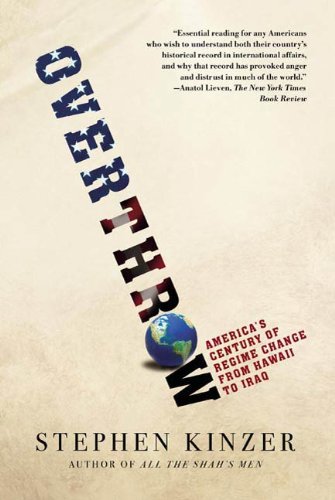
U.S. Foreign Policy, Regime Change, and Afghanistan w/ Stephen Kinzer episode artwork

EPISODE · May 12, 2021 · 48 MIN

U.S. Foreign Policy, Regime Change, and Afghanistan w/ Stephen Kinzer

from Parallax Views w/ J.G. Michael · host J.G.

On this edition of Parallax Views, what does President Joe Biden's decision to withdrawal troops from Afghanistan mean in the context of America's history with war and foreign intervention? Joining us to discuss this and the history of U.S. foreign policy in Afghanistan is the Watson Institute's Stephen Kinzer, author of Overthrow: America's Century of Regime Change from Hawaii to Iraq. This conversation was spurred on by Kinzer's April op-ed in the Boston Globe entitled "In Biden’s pledge to withdraw from Afghanistan, the prospect of turning an imperial tide". We begin by delving into the origins of how Stephen Kinzer developed his thinking on foreign policy, which in contrast to the D.C. consensus, emphasize restraint and skepticism towards the supposed effectiveness and benefits of imperial adventurism and foreign interventions. From there we delve into the origins of U.S. imperial ambitions and the American Exceptionalism that fuel those ambitions. In this regard Kinzer discusses an early intervention into the Philippines as well as detailing how the ethos of America's right to rule informs an understanding of historical that is to the detriment of learning history's lesson. From there we dive into the deep history of America's foreign intervention into Afghanistan following the events of September 11th, 2001. Kinzer notes how Afghanistan has fought foreign invaders many times over the course of centuries, and then takes us back to the overthrow of the Shah of Iran in 1979 and the Soviet-Afghan conflict of the Cold War. We go on to discuss the role of the CIA in the Soviet-Afghan conflict by way of its support of the mujahedeen and how this relates to the genesis of the Taliban. In this regard Kinzer responds to criticism that critics of U.S. foreign policy are "conspiracy theorists" who believe that the U.S. created jihadist militant organizations like al Qaeda. We also take some time to discuss how Operation Ajax, the covert operation that overthrew the democratically elected Prime Minister of Iran Mohammad Mossadegh in 1953, may also arguably create a domino effect of decades-spanning, far-reaching consequences that would eventually. Moreover, Kinzer discusses pushback against criticisms of the U.S. role in the growth of jihadist terrorism vis-à-vis accusations that such criticisms are based on conspiracy theories claiming that the United States directly created al Qaeda. In addition, Stephen Kinzer discusses the role of Saudi Arabia and Pakistan's ISI (intelligence services) in this area as well. We conclude the conversation by delving into the importance of Biden's statements concerning withdrawal and that Afghans must decide their future rather than Americans. Additionally, Kinzer discusses how we are moving towards a multipolar world and how a combination of foreign policy restraint and better domestic policies at home will actually benefit not only our national security but the well-being of ourselves and other countries more than continued foreign interventions. Moreover, Kinzer makes notes of how the American people, if not the beltway itself, are now embracing a more restrained vision of America's role in the world that stands in contrasts to D.C. stalwarts like Robert Kagan and Samantha Power

On this edition of Parallax Views, what does President Joe Biden's decision to withdrawal troops from Afghanistan mean in the context of America's history with war and foreign intervention? Joining us to discuss this and the history of U.S. foreign policy in Afghanistan is the Watson Institute's Stephen Kinzer, author of Overthrow: America's Century of Regime Change from Hawaii to Iraq. This conversation was spurred on by Kinzer's April op-ed in the Boston Globe entitled "In Biden’s pledge to withdraw from Afghanistan, the prospect of turning an imperial tide". We begin by delving into the origins of how Stephen Kinzer developed his thinking on foreign policy, which in contrast to the D.C. consensus, emphasize restraint and skepticism towards the supposed effectiveness and benefits of imperial adventurism and foreign interventions. From there we delve into the origins of U.S. imperial ambitions and the American Exceptionalism that fuel those ambitions. In this regard Kinzer discusses an early intervention into the Philippines as well as detailing how the ethos of America's right to rule informs an understanding of historical that is to the detriment of learning history's lesson. From there we dive into the deep history of America's foreign intervention into Afghanistan following the events of September 11th, 2001. Kinzer notes how Afghanistan has fought foreign invaders many times over the course of centuries, and then takes us back to the overthrow of the Shah of Iran in 1979 and the Soviet-Afghan conflict of the Cold War. We go on to discuss the role of the CIA in the Soviet-Afghan conflict by way of its support of the mujahedeen and how this relates to the genesis of the Taliban. In this regard Kinzer responds to criticism that critics of U.S. foreign policy are "conspiracy theorists" who believe that the U.S. created jihadist militant organizations like al Qaeda. We also take some time to discuss how Operation Ajax, the covert operation that overthrew the democratically elected Prime Minister of Iran Mohammad Mossadegh in 1953, may also arguably create a domino effect of decades-spanning, far-reaching consequences that would eventually. Moreover, Kinzer discusses pushback against criticisms of the U.S. role in the growth of jihadist terrorism vis-à-vis accusations that such criticisms are based on conspiracy theories claiming that the United States directly created al Qaeda. In addition, Stephen Kinzer discusses the role of Saudi Arabia and Pakistan's ISI (intelligence services) in this area as well.We conclude the conversation by delving into the importance of Biden's statements concerning withdrawal and that Afghans must decide their future rather than Americans. Additionally, Kinzer discusses how we are moving towards a multipolar world and how a combination of foreign policy restraint and better domestic policies at home will actually benefit not only our national security but the well-being of ourselves and other countries more than continued foreign interventions. Moreover, Kinzer makes notes of how the American people, if not the beltway itself, are now embracing a more restrained vision of America's role in the world that stands in contrasts to D.C. stalwarts like Robert Kagan and Samantha Power

NOW PLAYING

U.S. Foreign Policy, Regime Change, and Afghanistan w/ Stephen Kinzer

0:00 48:08

No transcript for this episode yet

We transcribe on demand. Request one and we'll notify you when it's ready — usually under 10 minutes.

Undeniable w/ Braxton Curtis Braxton Curtis The official Podcast of Braxton Curtis.A Father, Husband, and Business Owner just trying to figure it all out. Explicit Creativity Threads Life w/ Mr Benja Mr Benja Welcome creatives! These are discussions, thoughts, case studies, interviews, and lessons about how our creativity relates to life. The host, Mr Benja, is a former video game programmer / designer for Rockstar Games, Sony Santa Monica, The 3DO Company, and others, as well as a fine artist. -- Be sure to check out the website for more. Explicit Digital Tea Party W/ Rebekah and Musa digitalteapartypod Welcome to Digital Tea Party with Rebekah and Musa, where we pour a steaming cup of internet drama and sip on the chaos that comes with being chronically online. From TikTok trends to the latest social media meltdowns, we break it all down with unfiltered commentary, a sprinkle of humor, and way too much time on our hands. Join us as we navigate the digital overload and yap about everything the algorithm throws our way. Catch us on YouTube, Spotify, Apple Podcasts, and TikTok—always under Digital Tea Party. Let’s spill the tea, shall we? Explicit The Calculus of IT Nathan McBride & Michael Crispin An exploration into the intricacies of creating, leading, and surviving IT in a corporation.  Every week, Mike and I discuss new ways of thinking about the problems that impact IT Leaders.  Additionally, we will explore today's technological advances and keep it in a fun, easy-listening format while having a few cocktails with friends.  Stay current on all Calculus of IT happenings by visiting our website: www.thecoit.us. To watch the podcast recordings, visit our YouTube page at https://www.youtube.com/@thecalculusofit. Explicit

Frequently Asked Questions

How long is this episode of Parallax Views w/ J.G. Michael?

This episode is 48 minutes long.

When was this Parallax Views w/ J.G. Michael episode published?

This episode was published on May 12, 2021.

What is this episode about?

On this edition of Parallax Views, what does President Joe Biden's decision to withdrawal troops from Afghanistan mean in the context of America's history with war and foreign intervention? Joining us to discuss this and the history of U.S. foreign...

Can I download this Parallax Views w/ J.G. Michael episode?

Yes, you can download this episode by clicking the download button on the episode player, or subscribe to the podcast in your preferred podcast app for automatic downloads.
URL copied to clipboard!