Hi, welcome to today's CNAs podcast. My name is Anthony Cho, and I'm here today talking to Harry Cressa, the base of each fellow here at CNAs, about his latest report on Chinese overseas influence operations. Harry's written a new report called Under Pressure, which examines a lot of these aspects. Harry, welcome.
Thank you, Anthony. So tell us a little bit about this report. How is China influencing things overseas? Well, we've been getting more and more interested at how China's looking at the societies of its rivals and its competitors, many of them liberal democracies, and finding ways to subvert the traditional strengths that we think of with liberal democracies.
So what we're thinking of here is kind of similar to China's approach to military competition, where they know that they can't hope to compete directly with, say, China with the United States's Navy, its aircraft carriers, etc. And so it invests asymmetrically by developing cheap long range anti-ship missiles. So they don't have to match the United States' distillage to each again. They just have to be strong enough to undermine the United States' strengths in this area.
And we find that the Chinese government is adopting a similar approach in the power of liberal democracies, politics and cultural example. China doesn't have to compete with the cultural power of liberal democracies in its various rivals and competitors, but it just has to be strong enough to find paths to weaken and undermine those strengths. And that's primarily in the areas of politics, academia and private enterprise. So the idea is that eventually, by influencing and manipulating the voters and stakeholders of these three societies, China will be able to influence policy outcomes that are more advantageous to Beijing's interests.
Great. Well, let's start there and talk a little bit first about politics. What is China doing very large politically? And then are there any examples you'd like to highlight something that might be alarming to some listeners?
Absolutely. China is trying to find any entry point at can into a lot of these open societies to influence politics and the opinion of voters and in particular, mobilize specific leaders and opinion makers to see things in a more sympathetic light to China. One notable example is the case of a former Australian Senator Sam Dastairi. This fellow Mr.
Dastairi was a young progressive with an outsider credibility who was an exciting new figure in Australian politics who was soon overcome with financial ties to suspected Chinese interests. In particular, there was a Chinese billionaire by the name of Huang Xiangmuo who took a particular interest in Senator Dastairi and used lax Australian campaign finance laws to help Dastairi cover tens of thousands of legal bills that he had come upon. What about academia? We've obviously heard a lot of rumblings about Confucius Institutes, but can you disentangle that for us a little bit?
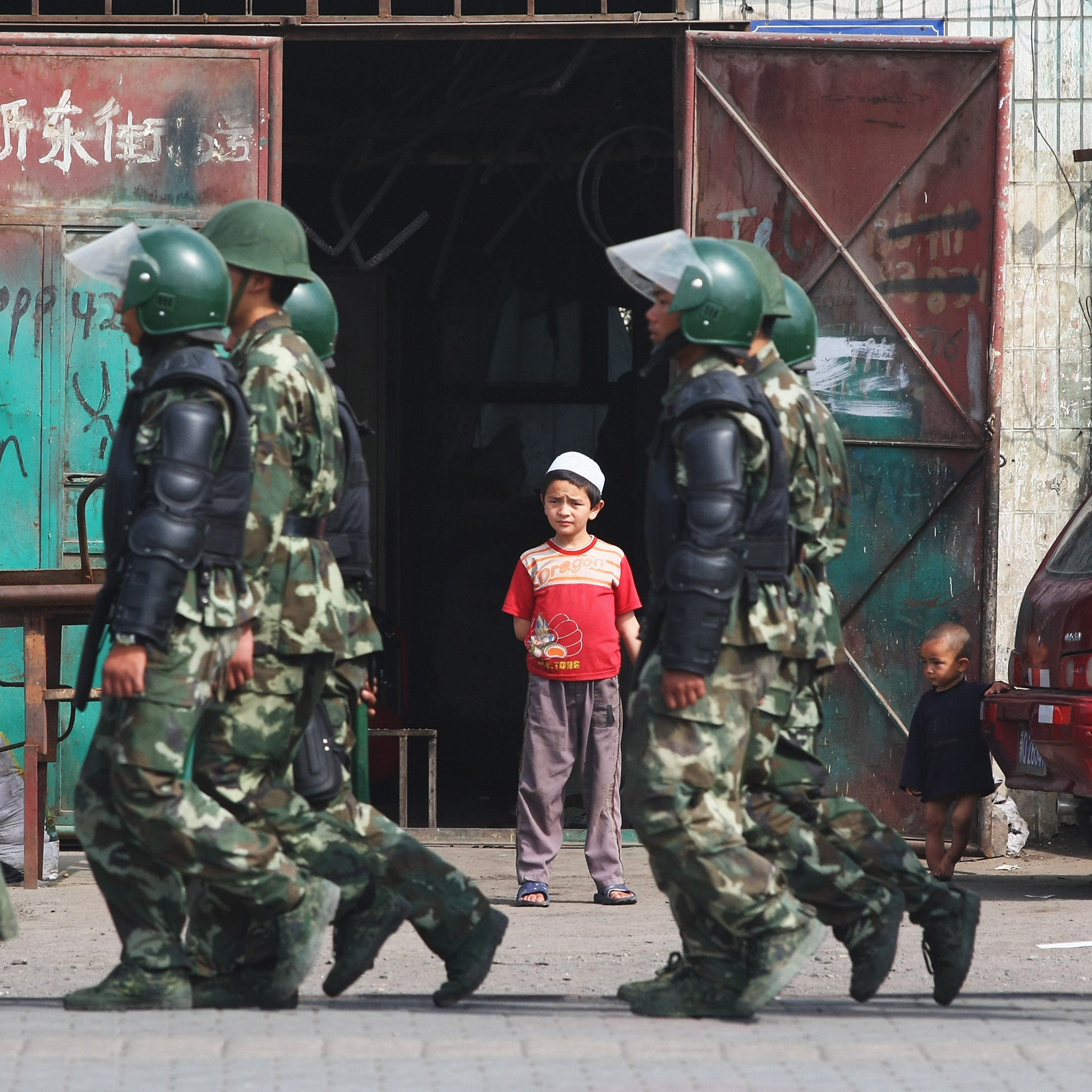
Absolutely. So one of the points of intersection between Western academia and Chinese academia is field research. And we're finding more and more that scholars from Western countries, from more liberal open countries, are having a harder time getting the visas required to do field research in China if they have previously done research on topics that China does not necessarily approve of. There's growing anecdotal evidence that scholars, who have researched Xinjiang Province and the Uyghur peoples there, which are associated with some political unease and Beijing, have a hard time getting granted interviews as to return to China and continue their research.
But as you mentioned, I think one of the growing concerns is Chinese academic influence on the domestic academia of little democracies and in particular, a form of Confucius Institutes. Confucius Institutes are something like a Chinese department in a box where a university can choose to host a semi-independent academic department that does Chinese language and cultural instruction at no cost to the university because the Chinese Ministry of Education is helping subsidize it. What is not often talked about is the strings that come attached with those institutes, which are one frequently shrouded in secrecy, but two are thought to widely include restrictions on the curriculum that can be taught in these Confucius Institutes and control over hiring. And so you have what's essentially directly funded by the Chinese government's self-power initiative on university campuses that need both compelling academic opportunities for their students, but also are facing an era of declining budgets.
Interesting. And lastly, what about private enterprise? I assume this means a large amount of Chinese business interests everywhere, but is there a way that it's being used? Well, I think that one of the most subversive ways that Chinese interfacing with American private enterprises playing out is in how they're using coercive regulations and laws to alter the presumed value set of a lot of these private companies, especially companies that have been vocal about their values, being particularly about American tech giants such as Apple and Google, who have been vocal about their values and how they see themselves as quintessentially American companies.
But the rubber hits the road in the Chinese market can frequently result in something of a change. For example, Google a few years ago made much hay about leaving China. They decided they were not able to, in good conscience, continue working under a censorship regime and decided that they were going to seek their fortunes elsewhere. Of course, they're now putting a toe back in the waters trying to find a way back into China.
Google CEO Sundar Pichai was just at a conference in China China's essentially controlled internet and it was the first appearance by a Google CEO there and was seen as something of an attempt at an knowledge branch. Another example here is Apple, which in the United States cultivates a reputation as being a very privacy-minded organization, one where they would fight against FBI efforts to get the phone unlocked of a suspected terrorist, but they haven't been putting up as many fights when asked by the Chinese government to remove applications from their store that lets consumers access the internet outside the Great Firewall of China, for example. Interesting. It almost seems like there's two separate sets of rules.
Well, given all of these alarming trends and it seems like we're kind of piecing together the forensic map of what's actually happening, what can be done without giving away the whole report? Is there something you'd like to highlight that can be done? I think that the overall theme I want to get at here is that sunlight is the best disinfectant. I think it's important that countries take a hard look at the laws regulating politics and how influence can be peddled in it.
Australia as a result of Senator Destiari's story is undergoing a comprehensive discussion right now about the influence of foreign money in their politics and it looks like they're going to be undertaking some significant reforms there. Here in the United States we have relatively strict campaign finance laws, but our laws around foreign funding for academia, for lobbying organizations, and for think tanks like our own are relatively lax and I think we need to take a hard look at that. In private enterprise, I don't think that it's a government's place to tell companies what their business models should be in the modern era, but I think that fundamentally citizens of free and open societies are going to need to take a sense of stakeholdership for the societies that they live in. We see that companies are compromising their values for overseas consumers.
There's no reason to think they won't be compromising their values at some point for domestic consumers as well. Great. Just to kind of conclude, there's been a lot of talk about China being conflated with the Communist Party of China being conflated with the Chinese people and you and I actually wrote on this a couple months ago in Foreign Affairs about the ethnocentric foreign policy of China. What do you see there going forward?
There's been more talk about the Chinese people. Xi Jinping just mentioned the ethnic Chinese sons and daughters about when talking about policy reform and state reform. Where do you see that going? I think this is going to be an era that liberal democracies are going to have to be very careful and thoughtful about.
One of the greatest strengths of liberal democracies is their inclusiveness and in particular, I think in the United States, the idea that citizenship does not coincide with ethnicity and I think that we are going to be tempted by the Chinese Communist Party's efforts to mobilize the broader Chinese diaspora to regress in that regard. As China invests more money in trying to mobilize a statist identity centered on Beijing among its overseas diaspora, I think there's significant danger that the United States and other allies and partners will be tempted to start thinking of anyone as – start thinking of members of the Chinese diaspora of Chinese immigrants as potential security risks and I think that's dangerous. We need to be thinking about those kinds of efforts at mobilization as an attack on American citizens, not as an attempt to subvert people who aren't quite American citizens. Great.
Well, that's it for us. Thanks for listening and we hope you turn it again for the next CNA's podcast. Thank you.