
EPISODE · Aug 29, 2025 · 24 MIN
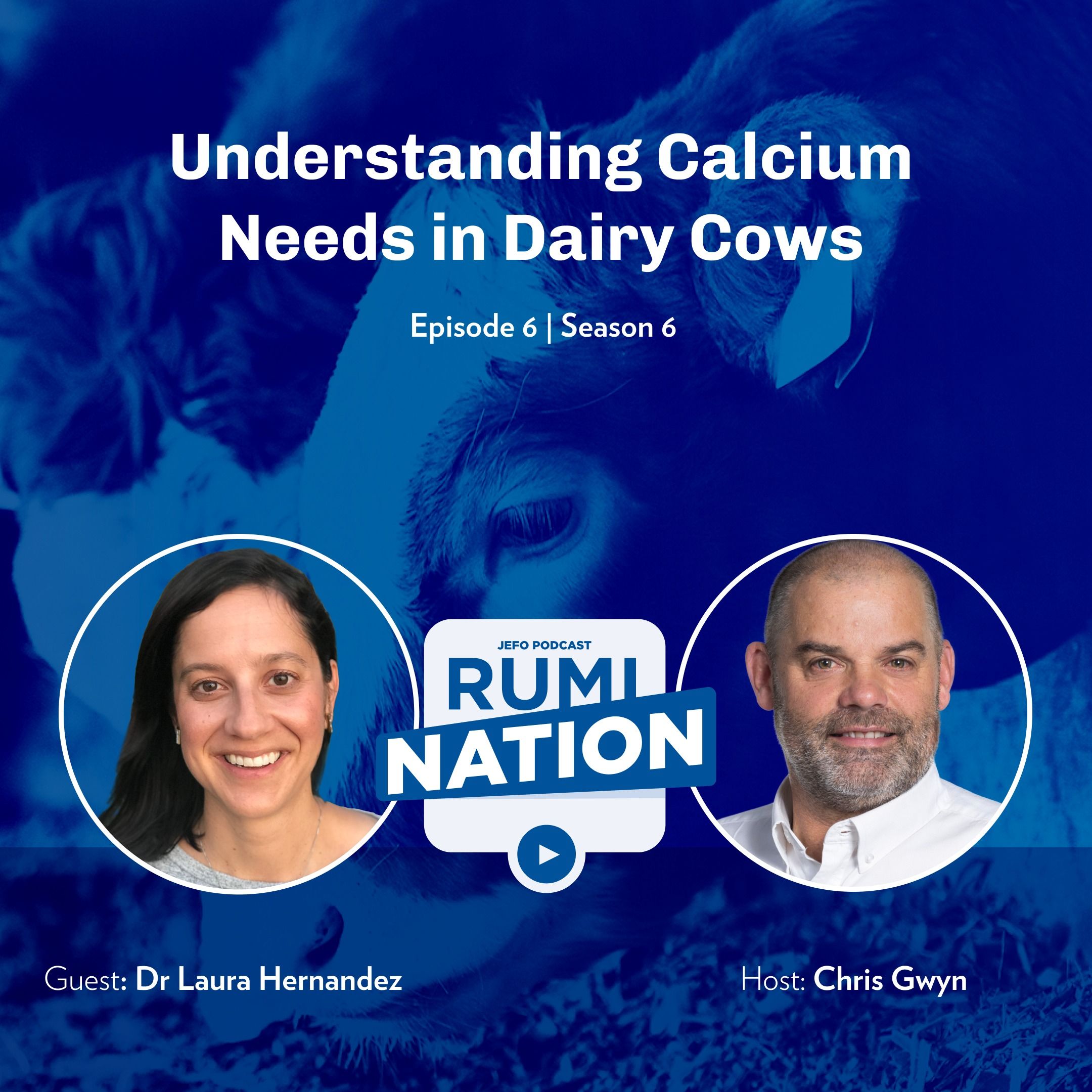
Understanding Calcium Needs in Dairy Cows
from RumiNation · host Jefo
Timestamps & Summary Chris Gwyn (01:50)Dr. Hernández, could you share with the audience your journey that brought you to be a trusted researcher and advisor at the University of Wisconsin?Dr. Laura HernandezSure. Working in Dr. Collier's lab, I had the fortunate pleasure of working in mammary biology. I specifically worked on how the mammary gland interacts with the endocrine and metabolic systems of an animal. And naturally, given his research was in dairy cows, that was my first exposure. I really became fascinated with this process. So, it led me to be a postdoc continuing this work, but also in humans and in mice, and looking at things more holistically from how the maternal metabolism and biology coordinate with the mammary gland to make milk and stay healthy at the same time. And so when they were looking for a lactation biologist at the University of Wisconsin, I was more than happy to apply for it and very fortunate to get the position. I've been here now for 14 years. […] Chris Gwyn (03:28)We deal every day with dairy ruminants about producing milk. Can we say sometimes you overlook the other, and the physiology and metabolism that goes on? This is strange, but it's awesome that you're in this role and the University of Wisconsin is continuing this role because it doesn't exist in a lot of universities, right?Dr. Laura Hernandez (03:55)It doesn't. And we're fortunate now we have a second faculty member in the space, Ximena Laporta. And so, they really expanded that. And prior to my getting here, at various periods of time, they had maybe two people focused in that space. Occasionally, we had someone studying mastitis. Pam Ruegg was here before Michigan State. And so they've always put a focus on that. […] Chris Gwyn (04:50)Further on that, we can expand because as I read through your research, it seems that perhaps, the industry in general may have overlooked the key role of the mammary system. As you pointed, it's specific to calcium balance or homeostasis in the dairy cow.Dr. Laura Hernandez I think maybe 30, 40 years ago, there was more emphasis on this interaction between what was happening in the tissue itself and how that was dealing with nutrition or the endocrine state of the animal. There have been some really great mammary biologists like Jeff Dahl, Dale Bowman, Bob Collier, and Alan Tucker at Michigan State. But there's been this space where we've really gone down nutritional management, which is important. But as the mammary line keeps producing milk, it's sending signals back to the cow, like “I need more”. And calcium, of course, is critical because it's the highest mineral content in milk. And the cow needs calcium, too, to maintain muscle balance and a variety of processes. […] Chris Gwyn (07:41)In some of the discussions you've had that negative gap in calcium actually extends quite a bit of ways into the lactation, doesn't it?Dr. Laura HernandezYeah. The most data we have in cows, at least, it's hard to assess bone status in a cow without euthanizing the animal, but for sure, in the first 30 days in milk, they're losing potentially up to 13% of their bone mass. But it's really not until the animal hits peak lactation, where she's not compensating for this massive amount of milk production and trying to ride herself after having given birth, that she gets to this state where she's achieved a steady amount of milk. […] Chris Gwyn (09:20)I was reading recently, in the last number of years, you and collaborative researchers have been looking at transient hypocalcemia. I wonder if you could expand a bit more on this and what it means to dairy producers or veterinarians or nutritionists.Dr. Laura HernandezThis has been an interesting task for my colleague, Jessica McCarthy, and I, of trying to tell people that a little bit of hypocalcemia is okay because the common thought is they're hypocalcemic, they're sick, they need more calcium, or they need a bolus, or they need an IV, and something's not right. There're really these categories and degrees of hypocalcemia that can be problematic. But the issue is what stimulates that calcium mobilization from bone is what we call an endocrine negative feedback. […] Chris Gwyn (17:01)Serotonin, you've done some work on that. Is there a play in there for these transition cows?Dr. Laura HernandezThis is just what I hope becomes another tool in the toolbox. But what we've shown, at least with our data, is that the precursor to serotonin, 5HTP or 5-hydroxy tryptophan, will trigger a hypocalcemia that then allows for those negative feedback events to start. […] Chris Gwyn (18:39)These products need to be mixed, consumed, delivered, properly. Where's the research going on hypocalcemia after this, you think?Dr. Laura HernandezThat's a great question. I think some of what we're doing is getting more details together on the exolith and trying to understand that to gather more information, I think that's one way. I think the other thing is trying to understand how all these different preventative methods work. When do you give a bolus? When do you give a gel? How do those things work in combination with these prepartum therapies? Because I think there's a real gap in that knowledge. […] Chris Gwyn (21:39)What would you share as the top three take-home messages when it comes to hypocalcemia in cows?Dr. Laura HernandezManage your cows prepartum. Pick your poison, whether it's Exalate or DECAD. I highly encourage that because they work. I would say, figure out what works best and do it right. […]The other one is that I don't think we need to be blood testing cows daily for the first week postpartum. I think if you're really concerned about how a herd is doing, maybe on a larger scale, try to get samples. If you're only going to do it once, wait 48 hours unless you see a sick animal. Always treat a sick animal. […]Then third, I think the other thing is that getting all the knowledge of the different treatments and preventions there are and understanding them is really important as a nutritionist or a veterinarian. […]
Embed this episode
What this episode covers
In this episode, Dr. Hernandez explains how managing calcium balance, especially transient hypocalcemia, supports dairy cow health, milk production, and effective prevention strategies prepartum.
Ready to play
Understanding Calcium Needs in Dairy Cows
No transcript for this episode yet
Similar Episodes
No similar episodes found.