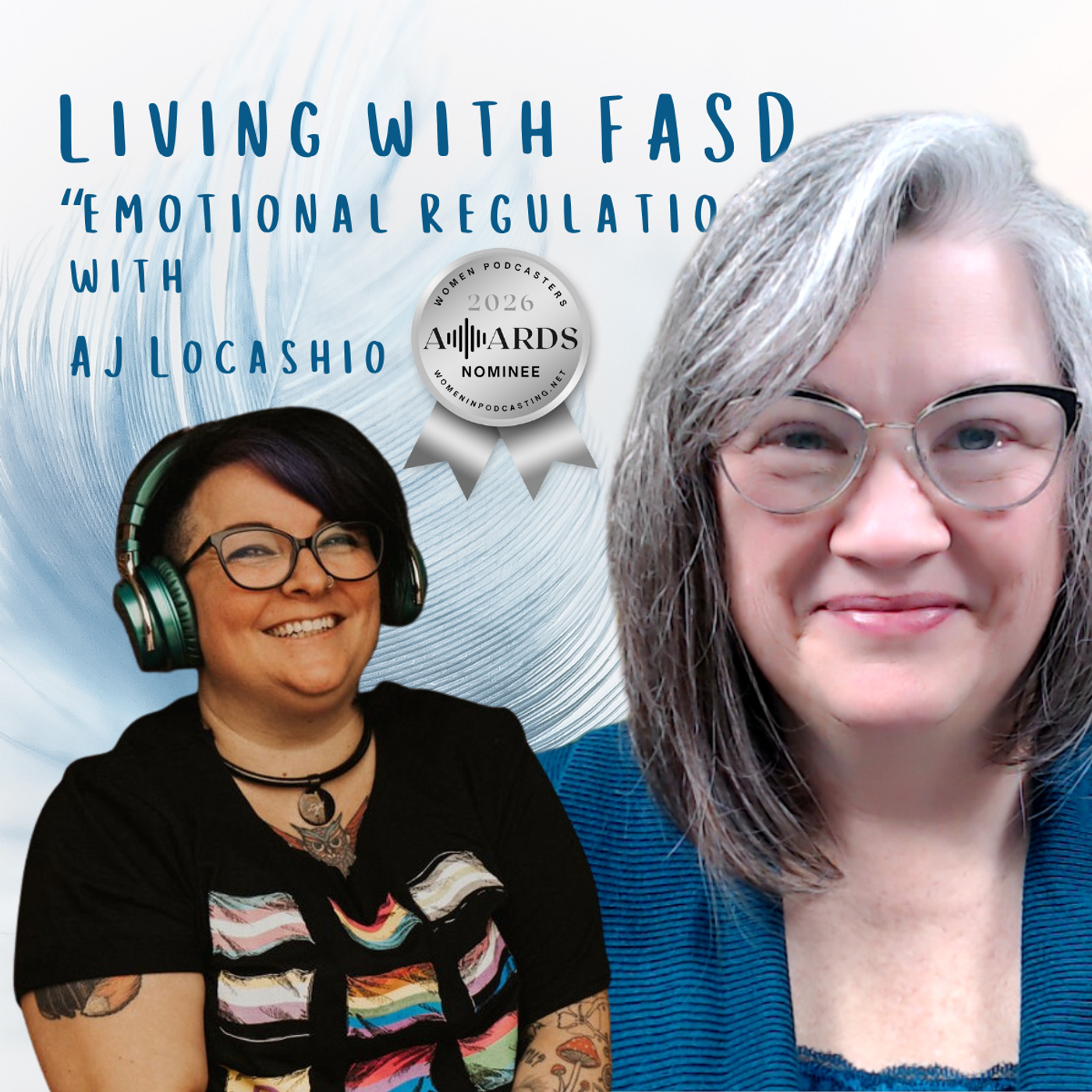
Understanding Emotional Regulation in Neurodivergent Individuals episode artwork

EPISODE · Feb 16, 2026 · 1H 9M

Understanding Emotional Regulation in Neurodivergent Individuals

from Living with FASD · host Patricia Kasper

In this episode of Living with FASD, host Patti Kasper talks with AJ Locascio, founder of Umbrella ND, about the emotional regulation challenges neurodivergent people face, including those with FASD, autism, and ADHD. They explore how sensory environments, trauma histories, & everyday microaggressions can lead to dysregulation, panic, and disconnection, and why understanding individual sensory profiles and creating supportive spaces is so important. AJ shares her journey from middle school teacher to community advocate, emphasizing the value of connection, self-advocacy, and accommodations in schools, medical settings, and public spaces.Patti and AJ also dive into language, communication, and the role of curse words as a coping strategy for some neurodivergent individuals, explaining how the brain can retain emotionally charged words even when other language skills are compromised. They call for more nuanced, context-aware interpretations of behavior that prioritize safety, self-awareness, and emotional regulation over compliance. Throughout the conversation, they highlight how advocacy is both necessary and exhausting, reinforcing that no one should have to do it alone and that community support is essential for emotional well-being.Takeaways:Emotional regulation is crucial for neurodivergent individuals.Microaggressions can significantly affect emotional responses.Supportive, sensory-aware environments help reduce dysregulation.Knowing one’s sensory profile allows for better support and accommodations.Community and connection are vital for long-term well-being and advocacy.Memorable quotes:“When we are losing our ability to use language, we hang on to any words that get a big reaction from people.”“There’s no such thing as a bad word; it’s context specific.”“Connection can definitely happen even when you’re alone.”“Self-awareness is the key to becoming regulated when you’re dysregulated.”“Advocacy is exhausting; we all need advocates.”Stay connected:Like, share, and follow the Living with FASD podcast to help spread awareness and understanding.Contact Patti: [email protected] | www.patriciakasper.comSchedule a complimentary call: https://calendly.com/kaspertrainingandcoaching/consultationPatti’s book, Sip by Sip: Candid Conversations with Adults Living with FASD: www.books.by/yourfasdcoach or Amazon.Connect with AJ and Umbrella in D: www.umbrelland.org | All AJ’s links: https://dot.cards/ajlocashioRecommended resources:Jaak Panksepp’s TED Talk: https://www.youtube.com/watch?v=65e2qScV_K8Burnout by Emily & Amelia Nagoski: https://a.co/d/eJaSFDR

In this episode of Living with FASD, host Patti Kasper talks with AJ Locascio, founder of Umbrella ND, about the emotional regulation challenges neurodivergent people face, including those with FASD, autism, and ADHD. They explore how sensory environments, trauma histories, & everyday microaggressions can lead to dysregulation, panic, and disconnection, and why understanding individual sensory profiles and creating supportive spaces is so important. AJ shares her journey from middle school teacher to community advocate, emphasizing the value of connection, self-advocacy, and accommodations in schools, medical settings, and public spaces.Patti and AJ also dive into language, communication, and the role of curse words as a coping strategy for some neurodivergent individuals, explaining how the brain can retain emotionally charged words even when other language skills are compromised. They call for more nuanced, context-aware interpretations of behavior that prioritize safety, self-awareness, and emotional regulation over compliance. Throughout the conversation, they highlight how advocacy is both necessary and exhausting, reinforcing that no one should have to do it alone and that community support is essential for emotional well-being.Takeaways:Emotional regulation is crucial for neurodivergent individuals.Microaggressions can significantly affect emotional responses.Supportive, sensory-aware environments help reduce dysregulation.Knowing one’s sensory profile allows for better support and accommodations.Community and connection are vital for long-term well-being and advocacy.Memorable quotes:“When we are losing our ability to use language, we hang on to any words that get a big reaction from people.”“There’s no such thing as a bad word; it’s context specific.”“Connection can definitely happen even when you’re alone.”“Self-awareness is the key to becoming regulated when you’re dysregulated.”“Advocacy is exhausting; we all need advocates.”Stay connected:Like, share, and follow the Living with FASD podcast to help spread awareness and understanding.Contact Patti: [email protected] | www.patriciakasper.comSchedule a complimentary call: https://calendly.com/kaspertrainingandcoaching/consultationPatti’s book, Sip by Sip: Candid Conversations with Adults Living with FASD: www.books.by/yourfasdcoach or Amazon.Connect with AJ and Umbrella in D: www.umbrelland.org | All AJ’s links: https://dot.cards/ajlocashioRecommended resources:Jaak Panksepp’s TED Talk: https://www.youtube.com/watch?v=65e2qScV_K8Burnout by Emily & Amelia Nagoski: https://a.co/d/eJaSFDR

NOW PLAYING

Understanding Emotional Regulation in Neurodivergent Individuals

0:00 1:09:47

No transcript for this episode yet

We transcribe on demand. Request one and we'll notify you when it's ready — usually under 10 minutes.

No similar episodes found.

No similar podcasts found.

Frequently Asked Questions

How long is this episode of Living with FASD?

This episode is 1 hour and 9 minutes long.

When was this Living with FASD episode published?

This episode was published on February 16, 2026.

What is this episode about?

In this episode of Living with FASD, host Patti Kasper talks with AJ Locascio, founder of Umbrella ND, about the emotional regulation challenges neurodivergent people face, including those with FASD, autism, and ADHD. They explore how sensory...

Can I download this Living with FASD episode?

Yes, you can download this episode by clicking the download button on the episode player, or subscribe to the podcast in your preferred podcast app for automatic downloads.
URL copied to clipboard!