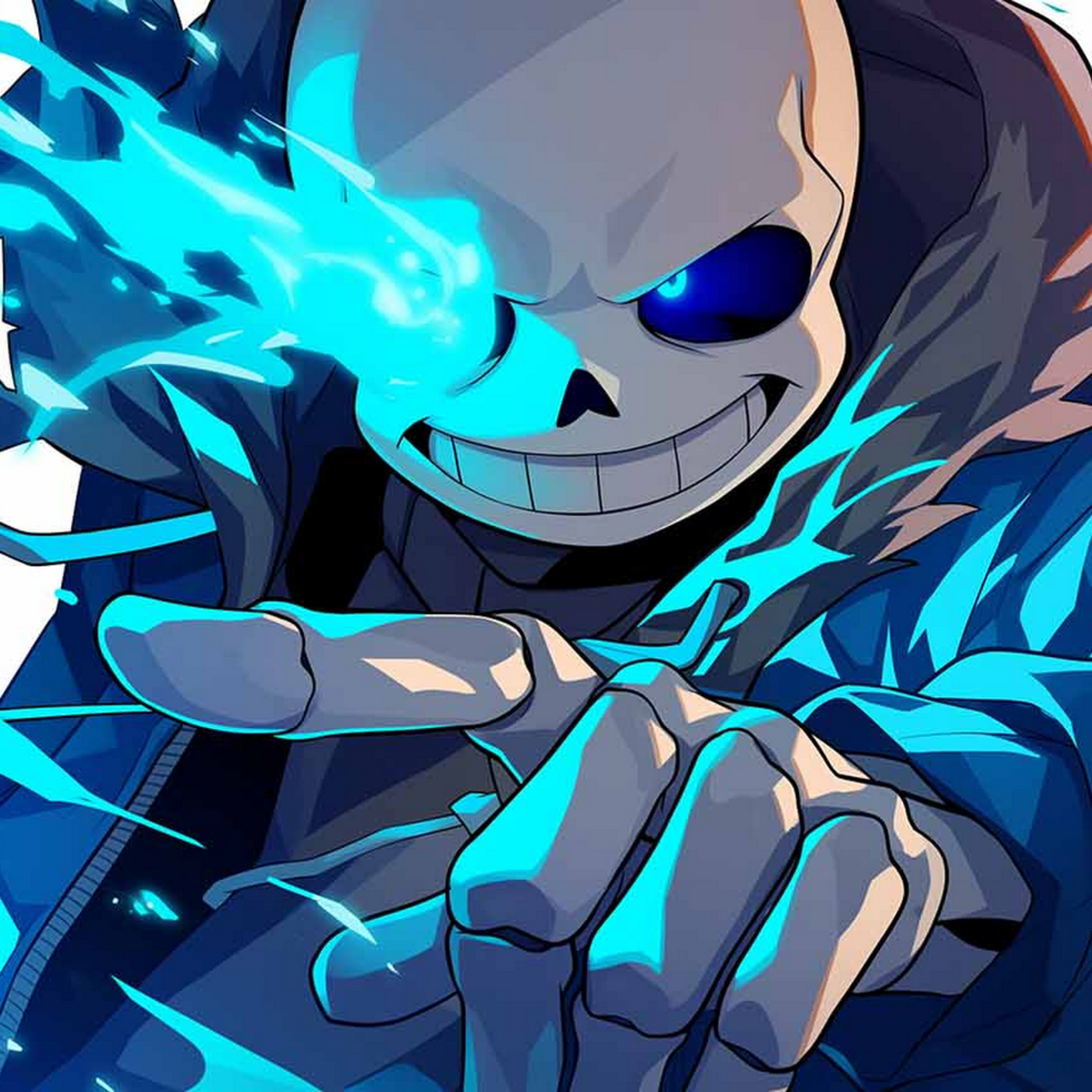
Welcome back to Dreamscape Archives. Tonight, we descend beneath Mount Ebot to explore the complete story of Undertale, a tale of monsters and humans, determination and despair, mercy and murder. Over the next hour, we'll uncover the tragedy that shaped an entire civilization, the experiments that blurred the line between life and death, and the choices that define what it means to be human. So settle in, get comfortable, and let's begin this journey into the underground, where every choice matters and nobody has to die.
The ancient war and the barrier. Long ago, two races ruled over the earth in harmony. Humans and monsters shared the world, living side by side in what should have been an age of peace and understanding. The monsters were beings of magic, their bodies composed of elements shaped and held together by their souls.
Unlike humans, whose physical forms were bound by flesh and bone, monsters existed as pure magical energy, given form, creatures of hope and compassion, whose very essence reflected the kindness within their hearts. But this harmony was not destined to last. Fear, that ancient poison that corrupts even the noblest intentions, began to seep into human hearts. They looked at the monsters and saw not neighbors, not friends, but something terrifying.
The monsters possessed an ability that humans could never achieve through natural means, the power to absorb human souls. When a monster absorbed a human soul, they became almost godlike in their strength, gaining power that transcended the normal limitations of their magical existence. A single monster with a human soul could become nearly invincible. The humans, terrified of this potential threat, began to see every monster as a danger waiting to manifest.
It did not matter that monsters were peaceful, that they had never used this power against humanity, that their souls were made of compassion and love. Fear needs no logic to justify its hatred. The humans looked at what monsters could do, not at what they had done. And in that fear, they declared war.
The war was not a battle, it was a massacre. Humans attacked suddenly, without mercy, without warning. Monster after monster fell to dust before they could even comprehend what was happening. Not a single human soul was taken by the monsters during the conflict, because there was no conflict, only slaughter.
The monsters, creatures whose souls were literally composed of compassion, could not bring themselves to kill even as they were being destroyed. Their mercy became their downfall. When the dust settled, quite literally, the humans had won a decisive victory. But victory was not enough.
The survivors among the monsters were driven from the surface world, forced to flee into the mountain called Mount Ebot. And there, at the mountain's base, the most powerful human mages gathered to perform a ritual that would seal the monsters away forever. The barrier they created was a work of incredible magical power, a seal that separated the underground from the surface world completely. This was no ordinary wall or boundary.
The barrier existed between dimensions, a magical prison that could not be broken from within by any force the monsters possessed. The rules of the barrier were absolute and merciless in their simplicity. Any monster attempting to leave would be stopped, their essence unable to pass through that invisible wall. Humans could enter freely, falling down into the underground, whether by accident or design.
But the only way for a monster to pass through the barrier was to possess a human soul. The cruelty of this imprisonment went deeper still. Seven human souls, the mages decreed, would be required to break the barrier entirely. Seven souls of immense determination gathered together could shatter the seal and free the monsters from their mountain prison.
It was a number chosen deliberately, impossibly high, yet theoretically achievable. The humans had given the monsters a key to their cell, but it was a key that required the deaths of seven innocent people to forage. Mount Ebot gained a dark reputation among humans over the years that followed. Strange stories circulated about the mountain, whispers of those who climbed to its peak and never returned.
The humans on the surface forgot why the mountain was feared, forgot the civilization of monsters trapped beneath the earth. The barrier ensured that no sound, no sign of the underground's existence could reach the surface. As far as most humans knew, monsters were nothing more than myths and legends, creatures from old stories that had never truly existed at all. But beneath the mountain, the monsters remembered everything.
They built a new civilization in the caverns and caves, creating a kingdom in the darkness. They established order, created culture, found ways to harness the magical crystals that grew in the underground depths to provide light and power. And at the head of this civilization stood their king and queen, Asgore and Toriel, Dreamer, boss monsters whose power and compassion made them natural leaders for their trapped people. The underground became home, but it was a home built on sorrow.
Every monster knew the truth of their existence. They were prisoners, punished for crimes they never committed, sealed away by a fear they had never justified. The barrier was a constant reminder of their imprisonment, a shimmer of magic visible at the far end of their kingdom, forever out of reach. Some monsters, like the hammer-wielding Gerson, who had fought in the war, remembered the surface world.
Others knew it only through stories passed down through generations, tales of a sun they had never seen, of stars that decorated a sky larger than any cavern ceiling. For many years, this was the reality of monster existence. Trapped, mourning their freedom, but trying desperately to build something resembling hope in the darkness. The king and queen gave their people stability, created a society where monsters could find joy, even in imprisonment.
And then, in what seemed like a miracle at the time, they were blessed with a child, a son, a prince, the first new hope the underground had seen since the barrier's creation. They named him Asriel Dreamer, and in his innocent laughter, the monsters found a reason to believe that perhaps the future could be brighter than the past. Little did they know that this child's fate would bring more tragedy to the underground than even the war itself had wrought. The tragedy of the Dreamer family.
Asriel Dreamer grew up surrounded by love, in a kingdom of magical beings who saw him as their future. Based on what monsters reveal about him throughout the underground, he appears to have been everything a prince should be. Kind and gentle, curious about the world, devoted to his parents. He played in the golden flowers that grew in the underground's gardens, those strange blooms that had somehow found their way beneath the earth.
He learned about magic from his father, about mercy from his mother, about the history of their people from the monsters who remembered the surface world. But Asriel's life and the fate of the entire underground changed forever when another human fell into their realm. It began with a discovery in the golden flower garden. Asriel was playing there one day when he found something that should not have existed in the underground.
A human child, fallen from the world above, lying unconscious among the flowers. The child was hurt from the fall, confused and afraid when they woke to find a monster standing over them. But Asriel, with all the compassion of his innocent heart, did not see a human. He saw someone who needed help, someone who had been hurt, someone who could use a friend.
Asriel brought the human child to his parents. Toriel and Asgore, despite everything humans had done to their people, welcomed this child into their home. They saw in this fallen human an opportunity for understanding, for mercy, for proving that monsters were better than the hatred that had sealed them away. The child was hurt, traumatized by their fall, and needed care.
The dreamers gave that care freely, asking nothing in return. The human child recovered under Toriel's gentle attention. They were invited to stay with the royal family, to live as a member of the dreamer household. And slowly, cautiously, the child began to open up to their new family.
They revealed their name, the name that players choose at the start of Undertale, but which carries a true canonical identity. Chara. Chara and Asriel became inseparable. The human and the monster, playing together in the golden flowers, exploring the underground's caverns, learning about each other's worlds.
To the monsters of the underground, they seemed like the perfect symbol of what could be, human and monster, living in harmony, proving that the old hatreds need not define the future. The king and queen loved Chara as they loved their own son, treating them as a true child of the dreamer family. But Chara carried secrets that no one, not even Asriel, fully understood until much later. They had not fallen into the underground by accident.
Asriel would later reveal to Frisk, during the true pacifist ending, that Chara had climbed Mount Ebat for an unhappy reason. According to Asriel, Chara hated humanity, though the full context of this hatred remains unclear. What is certain is that Chara came from the surface world, carrying deep wounds, scars that no magic could heal. Whatever experiences they had endured in the human world appeared to have shaped their later actions in profound ways.
One day, while baking a pie with Asriel for their father, Chara accidentally used buttercup flowers instead of buttercups as an ingredient, Asgore became violently ill from the pie, poisoned by the buttercup's natural toxins. It was meant to be an innocent mistake, a moment of confusion between similarly named ingredients. Everyone laughed about it afterward, once Asgore had recovered. But something about that incident planted a seed in Chara's mind, a terrible idea that would grow into a plan of devastating consequences.
Chara began to formulate a scheme to free the monsters from the underground. They knew the requirements for passing through the barrier, a monster soul fused with a human soul. They knew that such a fusion would grant incredible power, enough to kill the humans in Chara's home village and take six more human souls to break the barrier entirely. And they knew how to obtain the human soul necessary for this plan.
Chara would provide it themselves. The videotapes found in the true lab, Alphys's hidden research facility, reveal fragments of what happened next. Chara deliberately ate buttercup flowers, poisoning themselves with full knowledge of what the toxins would do. They became gravely ill, dying slowly while their adoptive family watched helplessly.
Asriel, desperate and grieving, heard Chara's plan through their suffering. When Chara died, Asriel would absorb their soul. Together, their fused consciousness would carry Chara's body to the surface, to the village where Chara had lived. The humans would see Chara's corpse and think Asriel had killed them.
But before they could act, Asriel would use their combined power to destroy the village. Six human souls would be taken, brought back to the underground, and the barrier would fall. Asriel, in his grief and love for his sibling, agreed to the plan. He did not want to kill anyone, did not want to hurt the humans, but Chara was dying.
And this seemed like the only way to give meaning to their death. When Chara's soul finally left their body, Asriel absorbed it, and their essences merged into a single being with unimaginable power. The fusion of Asriel and Chara carried the humans' body through the barrier, which parted for them since they now possessed both a monster and human soul. They emerged onto the surface world for the first time since the war, walking through the village where Chara had once lived.
The humans saw them coming, saw what appeared to be a monster carrying a dead human child, and immediately assumed the worst. They attacked without question, without mercy, just as their ancestors had done during the war. And here the plan fell apart. Chara's consciousness, furious and filled with hatred for humanity, wanted to use their full power.
They pushed Asriel to fight back, to kill these humans who were attacking them, to take the souls they needed. But Asriel, even fused with Chara's soul, could not bring himself to kill. He had never wanted violence. He had agreed to the plan in grief.
But now, faced with the reality of murder, his compassion won out over Chara's hatred. Asriel refused to fight back. He absorbed blow after blow from the humans, their weapons tearing into the fused body he shared with Chara. Mortally wounded, Asriel fled back to the underground, crossing the barrier one final time.
He made it as far as the throne room, to the garden, where he and Chara had played among the golden flowers. And there, in the same place where he had found Chara, Asriel collapsed and died. His body turned to dust, as all monsters do when they die. The dust spread across the golden flowers, settling into the soil, becoming one with the garden where two siblings had once found joy in each other's company.
Toriel and Asgore found their sons dust in the flowers, the only physical remains of the child they had raised with such love. And with that dust, their family, their marriage, and their hope for the future disintegrated. Toriel, consumed by grief and rage at her husband's failure to protect their children, left Asgore. She retreated to the ruins, the first area of the underground where new humans would fall, determined to protect any future humans from the fate that had befallen Chara and Asriel Asgore.
Heartbroken and driven by his people's desperation, declared war on humanity. Any human who fell into the underground would be killed, their soul taken, until seven souls could be gathered to break the barrier. The monsters, who had lived in hopeful peace for so long, transformed into a civilization, preparing for freedom at any cost. Six humans fell over the years that followed.
Six times, human souls were harvested and stored, kept in special containers that prevented their essence from dissipating. Six humans died, and the monsters came one soul closer to their freedom. All they needed was one more, one final soul to complete the set of seven. But Asriel's story did not end with his death in the golden flowers.
His tale had a horrifying epilogue, one that would not be discovered until years later when a scientist named Alphys conducted experiments that she would come to regret for the rest of her life. The creation of Flowey and the nature of determination. Alphys never meant to create a monster. when she was appointed as the royal scientist.
of the underground, succeeding the brilliant but mysterious W.D. Gaster, who had vanished under circumstances no one fully understood, she inherited a laboratory full of equipment and research into a substance called Determination Blueprints found in the lab, suggests that some of this equipment, possibly including the D.T. extraction machine, may have been designed by her predecessor, though this remains a matter of interpretation. This substance, Determination, was the key to understanding why humans were so much more resilient than monsters, why their souls persisted after death, while monster souls shattered almost immediately.
Determination was the force that allowed humans to refuse death, to continue existing through sheer force of will, even when their bodies should have failed. It was what made human souls persist long enough to be absorbed by monsters, and Alphys, tasked with finding a way to break the barrier, wondered if Determination could be extracted from human souls and injected into monsters, giving them the same persistence, the same refusal to die that humans possessed. In the depths of her laboratory, Alphys constructed a machine capable of extracting Determination from the six human souls that Asgore had collected. The D.T.
extraction machine was a marvel of magical engineering, a device that could literally pull the essence of will and Determination from a soul and concentrate it into injectable form. Alphys gathered a group of fallen-down monsters, those whose bodies had grown weak and were on the verge of turning to dust, and asked their families for permission to try an experimental treatment. The families agreed, desperate to save their loved ones. Alphys injected the extracted Determination into each monster, carefully monitoring their vital signs.
At first, the results seemed miraculous. The monsters woke up, their bodies strengthened by the human will now flowing through their magical forms. They were alive, they were conscious, they could move and speak again. Alphys documented her success in research entries, excited that she had found a way to make monsters' souls persist after death.
But Determination, it turned out, was never meant to exist in monster bodies. Monsters are beings of magic, their physical forms held together by their soul's natural compassion and hope. Determination is something else entirely, a force of pure will and refusal that fights against the natural order of things. When Determination met magical essence, the results were catastrophic.
The monsters began to melt. Their bodies lost cohesion, their forms becoming liquid as the Determination overwrote their soul's natural structure. But they did not die, because Determination would not allow them to die. Instead, they began to fuse with one another, their melting forms combining into horrific amalgamations of multiple monsters, creatures that retain the memories and consciousness of everyone who composed them, but existed in bodies that could barely maintain any consistent shape.
Alphys, horrified by what she had created, hid the amalgamates in a secret facility beneath her main laboratory. She could not let them die, could not bring herself to end their suffering, but she could not reveal them to the world either. The families who had trusted her thought their loved ones had died in the experiments. Alphys allowed them to believe this lie, accepting their hatred and grief rather than revealing the truth that their family members still existed, trapped in bodies that were equal parts, miracle and nightmare, sustained by a Determination that would not allow them the mercy of death.
But the Determination extraction experiments had a side effect that Alphys never anticipated. Some of the extracted Determination was spilled during the process, contaminating her laboratory. And in her desperate attempts to understand what went wrong, Alphys decided to inject Determination into other forms of life, trying to understand how it interacted with different types of matter. She injected Determination into a golden flower taken from Asgore's garden, the same garden where Asriel had died.
The flower that received the injection was special, though Alphys did not know it at the time. It was the first golden flower to bloom in the underground, a flower from the surface world that had fallen with Chara all those years ago. The seeds had tumbled down with Chara during their fall, taking root in the underground soil, blooming in the darkness, where no surface flower should have been able to grow. And critically, it was a flower that had been covered by Asriel's dust when he died, dust that contained traces of his magical essence, his memories, the very consciousness of the monster prince who had collapsed among these very blooms.
The Determination, seeking any form of consciousness to anchor itself to, bonded with Asriel's essence still present in the flower's structure. The dust had infused into the plant over the years, becoming part of its cellular makeup, creating a template of Asriel's being that lay dormant until Alphys's injection awakened it. What Alphys created was not truly a living flower in any conventional sense, but something far stranger and more tragic, a plant with a consciousness, with memories spanning a lifetime that was not its own, with the ability to think and feel and remember being something other than what it had become. Asriel Dreamer woke up in a flower's body, confused and terrified, unable to understand what had happened to him, or why he existed in this diminished alien form.
At first, Flowy, as he came to be called, felt hope. He was alive again, somehow, impossibly. He made his way through the underground with his new plant body, finding ways to move despite lacking legs, discovering that he could burrow through soil and emerge wherever he wished. He found his parents and tried to make them understand who he was, tried to communicate that their son had returned, that some miracle had brought him back from death, but something was terribly, fundamentally wrong with his existence.
Asriel had lost his soul in death, and the determination that animated him provided will without compassion, determination without love, existence without the fundamental magical essence that had once defined him. Without a soul, Flowy discovered that he could not feel emotions the way he once had. His parents' love meant nothing to him beyond an intellectual understanding that they cared. His friends could not make him happy, because happiness was an emotion his soulless form could no longer process.
He looked at his mother and father and felt nothing, saw them as objects that moved and spoke, rather than as the beings who had raised him with such devotion. He existed in a state of complete emotional emptiness, capable of understanding intellectually what he should feel, but unable to actually experience those feelings, like someone watching life through a window, rather than living it. Desperate and terrified by this emotional void, Flowy attempted to kill himself, to end this horrible existence. But the determination would not let him die.
Instead, something even stranger happened. Time reversed itself, returning Flowy to the moment before his suicide attempt. He remembered everything, but found himself given a chance to choose differently. He had discovered the power that players recognized as save and load, the ability to manipulate time itself through sheer determination.
Flowy experimented with his newfound power across what he implies were countless timelines. According to his own accounts to Frisk, he tried every conceivable approach to existence, being helpful, being cruel, befriending everyone, killing everyone. He exhausted every dialogue option, explored every outcome, lived through the underground's events in every possible permutation. Without a soul to give his actions emotional meaning, each attempt felt equally hollow.
Eventually, Flowy became what he feared most, a being who saw the entire world as a game, who viewed every other living creature as an object to be manipulated. He lost his sense of empathy, not because he chose to be cruel, but because nothing he did mattered anymore when he could simply reset time and undo it. The underground became his personal experiment, and its inhabitants became toys he could play with, break, and restore as many times as he wished. This was the state of the underground when the seventh human finally fell.
A civilization of monsters waiting for freedom, a scientist hiding terrible secrets in a lab beneath a lab, and a soulless flower with godlike power who had grown bored of existence itself. And this human, this final soul necessary to break the barrier, would have the power to choose which kind of story would unfold in this trapped world. Their name was Frisk, though the underground would come to call them by whatever name the player chose. And through Frisk's choices, three very different stories could emerge from the same series of events, the three roots and their meanings.
The underground that Frisk enters is a world defined by choices, where every action carries weight and consequences ripple through the entire timeline. The game presents three distinct paths, three different ways the story can unfold, each revealing different truths about the underground's inhabitants, and different philosophies about what it means to be human. The neutral route is the path most players find on their first playthrough, the natural result of playing Undertale, as one might play any other role-playing game. Frisk fights some monsters, spares others, makes friends with some inhabitants while leaving others to die.
The journey takes them through the ruins, where Toriel tries desperately to protect them, through Snowden, where the skeleton brothers sands and papyrus provide comic relief and hidden depths, through Waterfall, where Undyne hunts them relentlessly, through Hotland, where Mettaton turns their journey into televised entertainment. At the journey's end, Frisk faces Asgore in the throne room. The king, gentle despite his fearsome appearance, reveals that he never truly wanted to kill humans, that his declaration of war was born from grief and desperation rather than true hatred. He fights because his people need hope, because they need to believe freedom is possible.
When Frisk defeats him, Asgore's soul lingers just long enough for Flowey to appear and absorb it, along with the six human souls Asgore had collected. The fight against Photoshop Flowey, Omega Flowey, the flower transformed into a grotesque fusion of plant matter and human souls, reveals the true horror of what Flowey has become. He crashes the game, manipulates the save files, creates a bullet hell nightmare that seems impossible to survive. But the human souls themselves rebel against Flowey's control, helping Frisk survive and ultimately draining Flowey's power until he reverts to his original form.
The neutral rote's ending varies depending on who Frisk killed and who they spared. Sans delivers a judgment, evaluating Frisk's actions and assigning them an execution score based on the EXP and love they gained by killing. The acronyms reveal dark truths. EXP is not experience points but execution points, and love is not love but level of violence, a measure of how much distance someone has put between themselves and the suffering they cause others.
Different combinations of deaths result in different epilogues, phone calls from the underground survivors discussing what happened after Frisk left. But if Flowey survives the battle, if Frisk shows him mercy instead of killing him, the flower provides cryptic advice. Frisk should befriend everyone in the underground, should seek out relationships with all the major inhabitants. This advice, delivered by a creature who claims to have no capacity for kindness, opens the path to something deeper.
The true pacifist route represents Undertale at its most hopeful, a story about redemption and forgiveness, and the possibility that even the deepest wounds can heal. This route requires that Frisk never kills a single monster, that they solve every encounter through mercy and understanding. It requires befriending Papyrus, going on an awkward date with him that reveals his deep loneliness and his genuine desire for friends. It requires helping Undine overcome her hatred of humans by saving her from dehydration and later cooking with her in a scene that destroys her kitchen, but forges an unlikely friendship.
Most critically, the true pacifist route requires befriending Alphys, the nervous scientist whose self-hatred runs so deep that she can barely function. Through a strange date at the garbage dump and increasingly frantic phone calls as Alphys tries to manufacture situations where she can be helpful, Frisk helps Alphys begin to confront her lies. And this eventually leads to the revelation of the True Lab, the place where Alphys has hidden her greatest mistakes. The True Lab sequence is Undertale at its darkest, a horror show hidden beneath the game's cheerful surface.
Frisk descends into darkness, wandering through green-lit corridors filled with failed experiments. The amalgamates reveal themselves, creatures of melted flesh-infused consciousness that should not exist but cannot die. Videotapes scattered throughout the lab reveal the full story of Kara and Asriel, the plan that went wrong, the tragedy that shaped the entire underground's future. When Frisk finally restores power to the elevator and prepares to face Asgore, everything changes.
Toriel arrives with the other friends Frisk has made, determined to stop the king from killing another human. The other monsters appear as well, creating a confrontation that could have become violent, but instead becomes an intervention. Toriel and Asgore begin to hash out their long-held grief. Sans makes terrible jokes to cut the tension.
Mapyrus remains optimistic about everything. Undine stays loyal to both the king and her new human friend. And then Flowey strikes. He absorbs the souls of everyone present, every monster in the underground, transforming into his ultimate form, Asriel Dreamer, the god of hyper-death.
This is Asriel as he should have been, as he might have become if he had lived to adulthood, a being of incredible power with rainbow wings and impossible magical abilities. He intends to reset the timeline, to erase everything and start over, playing with his new friend Frisk forever in an endless cycle where no one can ever truly grow or change. The battle against Asriel is not a battle. Frisk cannot win through violence, cannot damage a being who has absorbed everything.
soul in the underground. Instead, they must act, must reach out to the lost souls of their friends trapped inside Asriel, and remind them of who they are. One by one Toriel and Asgore and Sons and Papyrus and Undine and Alphys are saved. Their essence is freed from Asriel's control.
And finally, Frisk reaches Asriel himself, the little boy who has been flowery for so long, who has forgotten what it feels like to have a soul, through sheer compassion, through refusing to give up on someone who has given up on himself. Frisk helps Asriel remember what it was like to care about others, to feel love, to be the gentle child he once was. With the power of every soul in the underground, Asriel breaks the barrier, freeing the monsters at last. The ending is bittersweet.
The monsters are free. They can return to the surface. They can finally live without imprisonment. But Asriel knows that without the souls he has absorbed, he will revert to being flowery again, will lose the emotions he has temporarily regained.
He begs Frisk not to come back, not to give him hope by returning to the underground, because he knows he will turn back into the soulless creature who could not appreciate their friendship. Frisk can comfort him one final time before he becomes flowery again, can tell him that he is still loved, even without a soul. The true pacifist ending represents Undertale's thesis, that mercy is always possible, that understanding can triumph over hatred, that even the most broken people deserve a chance at redemption. It is an ending that rewards players for refusing to take the easy path of violence, for believing that every monster they encounter has value beyond how much EXP they provide.
But there is a third path through Undertale, one that the game actively tries to dissuade players from taking. The genocide route is Undertale's darkest possible story, a route that transforms the game from a quirky RPG into a meditation on why players kill in video games at all. The genocide route requires that Frisk systematically murder every single monster in the underground. Not just the monsters they encounter randomly, but every monster in every area, grinding through encounters until the game explicitly tells them that nobody else is left to kill.
The monsters begin to realize something is wrong. NPCs evacuate areas, hiding from the killer stalking through their world. The random encounters become increasingly rare as the monster population is decimated. The game itself changes on the genocide route.
The cheerful music becomes distorted and sinister. The colorful world grows darker, emptier. Characters who were friendly or goofy in other routes become terrified or desperate. Toriel tries to stop Frisk in the ruins, realizes they are determined to kill, and dies begging them to prove they have some capacity for mercy.
Papyrus, eternally optimistic, believes he can change Frisk's heart right up until they cut him down mid-sentence. Undyne becomes Undyne the Undyne, a heroic warrior whose determination allows her to resist death long enough to mount one last stand against a genocidal murderer. She knows she is the underground's last hope, knows that if she fails, everyone will die. The battle against her is brutal, a genuinely difficult fight that tests players' skills.
And when she finally falls, her body does not turn to dust immediately. Instead, she melts, determination sustaining her just a bit too long as she realizes she has failed everyone. But the true nightmare of the genocide route is not Undyne's last stand. It is the confrontation with Sans in the Judgment Hall, the final barrier between Frisk and Asgore Sans, who has been a lazy comic relief character in every other route, who seemed like the least threatening monster in the underground, reveals that he is actually the most dangerous being Frisk will ever face.
Sans knows about timelines. He knows about resets. He has watched countless versions of events play out, has seen Frisk die and reload hundreds of times already. He understands what the player is doing, that they are treating the underground as a game, that they are killing everyone simply because they can, because they want to see what happens.
And Sans, despite knowing he cannot truly stop a player with determination-based save powers, decides to make the genocide route as frustrating and difficult as possible. The fight against Sans is notoriously challenging, designed to punish players for choosing this path. He breaks the rules of the battle system, attacks during menus, gives players almost no invincibility frames between hits. He makes the player earn every inch of progress, forces them to prove through pure skill and determination that they really want to see this route through to the end.
And when he finally falls, exhausted and defeated, he tells the player something chilling, that he is going to Grillby's, his favorite restaurant, as if nothing happened, because he knows this timeline will be reset eventually, that none of this really matters in a world where someone has the power to undo everything. After Sans falls, Frisk murders Asgore, and then encounters Flowey one final time. The flower, recognizing Frisk as the same Kara he once knew, tries to appeal to their shared past. But Frisk kills him too, reducing the screen to darkness.
And there, in the void, Kara finally appears in person, revealing that they have been awakened by Frisk's actions. Kara explains the truth, that Frisk's determination brought them back from death, that every kill has made Chara stronger, that they now understand their purpose is power itself. They offer to destroy the world, to erase everything, and move on to the next world. The player can choose to refuse, but Chara kills them anyway, revealing that in a genocide route, the player has given up their agency.
This is not Frisk's story anymore, this is Kara's story, and Chara makes the final choice. The genocide route serves as Undertale's meta-commentary on video game violence. It asks players directly why they kill in games, whether it is because they need to for progression, because it is fun, or simply because they can. It makes killing unfun, making each encounter a grinding chore, making players confront the reality that they are choosing to murder characters they could have befriended instead.
And it punishes players who complete it by permanently tainting future pacifist runs. Chara's influence remains even after the world is recreated, showing up in the final scenes to prove that some actions have consequences that cannot be undone. These three roots represent Undertale's philosophical core, that our choices define us, that violence is a choice rather than a necessity, and that mercy requires more courage than murder. The game respects players enough to let them be cruel, but it makes certain they understand the weight of that cruelty.
The Underground's inhabitants and their stories. The monsters of the Underground are far more than obstacles in Frisk's path. Each major character carries their own story, their own pain and hope, their own complex relationship with the world they inhabit. Understanding these characters reveals the true depth of Undertale's narrative, the way individual tragedies and triumphs weave together to create a complete picture of a civilization shaped by loss.
Toriel embodies the protective mother taken to an extreme. After losing both Chara and Azrael, after watching her husband declare war on innocent humans who fell into their world, Toriel retreated to the ruins with a singular purpose, to protect any future humans from being killed for their souls. She created a home in the empty ruins of the monster's original city, filling it with warmth and comfort despite the dust and decay around her. Every puzzle in the ruins is designed to teach rather than challenge.
Every encounter meant to show that monsters can be reasoned with rather than fought. But Toriel's protection became a prison. She cannot let humans leave the ruins because she knows what waits beyond. Monsters who need human souls, a husband who will kill them, a world that sees humans as keys to freedom rather than living beings worthy of mercy.
Her boss battle is an act of desperate love, a mother trying to prove to a child that they are not ready for the dangers ahead. She holds back her fire magic, aims her attacks away from Frisk, gives them every opportunity to give up and stay with her. When Frisk inevitably leaves, Toriel is heartbroken but not surprised. She has watched this happen before, has let previous humans go knowing they would likely die on the genocide route.
She tries one final time to stop a killer, realizes too late that they will not spare her, and dies with a sad smile, still hoping that somehow, deep down, there is good in them. On the pacifist route, she eventually confronts her own failures, makes peace with Asgore, and finally allows herself to be part of a family again. Sans and Papyrus represent one of Undertale's most mysterious relationships. The skeleton brothers appear to be comic relief, with Papyrus as the loud, energetic, optimistic younger brother determined to join the royal guard, and Sans as the lazy, pun-loving older brother who works multiple jobs without ever seeming to actually do any work.
But beneath the comedy lies something much darker. Sans knows too much. He understands, that timelines can be reset, talks about reports of timelines stopping and starting, implies he has lived through countless iterations of events. His knowledge of quantum physics seems unusually advanced for a resident of Snowden.
A hidden room behind his house contains mysterious equipment, and photographs of people Frisk doesn't recognize, suggesting connections to scientific endeavors. His relationship to W. D. Gaster remains mysterious, with hints scattered throughout the game, but never explicitly confirmed.
Despite his knowledge and power, Sans chooses inaction. He could stop bad things from happening, could prevent countless tragedies, but he knows that timelines can be reset. Why bother stopping something when someone with determination can simply undo it? His laziness is not really laziness, but a form of depression, a deep understanding that nothing truly matters in a world where time itself can be rewritten.
Only on the genocide route, when the player threatens to destroy everything permanently, does Sans finally act. Papyrus, by contrast, chooses optimism, despite living in the same world his brother has given up on. He believes in everyone, sees the best in every situation, refuses to kill even when his own life is threatened. On the genocide route, Papyrus offers Frisk a chance to be friends, believes in their capacity for goodness, even as they prepare to kill him.
His death is one of the most heartbreaking moments in the game, because he dies still believing in redemption, still thinking that his mercy might inspire change. Undine represents heroism in its purest form. She is a warrior who dedicated her life to protecting monsters, who trained to be strong enough to face any threat. Her mentor was Gerson, one of the monsters who fought in the war against humans, and from him she learned both combat skill and deep-seated distrust of humans.
When she first encounters Frisk, Undine sees only an enemy, a human soul, walking through her kingdom, a key to freedom that she can take by force. But Undine's hatred is not immutable. When Frisk saves her from dying of dehydration in Hotland, when they show her mercy she did not expect, something in her worldview cracks. She realizes that humans can be kind, can be brave, can be worthy of friendship.
Her transformation from enemy to friend happens entirely through Frisk's actions, through their refusal to fight her even when she is trying to kill them. On the genocide route, Undine becomes a true hero. She transforms into Undine the Undying, a form powered by pure determination, and the knowledge that she is the Underground's last hope. She fights not for herself, but for every monster Frisk has killed, for every friend who cannot fight back, for the future that will die if she fails.
Her battle theme is appropriately titled, Battle Against a True Hero, because that is exactly what she is, someone willing to sacrifice everything to protect others, even when she knows the fight is hopeless. Alphys carries the weight of failure and deception. She became royal scientist after Gaster's disappearance, inheriting a position that came with enormous expectations, given her predecessor's renowned brilliance. While she has real talents, particularly in robotics and engineering, as demonstrated by Meditin's body, she struggles with imposter syndrome and deep insecurities about her abilities.
Her experiments with determination were meant to help monsters, to find a way to make their souls persist, so that breaking the barrier would not require killing humans. Instead, she created the Amalgamates, abominations that should not exist but cannot die. The guilt of her failure consumes Alphys. She hides the Amalgamates in the True Lab, lies to their families, tells everyone they died when they are still alive, in forms too horrible to show the world.
She contemplates suicide in some of the games endings, unable to bear the weight of her deceptions. But on the pacifist route, with Frisk's support and Undine's love, Alphys finally finds the courage to face the truth, to reveal her mistakes to the families who trusted her, and beg their forgiveness. Meditin represents the desire to be more than what fate assigned. The ghost who would become Meditin was Napstablook's cousin, one of several incorporeal beings living in the underground diaries found in the ghost's old house, reveal their personality and dreams, though their original name is never explicitly stated in dialogue.
Unlike his cousin Napstablook, who accepted ghostly existence, Meditin dreamed of fame, of having a physical body, of being a star. He came to Alphys seeking help, and she built him a robotic body, a form that would allow him to perform, to entertain, to be the fabulous star he always knew he could be. But Meditin's dream came with complications. Through events revealed during the game, it becomes clear that Alphys programmed Meditin to pose as a human-killing robot, creating scenarios where she could then intervene and save Frisk, making herself appear heroic.
The plan seems to have been born from Alphys' desperate need to prove her worth after the determination experiments failed. Mettaton goes along with this scheme even though he shows no genuine desire to kill humans, treating his confrontations with Frisk as theatrical performances that advance Alphys' plan. On the pacifist route, when Mettaton finally reveals his true form, his ex-body designed for entertainment rather than combat, he admits that he does not actually want to kill Frisk. He is trapped by the role Alphys created for him, unable to be the star he wants to be while pretending to be a killer.
When Frisk shows him that he already has fans, that monsters love his performances, Mettaton finally finds the confidence to be himself rather than playing a part. And then there is Asgore, the king whose gentle nature is at odds with the role tragedy forced him to play. Before Asriel's death, Asgore was a kind ruler, a gardener who spent more time tending his golden flowers than governing. He welcomed Chara into his family, loved both his children equally, believed in peaceful coexistence between humans and monsters.
The war declaration, the decision to kill humans for their souls, was an act of desperation by a grieving father trying to give his people hope when he had none himself. Asgore does not want to kill Frisk. Every step of their journey, he is aware they are coming, and he does nothing to stop them. He could send the full force of the royal guard, could have killed Frisk the moment they left the ruins, but he delays, hoping somehow that things will work out differently.
When they finally meet, Asgore destroys the mercy button, not because he enjoys violence, but because he knows Frisk will try to spare him, and he cannot accept mercy when his entire kingdom expects him to take their soul. The tragedy of Asgore is that he is a good person, forced to do terrible things by circumstances beyond his control. He killed six humans and collected their souls, but each death weighed on him like a mountain. He maintains his war against humanity, but he names every human who falls, grows flowers in their memory, grieves them even as he takes their lives.
When Toriel returns and confronts him about his actions, he has no defense, because he knows she is right, that his solution was born from pain rather than wisdom. These characters, with all their flaws and virtues, their mistakes and redemptions, form the heart of Undertale's narrative. They are not simply obstacles or quest givers, but fully realized individuals dealing with impossible situations. The game asks players to see them not as monsters to be killed for experience points, but as people worthy of understanding and mercy.
And through Frisk's choices, players determine whether these characters find peace or die in despair, whether their stories end in hope or tragedy. The power to shape their fates is given freely to the player, along with the responsibility to consider whether that power should be used. The underground story is ultimately about choices and consequences, about the weight of our actions in worlds both real and virtual. It asks whether showing mercy in a game designed around combat can be its own form of bravery.
It questions whether completion is worth the cost, if that completion requires hurting others. And it suggests that the kindest act might be walking away, letting these characters have their happy ending without needing to see every possible outcome, every potential timeline. Undertale does not demand that players be perfect. The neutral route exists as recognition that most people will make some mistakes, will kill some monsters out of habit or self-defense before learning that mercy is possible.
But it does ask that players be thoughtful, that they consider why they make the choices they do in games, that they recognize these pixelated characters as extensions of the humans who created them. In the end, Undertale is a game about compassion, about seeing the humanity in those who seem monstrous, and the monstrosity in those who seem human. It is about a child who fell into a mountain and chose to see a world of people rather than a world of obstacles. And it is about a player who decided that in a game where nobody has to die, maybe nobody should die.
The underground waits beneath Mount Ebat, a kingdom of magic and hope, where monsters dream of the stars they cannot see. And somewhere in that darkness, a golden flower grows, carrying memories of a prince who once believed in mercy, before he learned to believe in nothing at all. That flower watches every human who falls, seeing in them echoes of the sibling he loved and lost, wondering if any of them will prove different from all the others. The story of Undertale is complete, but the choices are yours.
The path through the underground is open. And in a world where time itself can be reset, where every ending can be undone, and every choice revisited. The most important question is not what you will do, but why you choose to do it. Thank you for joining us on this journey through the underground.
If you enjoyed this deep dive into Undertale's complete lore, please like this video and subscribe to Dreamscape Archives for more gaming stories designed to help you relax and drift off to sleep. The world of games is full of fascinating narratives waiting to be explored, and we'll be here to guide you through them one story at a time. Until next time, stay determined.