
EPISODE · Aug 4, 2026 · 5 MIN
Unemployment worse than forecast & real wages fall
from The Kākā by Bernard Hickey · host Bernard Hickey
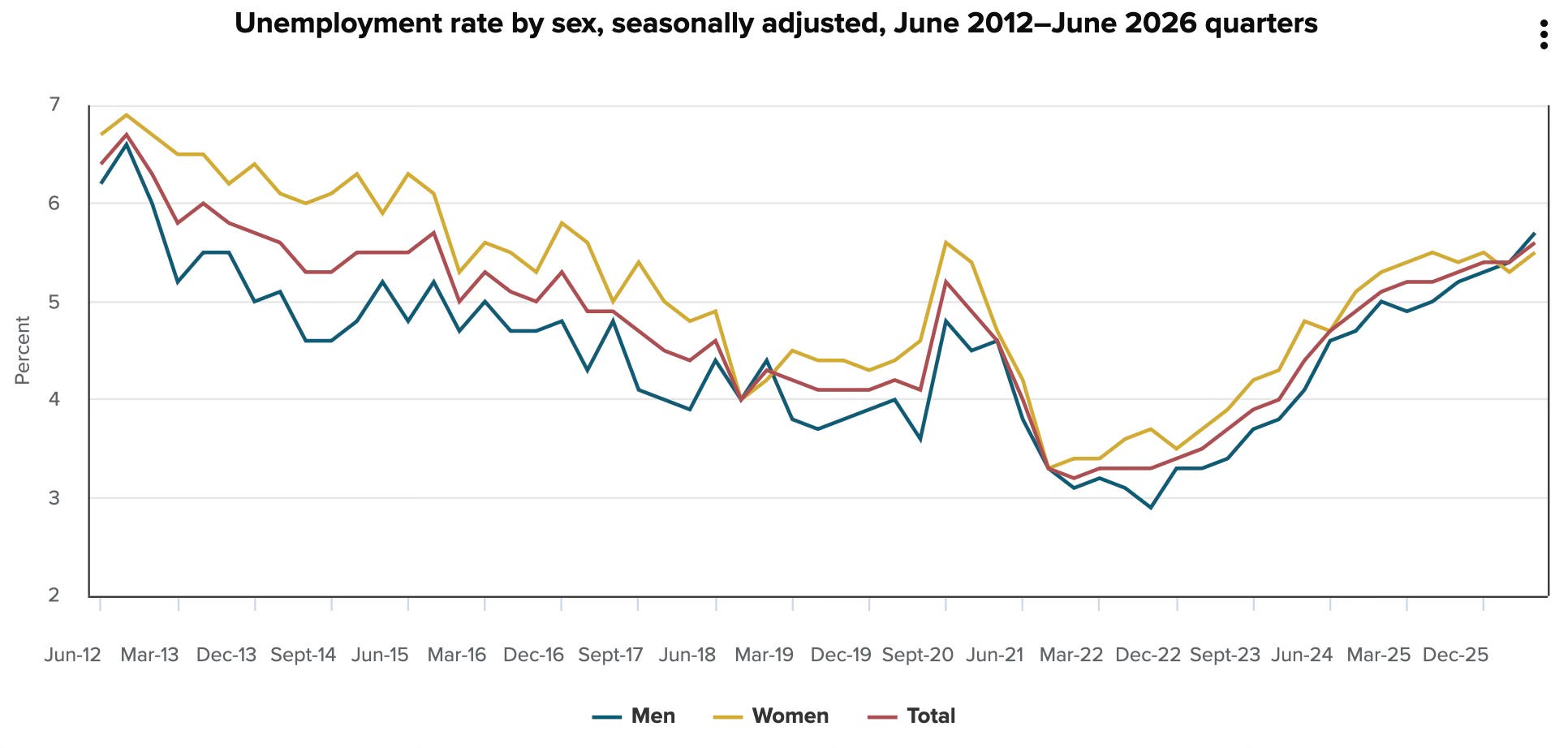
It couldn’t have been much worse. Unemployment rose and real wages fell. Unemployment rose more than expected to an 11-year high in the June quarter, while real wage deflation of 2.1% in the quarter added to the pain for home-owning households and voters now facing higher interest rates and lower housing wealth barely three months to go before the election.Yet this increase in the number of unemployed to 171,000 people, including 94,500 young people and 69,300 who have been unemployed for more than six months, happened during a year when 111,000 new temporary work visas were issued to workers from overseas. It has also happened just before the Reserve Bank decided the labour market was so tight it was creating an inflation problem that needed higher interest rates to create more unemployment to fix.Unemployment rose more than expected to an 11-year high of 5.6% in the June quarter, while the under-utilisation rate rose to a 13-year high of 13.8%. Economists had expected around 5.4%. That unemployment rate was up from 5.4% in the March quarter (revised up from 5.3%), while the under-utilisation rate was up from 12.9%. The unemployment rate for 15-24-year olds who were Not in Education, Employment or Training (NEET) rose to 13.8% from 12.9%, with the number rising by 7,300 to 94,500.The overall number of fully unemployed people rose 8,000 to 171,000, with 69,300 of those unemployed for more than six months. Meanwhile, the number of under-utilised people rose by 31,000 to 440,000. Of those, 255,700 were aged 15-34, up 33,000 from a year ago. The underutilisation rate for 15 to 24-year-olds rose from 33.6% to 37.0% percent over the year. The number of underutilised people in the 15-24 age group increased by 21,500 annually, with the largest increase in underutilisation coming from unemployment (up 12,200 over the year).This came after the number of people employed rose 13,000 in the June quarter from the March quarter to 2.905 million, but that wasn’t enough to keep up with the growth in the labour force of 21,000. That was driven by a 16,000 rise in the working age population and a rise of 5,000 because the participation rate rose to 70.7% from 70.5%.Wages fell 2.1% after adjusting for inflation; Retail wages at 26-year lowWage growth was also weak and below the Consumer Price Inflation rate. The Labour Cost Index measure of annual wage growth was 2.0% in the June quarter, which was below the CPI inflation rate of 4.1%, meaning real wage deflation was 2.1% in the June quarter. Real wage deflation was greatest in those jobs where discretionary consumer spending was weakest.Average total hourly earnings in the retail sector were unchanged from a year earlier at $33.66 per hour. That was the lowest retail wage inflation since the September quarter of 2000, when average retail wages fell 0.3% from the same quarter a year ago.A Government has never been re-elected during a period when real house prices and real wages are falling at the same time. The Labour Force data for the September quarter will be published on November 4, three days before the election.Many thanksBernard This is a public episode. If you'd like to discuss this with other subscribers or get access to bonus episodes, visit thekaka.substack.com/subscribe
Embed this episode
Ready to play
Unemployment worse than forecast & real wages fall
No transcript for this episode yet
Similar Episodes
No similar episodes found.
Similar Podcasts
No similar podcasts found.