Universal Salvation--an Introduction
from Gnostic Reformation, Clear and Simple Hosted by Cyd Ropp
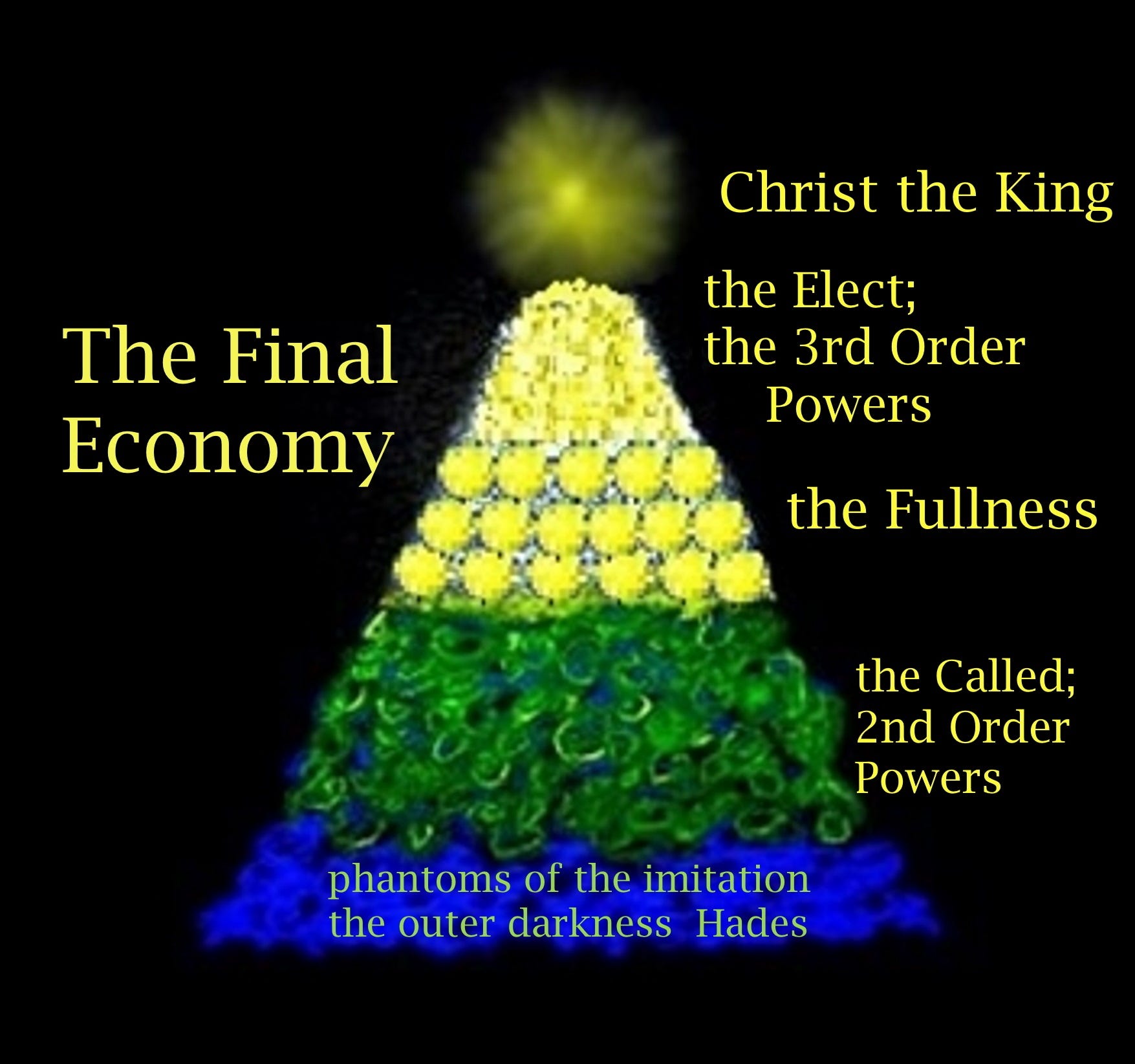
I thought today I would start sharing with you a book that I am reading by David Bentley Hart. Hart wrote that translation of the New Testament that I'm very much enjoying, because it mirrors the same language that the Gnostic gospel uses in the Nag Hammadi codices, particularly the Tripartite Tractate, which is what I share with you here at Gnostic Insights. David Bentley Hart is extremely eloquent and erudite. His prose puts me to shame. He is a great writer and a brilliant mind. He's an Eastern Orthodox scholar of religion and a philosopher. And the deal is, he does seem to love God. So his philosophy and his theology goes through what seems to me to be a very Gnostic heart and orientation on his part. So I'm reading this book now called, That All Shall Be Saved, Heaven, Hell, and Universal Salvation, because I could tell from reading the footnotes in his New Testament that he and I agree on this universal salvation. I seem to be coming at it from a different place than he does, but I must admit I'm only about 40 pages into the book, so I don't know if he's going to cover my orientation or not. My major reason why everyone and everything that's living now will return to heaven is that everything comes from heaven. So if everything doesn't return to heaven in the end, if most of it, as a matter of fact, was thrown into eternal fires of torment, well, God itself would be lessened. The Father would be less than he was at the beginning, and that's an impossibility, because the Father was, is, and ever shall be the same. He is not diminished by the love and consciousness and life that flows out of him. But if that life, love, and consciousness winds up in a black hole at the bottom of an eternal pit of torment, well, there's so many things wrong with that statement, just absolutely wrong. And that's what David Bentley Hart's book is all about, and he has several ways he's going to explain why that can't be so. The reason I say it can't be so is that all consciousness, life, and love come from the Father. So in the big roll-up, if we accept the proposition that there will be an end to this material existence, which is what all Christians and Jews profess, and if everything that emanated from the Father in the beginning, beginning with the Son, which is the first and only direct emanation, and then everything else emanates through the Son, well, if it doesn't return at the end of material time, then the Father and the ethereal plane would be diminished, because it poured out all of this love and consciousness into this material realm, and it all has to return. The Tripartite Tractate says that everything that existed from the beginning will return at the end of time. In verses 78 and 79 of the Tripartite Tractate, it's speaking about the shadows that emerged from Logos after the Fall, and it says, Therefore their end will be like their beginning, from that which did not exist they are to return once again to the shadows. “Their end will be like their beginning,” in that they didn't come from above—they were shadows of the fallen Logos. And so when the light comes and shines the light, the shadows disappear. Furthermore, in verses 80 and 81, the Tripartite Tractate says, The Logos, being in such unstable conditions, that is, after the Fall, did not continue to bring forth anything like emanations, the things which are in the Pleroma, the glories which exist for the honor of the Father. Rather, he brought forth little weaklings, hindered by the illnesses by which he too was hindered. It was the likeness of the disposition which was a unity, that which was the cause of the things which do not exist from the first. So these shadows didn't exist in the Pleroma; they were shadows, they were imitations of the unity which existed from the first, and that unity is the Fullness of God—the Aeons of the Fullness of God. And it is only these shadows that will be evaporated at the end of time, that will not go to the ethereal plane. All living things will, because we're not shadows of the Fall. We are actually sent down from the unity, from the Fullness of God, with life, consciousness, and love. And so all of that has to return to the Father. So that is where I'm coming from, that God can't be lessened, made less than it was at the beginning. So everything will be redeemed and returned. And of course, practically all of Christianity nowadays believes that most everything that was emanated from the beginning will be destroyed, or put into a fire of torment for all eternity. Anyone who wasn't baptized, or anyone who didn't come forward to profess a belief in Christ. So that's most of the other cultures, most of the world, and the conventional Christian church doesn't even realize that animals are going to heaven. I often comfort people whose pet has just passed away, and they're missing them so badly, and they love them so much, and it hurts so much, and I say to them in comfort, “Well, your pet is waiting for you in heaven, and you'll be reunited when you cross over, and then you'll have them again, and you'll all be very happy forever together.” That's my basic approach. As a matter of fact, I'm waiting for my pack—that's who I expect to greet me. I'm not waiting for my dead relatives, or my late husband. I'm not expecting them on the other shore waiting for me, although perhaps they will be. But who I really am looking forward to seeing are my dogs and cats, every dog and cat I've ever had. And I figure they're all up there together as a big pack, playing on the beach. So that's what keeps me comforted, and keeps me looking forward. I'm very happy to imagine that that will be what greets me when I cross over. So this morning, what I'd like to share with you are some of Hart's writing that he shares in his introduction that's called, The Question of an Eternal Hell, Framing the Question. So this is before he even gets into his various apologetics of how it is that everyone will be saved. But I really wanted to share this with you. Hart writes in a very high-minded manner, so I'll attempt to translate it for us all. So on page 16, Hart says, And as I continued to explore the Eastern Communions as an undergraduate, I learned at some point to take comfort from an idea that one finds liberally scattered throughout Eastern Christian contemplative tradition, from late antiquity to the present, and expressed with particular force by such saints of the East as Isaac of Nineveh, who lived between 613 and 700, and Silouan of Athos, who lived between 1866 and 1938. And the idea is this, that the fires of hell are nothing but the glory of God, which must at the last, when God brings about the final restoration of all things, pervade the whole of creation. For although that glory will transfigure the whole cosmos, it will inevitably be experienced as torment by any soul that willfully seals itself against love of God and neighbor. To such a perverse and obstinate nature, the divine light that should enter the soul and transform it from within must seem instead like the flames of an exterior chastisement. That's pretty interesting. He's saying that after the final roll-up, the glory of God, or the light of God, will fill all of space and eternity, and that we will be able to see it and experience it. We will stand before the glory of God. But anyone who is hiding from God, or that is a hateful person, will experience that same glory as flames of fire that torment. And so that will be their punishment. But it's not coming from God. God's bringing glory and love and light. But they, because they are resistant, they will experience it as those flames of hell. So Hart goes on to say, This I found not only comforting, but also extremely plausible at an emotional level. It is easy to believe in that version of hell, after all, if one considers it deeply enough, for the very simple reason that we all already know it to be real in this life, and dwell a good portion of our days confined within its wall… This is a public episode. If you'd like to discuss this with other subscribers or get access to bonus episodes, visit cydropp.substack.com/subscribe
Embed this episode
No transcript yet.