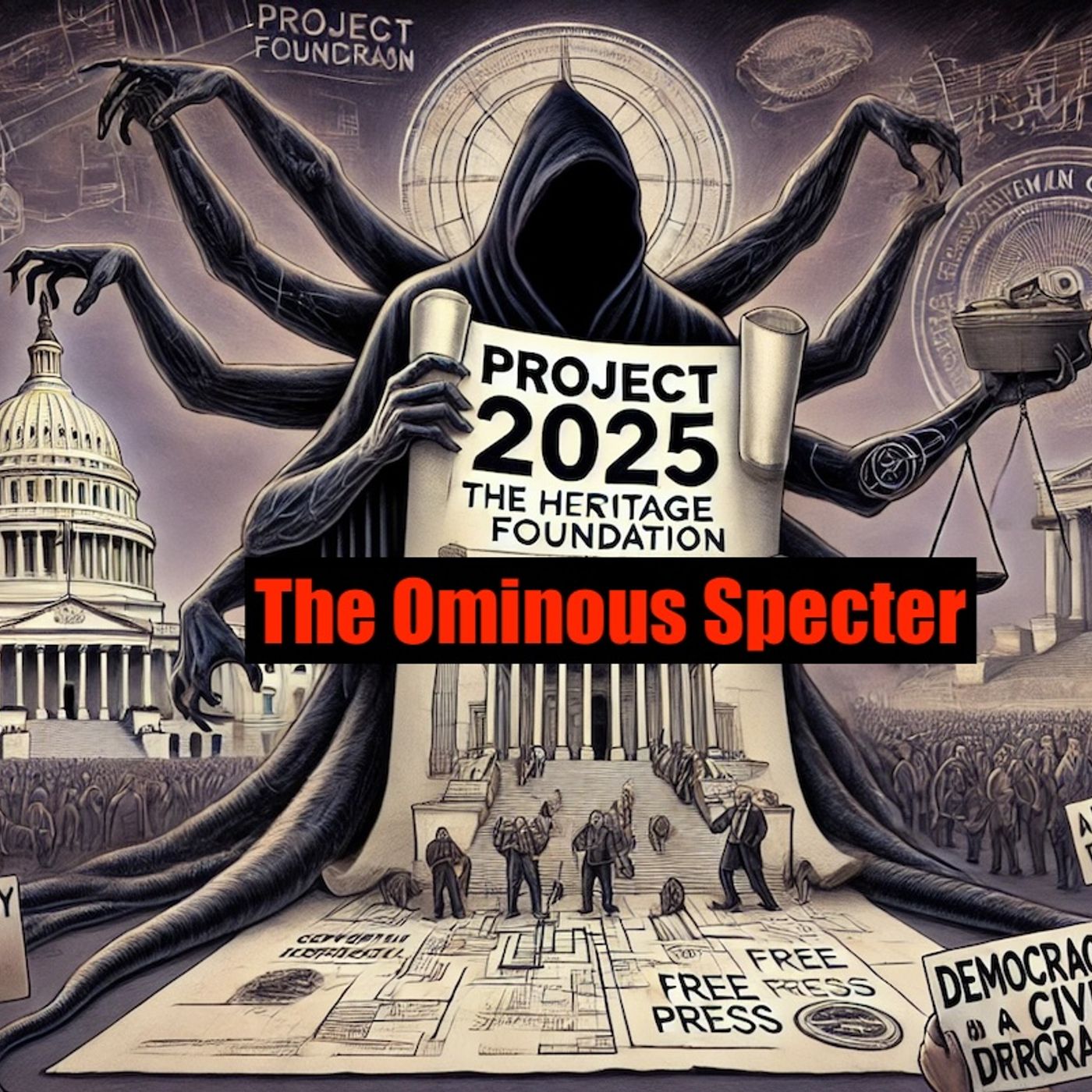
Unleashing the Radical Agenda: Project 2025's Bid to Reshape American Governance episode artwork

EPISODE · Sep 11, 2025 · 5 MIN

Unleashing the Radical Agenda: Project 2025's Bid to Reshape American Governance

from Project 2025: The Ominous Specter · host Inception Point AI

Project 2025 has quickly become the most consequential—and controversial—blueprint for American governance in recent history. Conceived by the Heritage Foundation and launched with a sprawling 927-page policy manual in April 2023, Project 2025’s core goal is to reshape the entire federal government according to staunch conservative priorities. It is, as Heritage Foundation president Kevin Roberts puts it, an effort to “dismantle the administrative state and restore presidential control over the executive branch.” Yet behind those words lies an ambitious checklist for the next presidential administration, presuming a Republican—most likely Donald Trump—takes office. Project 2025 is not just a collection of ideas. It is a detailed playbook, complete with executive orders, departmental reorganization timetables, and a so-called 180-day playbook, designed for rapid execution on “Day One.” At the heart of Project 2025 is an unprecedented push to centralize power in the Oval Office. The plan relies on the controversial unitary executive theory, which argues all executive branch employees should be directly answerable to the president. Kevin Roberts has been explicit: “All federal employees should answer to the president.” According to the project manual, entire agencies such as the Department of Justice, Consumer Financial Protection Bureau, and the Federal Trade Commission would lose their current independence and fall under direct White House control. One of the most sweeping reforms revolves around personnel. The blueprint resurrects the idea of “Schedule F”—a Trump-era category that would allow the president to reclassify tens of thousands of career civil servants as political appointees, instantly stripping them of protections from partisan firing. The National Federation of Federal Employees warns this would “give the president and his loyalists full control of the executive branch for personal and political gain,” hollowing out civil service checks that have traditionally protected against corruption and patronage. Concrete examples illustrate the scale of the changes envisioned. In foreign policy, the State Department chapter recommends that, before January 20, all leadership be dismissed and replaced with ideologically aligned “acting” appointees who bypass Senate confirmation entirely. Kiron Skinner, the former policy planning chief who wrote this section, has called for removing staff she considers too left-leaning, despite admitting she could not name a single time employees substantively obstructed White House policy. The playbook doesn’t stop there. Project 2025 proposes slashing federal workforce numbers through forced attrition, with the White House directing agency heads to lay off or consolidate thousands of positions and eliminate entire offices deemed non-essential. For example, agencies like USAID and the CFPB are earmarked for dissolution, their functions either axed or merged into departments more closely monitored by the ex This content was created in partnership and with the help of Artificial Intelligence AI.

Project 2025 has quickly become the most consequential—and controversial—blueprint for American governance in recent history. Conceived by the Heritage Foundation and launched with a sprawling 927-page policy manual in April 2023, Project 2025’s core goal is to reshape the entire federal government according to staunch conservative priorities. It is, as Heritage Foundation president Kevin Roberts puts it, an effort to “dismantle the administrative state and restore presidential control over the executive branch.” Yet behind those words lies an ambitious checklist for the next presidential administration, presuming a Republican—most likely Donald Trump—takes office. Project 2025 is not just a collection of ideas. It is a detailed playbook, complete with executive orders, departmental reorganization timetables, and a so-called 180-day playbook, designed for rapid execution on “Day One.” At the heart of Project 2025 is an unprecedented push to centralize power in the Oval Office. The plan relies on the controversial unitary executive theory, which argues all executive branch employees should be directly answerable to the president. Kevin Roberts has been explicit: “All federal employees should answer to the president.” According to the project manual, entire agencies such as the Department of Justice, Consumer Financial Protection Bureau, and the Federal Trade Commission would lose their current independence and fall under direct White House control. One of the most sweeping reforms revolves around personnel. The blueprint resurrects the idea of “Schedule F”—a Trump-era category that would allow the president to reclassify tens of thousands of career civil servants as political appointees, instantly stripping them of protections from partisan firing. The National Federation of Federal Employees warns this would “give the president and his loyalists full control of the executive branch for personal and political gain,” hollowing out civil service checks that have traditionally protected against corruption and patronage. Concrete examples illustrate the scale of the changes envisioned. In foreign policy, the State Department chapter recommends that, before January 20, all leadership be dismissed and replaced with ideologically aligned “acting” appointees who bypass Senate confirmation entirely. Kiron Skinner, the former policy planning chief who wrote this section, has called for removing staff she considers too left-leaning, despite admitting she could not name a single time employees substantively obstructed White House policy. The playbook doesn’t stop there. Project 2025 proposes slashing federal workforce numbers through forced attrition, with the White House directing agency heads to lay off or consolidate thousands of positions and eliminate entire offices deemed non-essential. For example, agencies like USAID and the CFPB are earmarked for dissolution, their functions either axed or merged into departments more closely monitored by the ex This content was created in partnership and with the help of Artificial Intelligence AI.

NOW PLAYING

Unleashing the Radical Agenda: Project 2025's Bid to Reshape American Governance

0:00 5:00

No transcript for this episode yet

We transcribe on demand. Request one and we'll notify you when it's ready — usually under 10 minutes.

Frequently Asked Questions

How long is this episode of Project 2025: The Ominous Specter?

This episode is 5 minutes long.

When was this Project 2025: The Ominous Specter episode published?

This episode was published on September 11, 2025.

What is this episode about?

Project 2025 has quickly become the most consequential—and controversial—blueprint for American governance in recent history. Conceived by the Heritage Foundation and launched with a sprawling 927-page policy manual in April 2023, Project 2025’s...

Can I download this Project 2025: The Ominous Specter episode?

Yes, you can download this episode by clicking the download button on the episode player, or subscribe to the podcast in your preferred podcast app for automatic downloads.
URL copied to clipboard!