
EPISODE · May 13, 2025 · 3 MIN
Unraveling Cloud Mysteries: What Your Sky Shapes Really Mean and Why Humans See Patterns
from Cloud Shapes What’s That Cloud Mean? · host Inception Point AI
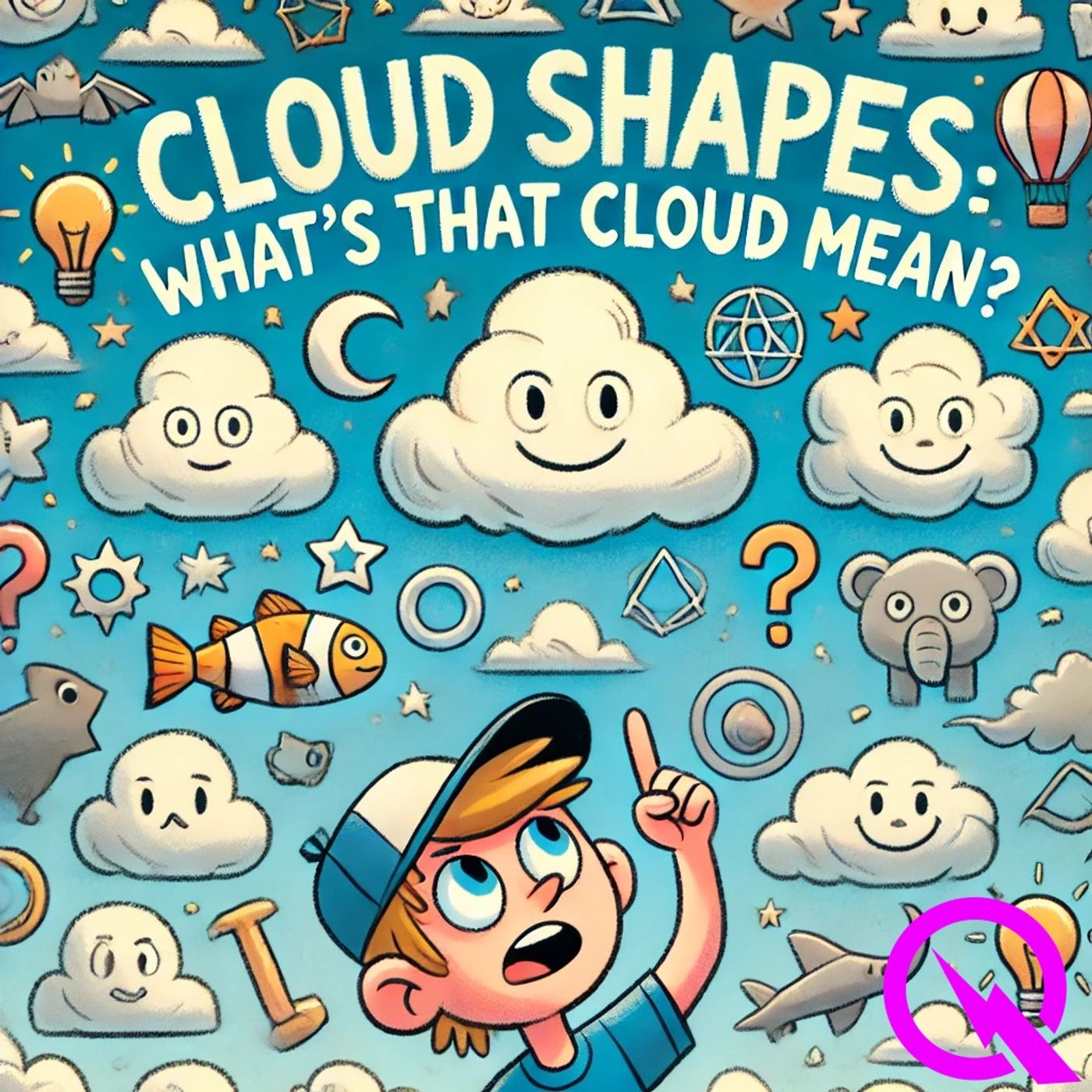
Hey there, it's Jed Why, your friendly neighborhood tinkerer turned audio explorer. Back in the day, I used to spend hours fiddling with gadgets, trying to make them do things they were never meant to do. Now, I channel that restless energy into unraveling life's oddball mysteries for you, my curious listeners. Today, we're diving into a topic that's been nagging at me lately: cloud shapes. What's that cloud mean? Huh, that's weird—let's unpack it. It all started this morning when I was sipping my lukewarm coffee on the porch, staring at the sky. There was this one cloud that looked just like a whale, complete with a spout and everything. I couldn't help but wonder if there was some deeper meaning behind it. So, I did what any self-respecting tinkerer would do: I started digging. Turns out, cloud shapes have been fascinating humans for centuries. Back in ancient times, people believed that clouds were messages from the gods. The Greeks thought that Zeus used clouds to communicate with mortals, while the Norse believed that clouds were the breath of the frost giants. Huh, that's weird—let's unpack it. In reality, cloud shapes are determined by a combination of factors like temperature, humidity, and wind patterns. Cirrus clouds, those wispy, high-altitude ones, are made of ice crystals and often look like feathers or horse tails. Cumulus clouds, on the other hand, are those big, fluffy ones that look like cotton balls. They're formed by rising warm air and can sometimes resemble animals or objects, like my whale cloud. But here's where it gets really interesting: scientists have found that our brains are wired to see patterns, even when they're not really there. It's called pareidolia, and it's the same phenomenon that makes us see faces in toast or the man in the moon. So, when we look at a cloud and see a whale, it's not just the cloud's shape that's at play—it's also our own perception. As I was pondering this, I couldn't help but think about how this applies to other areas of life. How often do we see patterns or meanings where there are none? Like when we read too much into a text message or overanalyze a friend's tone of voice. Maybe we could all benefit from taking a step back and looking at things from a different perspective, just like we do with clouds. Speaking of different perspectives, did you know that there's a whole subculture of cloud enthusiasts out there? They're called nephophiles, and they spend their time chasing storms and snapping photos of the most spectacular cloud formations. Some even believe that certain cloud shapes can predict the weather or even influence our moods. Huh, that's weird—let's unpack it. While there's no scientific evidence to support the idea that clouds can predict the weather, there is some truth to the notion that they can affect our emotions. Studies have shown that people tend to feel happier and more relaxed on sunny days, while overcast skies can lead to feelings of sadness or melancholy. This content was created in partnership and with the help of Artificial Intelligence AI.
Embed this episode
NOW PLAYING
Unraveling Cloud Mysteries: What Your Sky Shapes Really Mean and Why Humans See Patterns
No transcript for this episode yet
Similar Episodes
No similar episodes found.
Similar Podcasts
No similar podcasts found.