
EPISODE · May 19, 2026 · 16 MIN
Urticaria Triggers: Infection Insights
from All Things Urticaria – Learning about urticaria with Prof. Dr. Torsten Zuberbier · host UCARE, the Global Allergy and Asthma Excellence Network for Urticaria
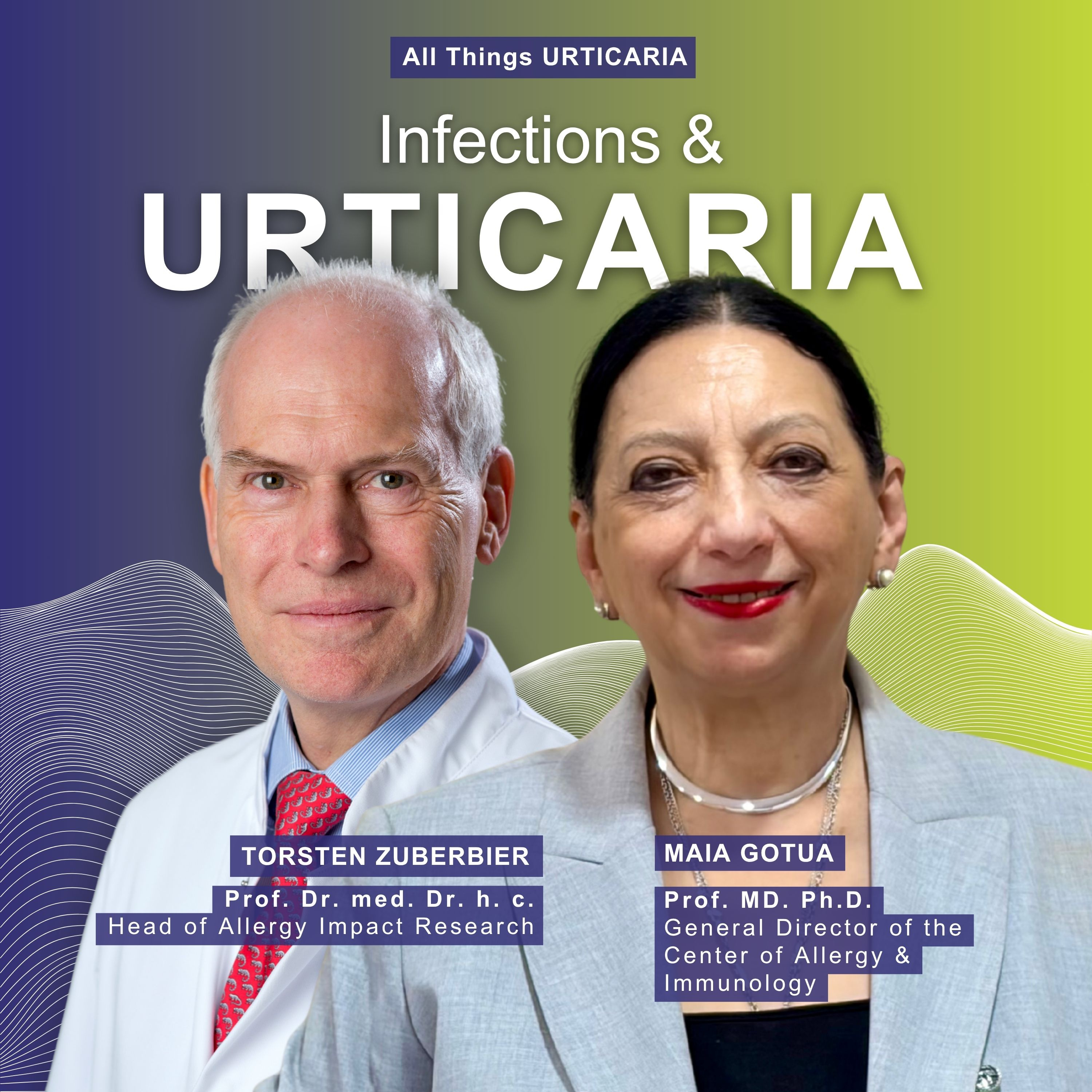
In this episode of the UCARE GA²LEN (Global Allergy and Asthma Excellence Network) podcast on Urticaria, Prof. Torsten Zuberbier and Prof. Maia Gotua discuss the role of infections in acute and chronic urticaria. They explore how infections can trigger, mimic, or worsen symptoms—and why careful clinical evaluation is key. They discuss: 🔹 How often do infections trigger acute urticaria, especially in children? 🔹 Which viral and bacterial infections are most commonly involved? 🔹 Why is “wait and see” often appropriate in acute urticaria? 🔹 How do infections contribute to chronic spontaneous urticaria (CSU)? 🔹 When should physicians investigate infections further? 🔹 Why is targeted diagnostics more important than broad screening? 🔹 How do regional differences influence which infections are relevant? The episode highlights a balanced approach: recognizing infections as important triggers while avoiding unnecessary diagnostics. It emphasizes clinical judgment, patient history, and region-specific factors in managing urticaria effectively. Key Learnings from the Episode:Infections are a common trigger of acute urticaria, especially in children. Viral infections are the most frequent cause, but bacterial and parasitic infections also play a role. Acute urticaria often resolves spontaneously, so extensive diagnostics are not needed. In chronic spontaneous urticaria, infections may trigger or sustain inflammation. Targeted diagnostics based on clinical history are essential. Routine broad screening for infections is not recommended. Regional differences influence relevant infectious triggers. Treating infections may help, but does not always resolve urticaria. Autoimmune mechanisms often maintain chronic urticaria. Physician–patient communication is key to identifying underlying triggers. Chapters:00:00 Introduction to Urticaria and Infections04:43 Acute Urticaria and Infections08:40 Chronic Spontaneous Urticaria and Infections12:10 Cold Urticaria and Infections15:48 Conclusion and Future DirectionsDo you have suggestions for future episodes? Please provide feedback and offer your suggestions for future topics and expert selection here. Feedback form: ATU: https://forms.office.com/e/m6a2uEdsUH
Embed this episode
NOW PLAYING
Urticaria Triggers: Infection Insights
No transcript for this episode yet
Similar Episodes
No similar episodes found.
Similar Podcasts
No similar podcasts found.