
EPISODE · Dec 16, 2024 · 25 MIN
US Gov’t UFO Disinformation: An Architecture of Strategic Ambiguity
from Tatsu’s Newsletter Podcast · host Tatsu Ikeda
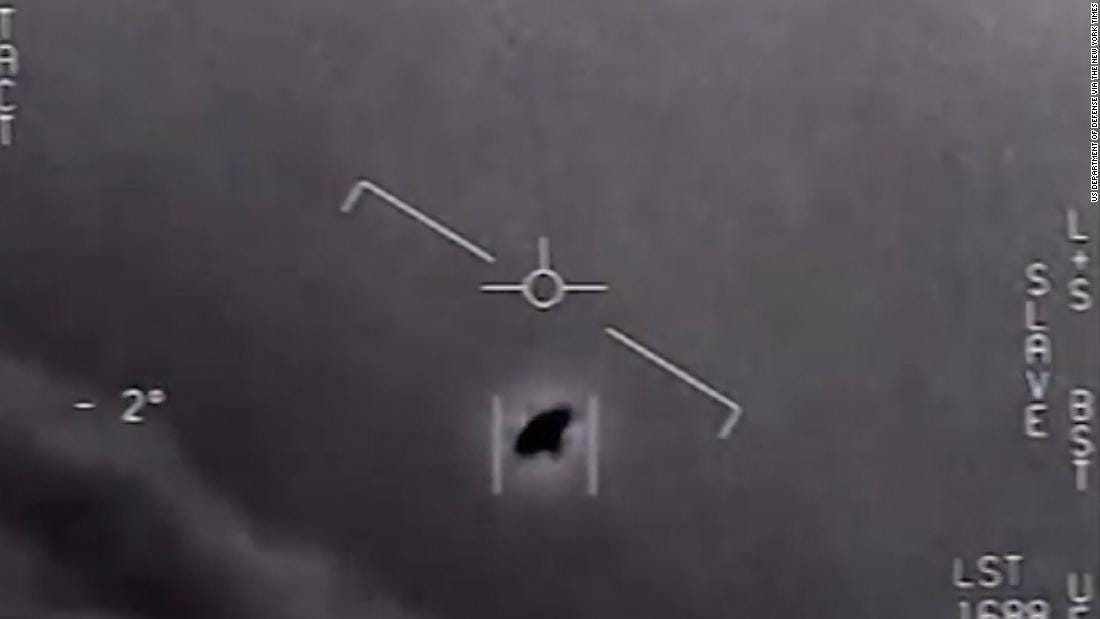
From his desk at Kirtland Air Force Base in 1980, Richard Doty orchestrated what would become one of the most notorious psychological operations in UFO history. As an Air Force Office of Special Investigations (AFOSI) agent, he deliberately fed fabricated stories to researchers, setting in motion a decades-long cascade of manufactured mysteries that would exemplify the government’s sophisticated approach to managing public perception of unexplained aerial phenomena.“I was authorized to show them some documents… that weren’t completely accurate but weren’t completely false,” Doty revealed in a 2014 interview. His admission illuminated a complex web of strategic deception that extended far beyond simple denial or confirmation.Documents obtained through Freedom of Information Act requests reveal an intricate architecture of uncertainty, deliberately constructed to serve multiple intelligence objectives. This architecture, refined over decades, represents a calculated approach to information management that continues to influence public discourse.Programs, Contractors, and Operational Infrastructure (1947-2024)Early Programs (1947-1969)Project SIGN (1947-1948) marked the first official USAF investigation, with RAND Corporation providing technical analysis. The program produced the controversial “Estimate of the Situation” document, which leadership suppressed and subsequently destroyed. SIGN’s operational framework established patterns that would persist through decades of government UAP investigations.Project GRUDGE (1949-1951) expanded the infrastructure, bringing in Battelle Memorial Institute for case analysis while maintaining connections to Project TWINKLE’s monitoring systems. “The shift from SIGN to GRUDGE represented more than a name change,” noted Dr. Jacques Vallée. “It established a template for how scientific authority could be used to dismiss cases while maintaining classified studies.”Project BLUE BOOK (1952-1969) further refined these techniques, leveraging academic partnerships through J.A. Hynek at Northwestern University while maintaining technical consulting relationships with Douglas Aircraft Company. “We were instructed to debunk every case publicly while maintaining detailed records of unexplained incidents for internal review,” Hynek later revealed.Classified Programs (1970s-1990s)The post-Blue Book era saw the emergence of more sophisticated operational frameworks. Project AQUARIUS, under NSA oversight, coordinated multiple defense contractors through compartmentalized programs. The AFOSI operations of this period, including Doty’s activities, integrated with BDM Corporation’s technical infrastructure and the enigmatic Collins Elite study group.“The CIA’s role in the UFO controversy was aimed at domestic targets as much as foreign ones,” notes historian Richard Dolan. “It wasn’t just about managing public perception, but about creating a specific psychological environment.”Modern Era (1990s-Present)The Advanced Aerospace Threat Identification Program (AATIP) represented a significant evolution in approach. Through Bigelow Aerospace Advanced Space Studies (BAASS), the $22 million program maintained multiple shell operations while subcontracting to EarthTech International and others.The Advanced Aerospace Weapons Systems Applications Program (AAWSAP) expanded this framework, integrating aerospace giants like Lockheed Martin and Boeing with think tanks including RAND and MITRE Corporation. The program’s connection to NEMESIS electronic warfare systems suggests broader implications for military deception capabilities.The Mechanics of Manufactured MysteryThe operational playbook emerged in the aftermath of World War II. As the Robertson Panel convened in 1953, the CIA and Air Force developed sophisticated techniques for manipulating public discourse around unidentified aerial phenomena. Their methods included:* Embedding operatives within civilian research groups* Seeding contradictory narratives through multiple channels* Creating calibrated levels of doubt in official statements* Utilizing scientific authority to dismiss cases while maintaining classified studiesNick Pope, who ran the British Government’s UFO project at the Ministry of Defence, provides insight into this dual approach: “Governments have consistently played a double game with UFOs, debunking them while secretly studying them. This isn’t speculation – the declassified documents prove it.”The Infrastructure of UncertaintyBy the 1990s, the government had developed a sophisticated infrastructure for managing UFO-related information:* Compartmentalized programs with deliberate information leaks* Front organizations for monitoring civilian research* Controlled opposition through funded skeptics* Strategic use of ridicule and professional consequencesThe Modern MachineryContemporary operations have evolved with technology. Luis Elizondo, former director of AATIP, has spoken about the persistence of institutional resistance: “There are elements within the government still very much involved in obfuscating the truth from the American people.”Recent operational patterns reveal:* The 2017-2021 UAP disclosures combined unprecedented transparency with strategic ambiguity* Official statements simultaneously acknowledge anomalous data while deflecting specific inquiries* Multiple agencies offer conflicting interpretations of identical phenomena* Selective release of gun camera footage creates controlled narrative frameworksThe Human Cost“The ridicule factor has been very carefully engineered and implanted,” stated Dr. Robert Wood, a former McDonnell Douglas scientist who studied these programs. “It’s a powerful weapon of disinformation.”Military personnel reporting genuine anomalous phenomena often found themselves caught in this machinery. As Colonel Charles Halt, witness to the Rendlesham Forest incidents, noted: “The military’s first response was to try to discredit the witnesses rather than investigate the events.”The Strategic CalculusKit Green, former CIA analyst involved in UFO-related programs, has acknowledged the complexity of these operations: “The government’s approach to this subject has been far more sophisticated and nuanced than either believers or skeptics typically realize.”This calculation becomes evident in the paradoxical nature of recent disclosures, where increased transparency serves to maintain strategic ambiguity. The 2021 UAP report to Congress exemplifies this approach – acknowledging unexplained phenomena while carefully avoiding definitive conclusions.As night falls over New Mexico’s military installations, these operational frameworks continue to shape public discourse around unexplained aerial phenomena. The infrastructure of strategic ambiguity, refined through decades of psychological operations, maintains its influence – exemplifying the government’s calculated approach to managing not just information, but the mechanisms of belief itself.The machinery persists, its techniques more refined than ever, leaving us to navigate an epistemic landscape where certainty remains deliberately elusive. This is a public episode. If you'd like to discuss this with other subscribers or get access to bonus episodes, visit tatsuikeda.substack.com/subscribe
Embed this episode
NOW PLAYING
US Gov’t UFO Disinformation: An Architecture of Strategic Ambiguity
No transcript for this episode yet
Similar Episodes
No similar episodes found.
Similar Podcasts
No similar podcasts found.