
EPISODE · May 14, 2026 · 7 MIN
US History 1492-1877, Unit 2: Colonial America: Middle Colonies
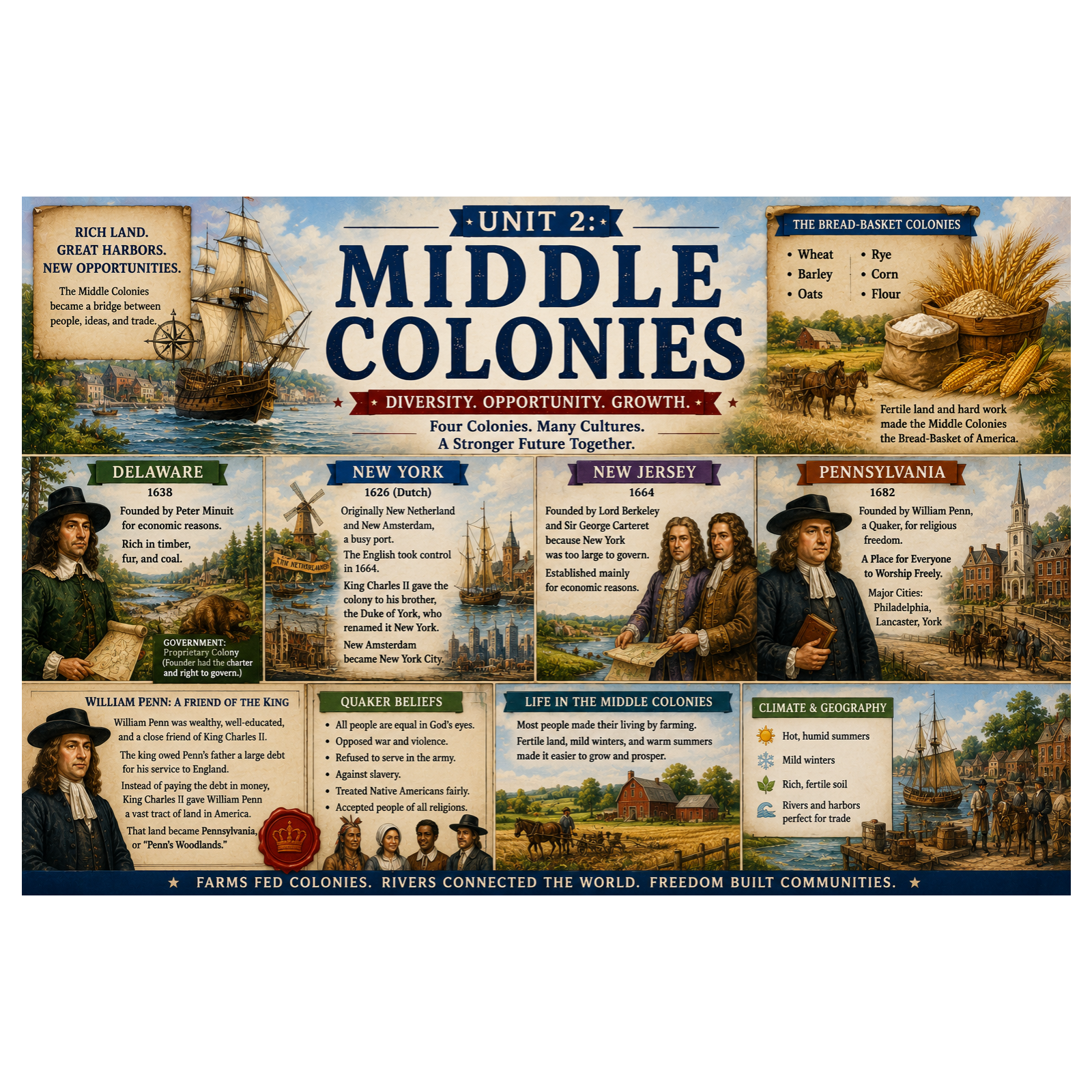
In this lesson from Unit 2: Colonial America, students explore the development of the Middle Colonies and examine how geography, economics, diversity, and religious tolerance shaped life in the region. Students study the colonies of Delaware, New York, New Jersey, and Pennsylvania while analyzing how these colonies became some of the most economically successful and culturally diverse areas in Colonial America.The lesson begins by introducing the concept of regions and examining the geography and climate of the Middle Colonies, including fertile soil, mild winters, hot summers, and access to important rivers and ports. Students learn how these environmental advantages supported farming, trade, and economic growth.Students then investigate the founding of Delaware and New York, including the Dutch origins of New Netherland and New Amsterdam before English forces took control and renamed the colony New York. The lesson highlights the importance of trade, harbors, and economic competition between European powers in North America.A major focus of the lesson is Pennsylvania and the leadership of William Penn. Students examine Penn’s background as a wealthy Quaker with close ties to King Charles II and learn how Pennsylvania was granted to him partly as repayment for debts owed to his family by the English crown. The lesson explores Penn’s vision for a colony built on religious freedom, tolerance, and fair treatment of Native Americans.Students also analyze the beliefs of the Quakers, including equality among people, opposition to violence and slavery, and acceptance of people from different religious backgrounds. The lesson explains how these beliefs shaped Pennsylvania into one of the most tolerant and diverse colonies in North America.The lesson concludes with an examination of the economy of the Middle Colonies, including farming, grain production, trade, shipping, and growing cities such as Philadelphia. Students learn why the Middle Colonies became known as the “Bread Basket Colonies” due to their massive production of wheat, barley, oats, rye, and corn.By the end of the lesson, students will understand how the Middle Colonies became centers of diversity, economic opportunity, religious tolerance, and trade while helping shape the social and economic foundations of Colonial America.
Embed this episode
Ready to play
US History 1492-1877, Unit 2: Colonial America: Middle Colonies
No transcript for this episode yet
Similar Episodes
No similar episodes found.
Similar Podcasts
No similar podcasts found.