
EPISODE · May 14, 2026 · 6 MIN
US History 1492-1877, Unit 2: Colonial America: Southern Colonies
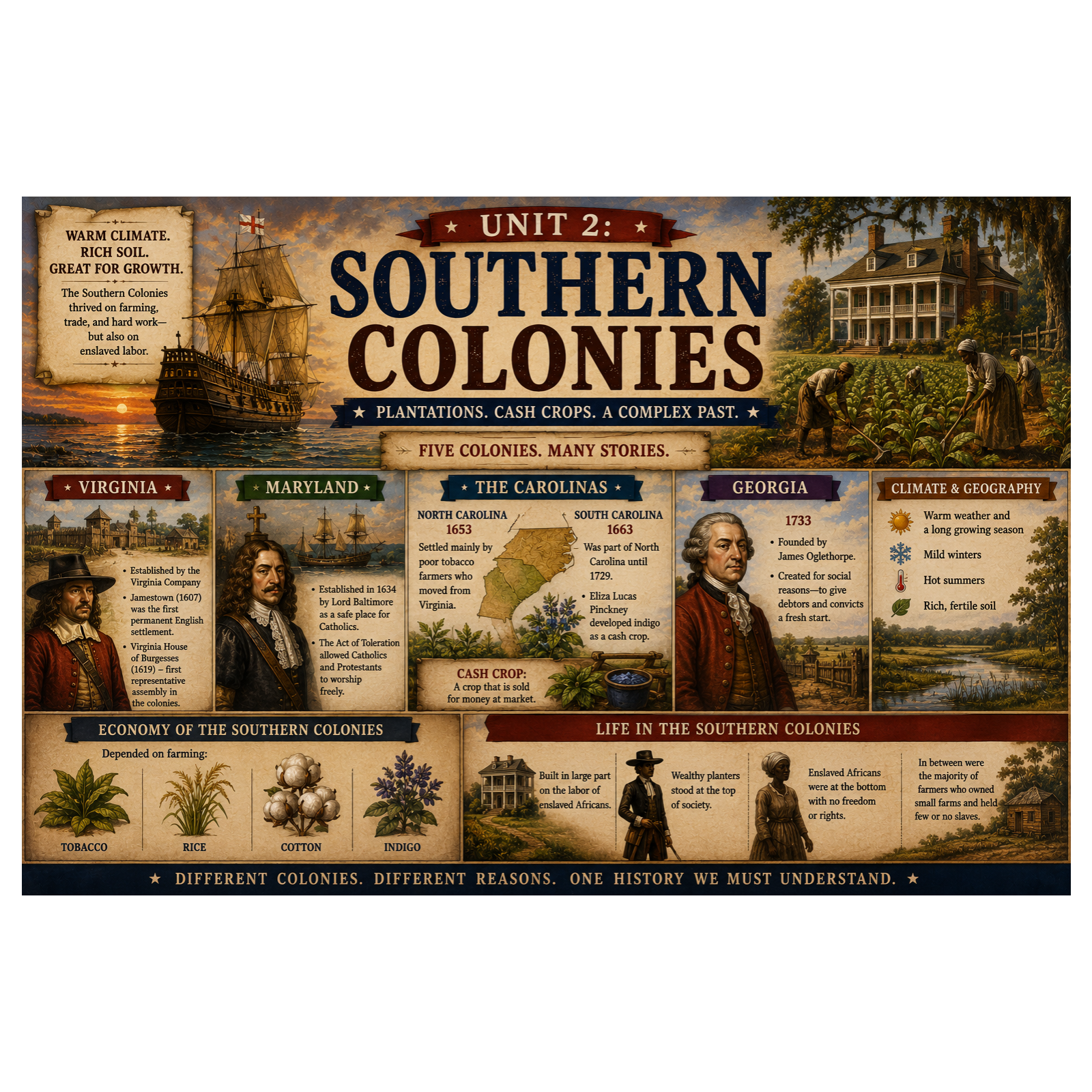
In this lesson from Unit 2: Colonial America, students explore the development of the Southern Colonies and examine how geography, agriculture, economics, and slavery shaped life in the region. Students study the colonies of Virginia, Maryland, North Carolina, South Carolina, and Georgia while learning how the Southern Colonies became centers of plantation agriculture and cash crop production.The lesson begins with the founding of Virginia and Jamestown, the first permanent English settlement in North America. Students examine the growth of tobacco as a major cash crop and learn about the Virginia House of Burgesses as the first representative assembly in the English colonies.Students then explore the founding of Maryland by Lord Baltimore as a refuge for Catholics and analyze the significance of the Act of Toleration in promoting limited religious freedom for Christians within the colony.The lesson also examines the development of North Carolina and South Carolina, including the role of the Lords Proprietors and the economic growth of plantation agriculture. Students learn about Eliza Lucas Pinckney and her contribution to developing indigo as an important Southern cash crop.A major focus of the lesson is Georgia and the leadership of James Oglethorpe. Students investigate Georgia’s founding as a colony intended to provide debtors and convicts with a fresh start while also serving as a protective buffer between the English colonies and Spanish Florida.Students also study the geography and climate of the Southern Colonies, including fertile soil, warm weather, and long growing seasons that supported plantation farming. The lesson explains how crops such as tobacco, rice, indigo, and cotton became the foundation of the Southern economy.Finally, students examine the role of enslaved labor in the Southern Colonies and analyze how plantation agriculture created a rigid social hierarchy dominated by wealthy plantation owners.By the end of the lesson, students will understand how farming, cash crops, representative government, geography, and slavery shaped the Southern Colonies and contributed to the growth of Colonial America.
Embed this episode
Ready to play
US History 1492-1877, Unit 2: Colonial America: Southern Colonies
No transcript for this episode yet
Similar Episodes
No similar episodes found.
Similar Podcasts
No similar podcasts found.