
EPISODE · Mar 28, 2026 · 20 MIN
Use of Stoicism Principles by Healthcare Leaders to Drive Quality
from Culture Coalition Podcast
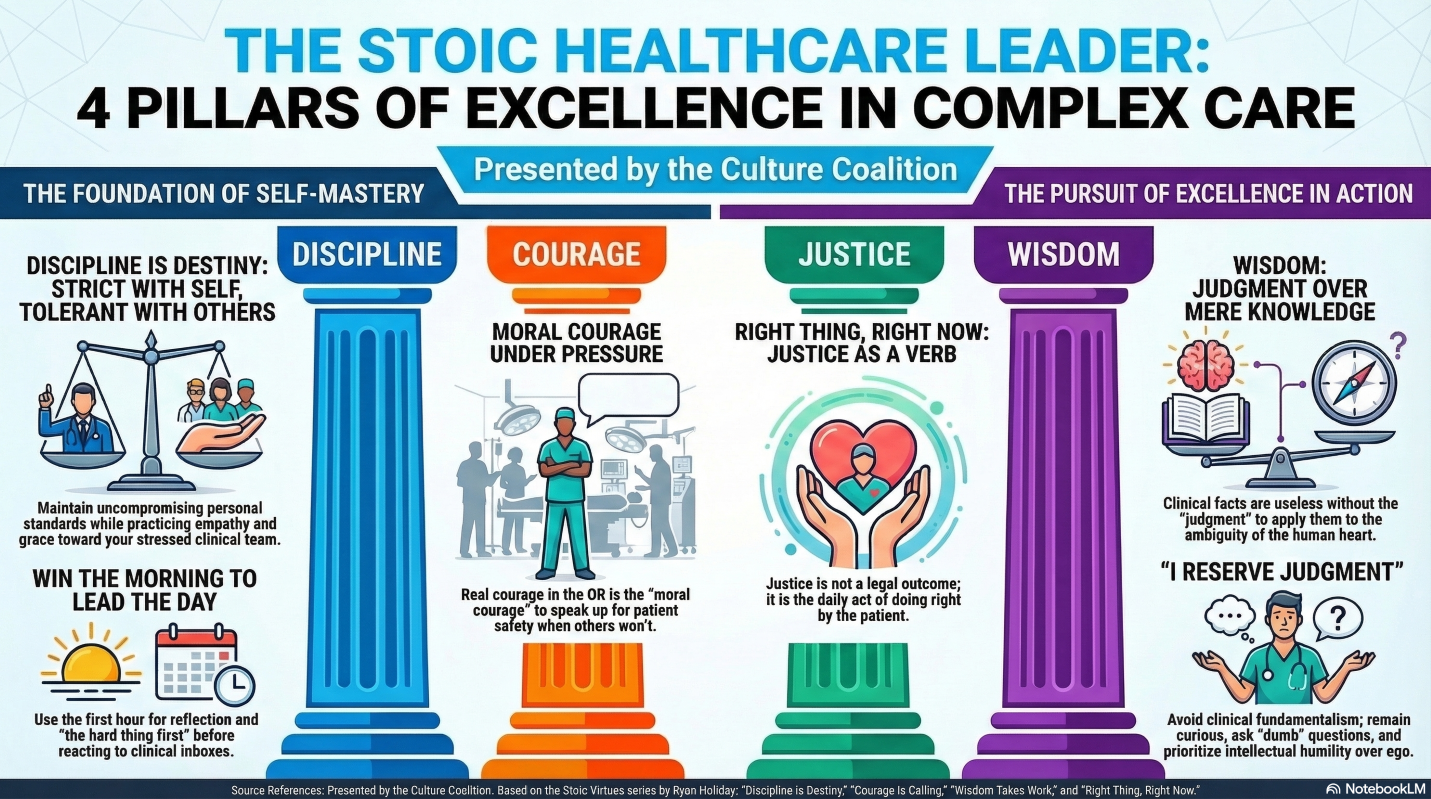
4 Counter-Intuitive Rules for Leading Complex CareHospital environments are currently "bananas." In the collision of high stakes and constant distraction, the Culture Coalition posits that Stoicism is not about being unfeeling; it is about maintaining a steady hand during a massive hemorrhage. Leadership is internal mastery in an external world of chaos.Master the "Self" Before the "Staff" True discipline begins with the body. You must treat your physical state rigorously so it does not "disobey the mind" during a grueling shift. Reclaim your morning "triage" by ignoring your phone for the first hour; reactive leaders are rarely effective ones. By being "strict with yourself and tolerant with others," you avoid becoming a clinical tyrant or an "energy vampire" who drains team cohesion in the OR."The most powerful person is the one under their own power." — Ryan HolidayMoral Courage Over Clinical Compliance We often celebrate the physical courage of a complex thoracic surgery, yet shy away from the moral courage required to step into the "arena." Real leadership is pausing a line for a safety check even when the surgical schedule is crumbling. If you fail to act, you will be dogged by a "nagging sense" that more was possible. Step up: "Of cowards, nothing is written."Justice is a Verb, Not a Noun Justice is the highest virtue; the presence of injustice renders any clinical achievement worthless. It is not a passive legal concept, but what we do right now. Integrity is only real when there is a "Cost of Principles"—such as choosing a safer, more expensive vendor or protocol even if it bleeds your department budget. "It’s not a principle unless it costs you."Prioritize Judgment Over Rote Knowledge Wisdom takes work. Montaigne famously noted that we should evaluate a magistrate not by academic testing, but by giving them a case to judge. In leadership, board scores (Knowledge) are secondary to the ability to "judge" the nuances of a team conflict or a patient's lived reality. To improve care, remain an "active and vigorous" learner, willing to look stupid by asking the fundamental questions others are too proud to raise.Conclusion These virtues shift a unit’s culture from reactive survival to intentional excellence. Hosted on Acast. See acast.com/privacy for more information.
Embed this episode
NOW PLAYING
Use of Stoicism Principles by Healthcare Leaders to Drive Quality
No transcript for this episode yet
Similar Episodes
No similar episodes found.
Similar Podcasts
No similar podcasts found.