
EPISODE · Feb 15, 2019 · 5 MIN
Use These Notes to Make Grime Bass Lines
from Ray Harmony · host Hack Music Theory
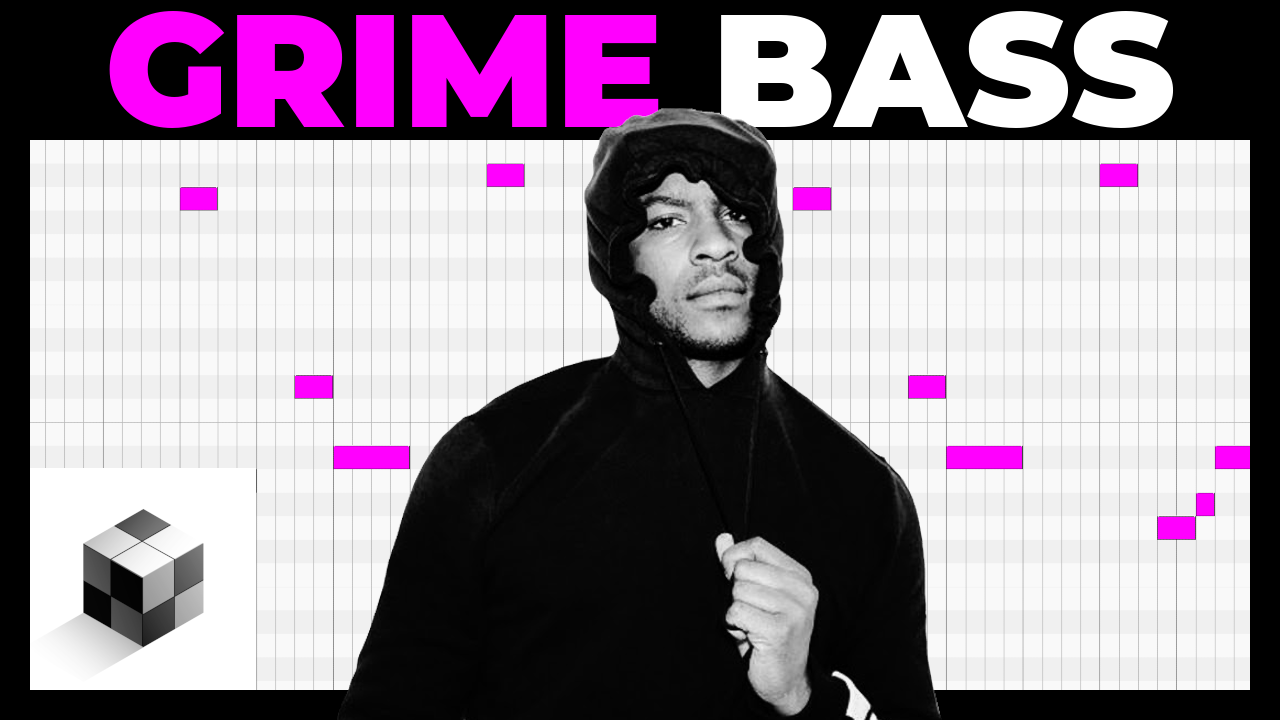
When you want a heavy bass line, do you find yourself clicking through your sounds trying to find something that makes your bass heavy? Well, sounds don’t make bass lines heavy, the notes do. So in this video, you’ll learn what notes to use to make your bass lines heavy, regardless of the sounds you’re using. But first… tea! DOWNLOAD PDF + WAV + MIDI FROM THIS VIDEO Hello revolutionary music makers, we are Kate Harmony and Ray Harmony (AKA Revolution Harmony), and welcome to Hack Music Theory. We help you make great music that stands out, so you can move and grow your audience! If that sounds useful to you, then subscribe to our YouTube channel and hit that bell to get notified every Thursday, when we publish our new video. Alright, let’s jump in... THEORY The legendary London grime producer & MC, SKEPTA, just dropped his new single “Wish You Were Here”. This track is the epitome of London’s grime sound, with its string arpeggios, dissonant bass, and syncopated drums. However, Skepta has a secret scale up his sleeve, which takes this tune to the next level. Now, it’s no secret that Grime producers love the Phrygian mode for its ♭2 (for example, if you’re in A Phrygian, the ♭2 is B♭). And if you’re familiar with modes, you’ll know that Phrygian is minor. And if you’re not familiar with modes, just keep watching cos we’ll explain Phrygian in a minute. So, here’s where the grime veteran kicks things up: Instead of playing the ♭3, he plays the 3, thereby turning Phrygian into Phrygian dominant (AKA Phrygian major), which is a very rare scale! And please note, there are many different (and better!) names for this scale, but Phrygian dominant is probably the most common name for it in the West. And finally, as if a rare scale wasn’t enough, Skepta throws in another note that isn’t even in Phrygian or Phrygian dominant, the 7. And by the way, if you’re new to the concept of musical spelling, which is when we assign numbers to notes (like 7), then read the fourth hack in our free book “12 Music Theory Hacks to Learn Scales & Chords”. And if you’re new to the concept of flat numbers (like ♭3), then read the eighth hack in the book, which you can download below. SETUP Alright, now you’re gonna learn how to use this theory to make your own version, and what you see on the screen right now is our version that we made earlier. So, start by setting up two bars of 4/4, with your grid set to 1/16 notes, and your tempo set to 135 BPM. Skepta uses B♭ Phrygian dominant, but we’re using A, cos there’s fewer flats, so it’s easier for learning. STEP 1. “SKEPTA SCALE” First things first, let’s talk about what Phrygian is. And that story begins with the Aeolian mode (AKA the natural minor scale), which is what you get when you play all the white notes, with A as your root note (in other words, your scale’s home). Now, to turn the Aeolian mode into the Phrygian mode, all you do is move the second note (B) one semitone down (to B♭). Then, to turn Phrygian in to Phrygian dominant, all you do is move the third note (C) one semitone up (to C♯), which changes the scale from minor to major. And finally, throw in that naughty note that is not in Phrygian or Phrygian dominant, the G♯. So, here is the “Skepta scale”: A B♭ C♯ D E F G G♯. And if you wanna start it on B♭, like Skepta does in his track, then just select all the MIDI and move it one semitone up. STEP 2. BASS LINE Right, now that you know the “Skepta scale”, it’s time to use those notes to write your bass line. So, start by playing the root (A) for a 1/4 note, then complete the rest of your first bar with the notes A, C♯ and G, which outlines an A7 chord. Then in your second bar, start by playing the ♭2 (B♭), which creates that classic grime sound. Next, complete the rest of that bar with the notes G and B♭, which outlines a Gm chord, and then throw in that naughty G♯ somewhere towards the end. And lastly, for maximum groove, use plenty of rests and off-beats. NEXT Right, now that you’ve got one section down, how do you write more sections for it, and then, how do you transition between those sections, and turn 'em into a song? Great questions, and if this is something you need help with, then check out our cutting-edge online apprenticeship course, where you’ll literally learn every step of the music making process, and most importantly, you’ll learn how to finish your songs! You’ll also gain access to our private network, which is a safe online space (i.e. social media platform) exclusively for our 600+ apprentices from 50+ countries. Our Network is a super supportive place for you to ask theory questions, share your music, get feedback, meet like-minded music makers, and collaborate! If all this sounds useful to you, then head on over to our Online Apprenticeship page now. Kate & Ray Harmony (AKA Revolution Harmony) Music Teachers & Producers in Vancouver BC, Canada LEVELS Level 1 - Read our free book (below) & watch our YouTube videos Level 2 - Read our "Part 1" book & "Songwriting & Producing" PDF Level 3 - Practice making music using our lessons (PDF+MIDI+WAV) Level 4 - Learn our secret art of song-whispering & finish your music ABOUT Hack Music Theory is a pioneering DAW method for making great music that stands out, so you can move and grow your audience! Taught by award-winning music lecturer Ray Harmony, and his protégé wife Kate Harmony, from their studio in Vancouver BC, Canada. Ray is the author of critically-acclaimed book series "Hack Music Theory", and has made music with Serj Tankian (System of a Down), Tom Morello (Rage Against the Machine), Steven Wilson (Porcupine Tree), Devin Townsend (Strapping Young Lad), Ihsahn (Emperor), Kool Keith (Ultramagnetic MCs), Madchild (Swollen Members), and many more! Kate has the highest grade distinction in Popular Music Theory from the London College of Music, and is the only person on the planet who's been trained by Ray to teach his method. On that note, the "Hack Music Theory" YouTube channel teaches relevant and instantly-usable music theory for producers, DAW users, and all other music makers (songwriters, singers, guitarists, bassists, drummers, etc.) in all genres, from EDM to R&B, pop to hip-hop, reggae to rock, electronic to metal (and yes, we djefinitely djent!). COPYRIGHT © 2019 Revolution Harmony Revolution Harmony is Ray Harmony & Kate Harmony All content (script & music) in video by Revolution Harmony Wooohooo!!! You’re a mere 30 minutes away from being even smarter than you already are. Just head on over to your inbox now for your free download. There was an error submitting your subscription. Please try again. “The most brilliant, fast, easy & fun music theory book I’ve ever seen!” DEREK SIVERS, CD Baby founder We use this field to detect spam bots. If you fill this in, you will be marked as a spammer. DOWNLOAD FREE BOOK /* Layout */ .ck_form { /* divider image */ background: #EAE9EA url(data:image/gif;base64,R0lGODlhAQADAIABAMzMzP///yH/C1hNUCBEYXRhWE1QPD94cGFja2V0IGJlZ2luPSLvu78iIGlkPSJXNU0wTXBDZWhpSHpyZVN6TlRjemtjOWQiPz4gPHg6eG1wbWV0YSB4bWxuczp4PSJhZG9iZTpuczptZXRhLyIgeDp4bXB0az0iQWRvYmUgWE1QIENvcmUgNS41LWMwMTQgNzkuMTUxNDgxLCAyMDEzLzAzLzEzLTEyOjA5OjE1ICAgICAgICAiPiA8cmRmOlJERiB4bWxuczpyZGY9Imh0dHA6Ly93d3cudzMub3JnLzE5OTkvMDIvMjItcmRmLXN5bnRheC1ucyMiPiA8cmRmOkRlc2NyaXB0aW9uIHJkZjphYm91dD0iIiB4bWxuczp4bXA9Imh0dHA6Ly9ucy5hZG9iZS5jb20veGFwLzEuMC8iIHhtbG5zOnhtcE1NPSJodHRwOi8vbnMuYWRvYmUuY29tL3hhcC8xLjAvbW0vIiB4bWxuczpzdFJlZj0iaHR0cDovL25zLmFkb2JlLmNvbS94YXAvMS4wL3NUeXBlL1Jlc291cmNlUmVmIyIgeG1wOkNyZWF0b3JUb29sPSJBZG9iZSBQaG90b3Nob3AgQ0MgKE1hY2ludG9zaCkiIHhtcE1NOkluc3RhbmNlSUQ9InhtcC5paWQ6MUQ5NjM5RjgxQUVEMTFFNEJBQTdGNTQwMjc5MTZDOTciIHhtcE1NOkRvY3VtZW50SUQ9InhtcC5kaWQ6MUQ5NjM5RjkxQUVEMTFFNEJBQTdGNTQwMjc5MTZDOTciPiA8eG1wTU06RGVyaXZlZEZyb20gc3RSZWY6aW5zdGFuY2VJRD0ieG1wLmlpZDoxRDk2MzlGNjFBRUQxMUU0QkFBN0Y1NDAyNzkxNkM5NyIgc3RSZWY6ZG9jdW1lbnRJRD0ieG1wLmRpZDoxRDk2MzlGNzFBRUQxMUU0QkFBN0Y1NDAyNzkxNkM5NyIvPiA8L3JkZjpEZXNjcmlwdGlvbj4gPC9yZGY6UkRGPiA8L3g6eG1wbWV0YT4gPD94cGFja2V0IGVuZD0iciI/PgH//v38+/r5+Pf29fTz8vHw7+7t7Ovq6ejn5uXk4+Lh4N/e3dzb2tnY19bV1NPS0dDPzs3My8rJyMfGxcTDwsHAv769vLu6ubi3trW0s7KxsK+urayrqqmop6alpKOioaCfnp2cm5qZmJeWlZSTkpGQj46NjIuKiYiHhoWEg4KBgH9+fXx7enl4d3Z1dHNycXBvbm1sa2ppaGdmZWRjYmFgX15dXFtaWVhXVlVUU1JRUE9OTUxLSklIR0ZFRENCQUA/Pj08Ozo5ODc2NTQzMjEwLy4tLCsqKSgnJiUkIyIhIB8eHRwbGhkYFxYVFBMSERAPDg0MCwoJCAcGBQQDAgEAACH5BAEAAAEALAAAAAABAAMAAAICRFIAOw==) repeat-y center top; font-family: 'Montserrat'; line-height: 1.5em; overflow: hidden; color: #000000; font-size: 16px; border-top: none; border-top-color: #666666; border-bottom: none; border-bottom-color: #3d3d3d; -webkit-box-shadow: none; -moz-box-shadow: none; box-shadow: none; clear: both; margin: 0px 0px; } .ck_form, .ck_form * { -webkit-box-sizing: border-box; -moz-box-sizing: border-box; box-sizing: border-box; } #ck_subscribe_form { clear: both; } /* Element Queries — uses JS */ .ck_form_content, .ck_form_fields { width: 50%; float: left; padding: 5%; } .ck_form.ck_horizontal { } .ck_form_content { border-bottom: none; } .ck_form.ck_vertical { background: #fff; } .ck_vertical .ck_form_content, .ck_vertical .ck_form_fields { padding: 10%; width: 100%; float: none; } .ck_vertical .ck_form_content { border-bottom: 1px dotted #aaa; overflow: hidden; } /* Trigger the vertical layout with media queries as well */ @media all and (max-width: 499px) { .ck_form { background: #fff; } .ck_form_content, .ck_form_fields { padding: 10%; width: 100%; float: none; } .ck_form_content { border-bottom: 1px dotted #aaa; } } /* Content */ .ck_form_content h3 { margin: 0px 0px 0px; font-size: 0px; padding: 0px; } .ck_form_content p { font-size: 14px; } .ck_image { float: left; margin-right: 5px; } /* Form fields */ .ck_errorArea { display: none; } #ck_success_msg { padding: 10px 10px 0px; border: solid 1px #ddd; background: #eee; } .ck_label { font-size: 14px; font-weight: bold; } .ck_form input[type="text"] { font-size: 16px; text-align: center; margin-top: 20px; margin-bottom: 0px; padding: 8px 8px; width: 100%; border: 1px solid #d6d6d6; /* stroke */ -moz-border-radius: 4px; -webkit-border-radius: 4px; border-radius: 30px; /* border radius */ background-color: #fff; /* layer fill content */ height: auto; } .ck_form input[type="email"] { font-size: 16px; text-align: center; margin-top: 0px; margin-bottom: 15px; padding: 8px 8px; width: 100%; border: 1px solid #d6d6d6; /* stroke */ -moz-border-radius: 4px; -webkit-border-radius: 4px; border-radius: 30px; /* border radius */ background-color: #fff; /* layer fill content */ height: auto; } .ck_form input[type="text"]:focus, .ck_form input[type="email"]:focus { outline: none; border-color: #aaa; } .ck_checkbox { padding: 10px 0px 10px 20px; display: block; clear: both; } .ck_checkbox input.optIn { margin-left: -20px; margin-top: 0; } .ck_form .ck_opt_in_prompt { margin-left: 4px; } .ck_form .ck_opt_in_prompt p { display: inline; } .ck_form .ck_subscribe_button { width: 100%; color: #fff; margin: 0px 0px 0px; padding: 8px 8px; font-size: 18px; background: #d74128; -moz-border-radius: 4px; -webkit-border-radius: 4px; border-radius: 30px; /* border radius */ cursor: pointer; border: none; text-shadow: none; } .ck_form .ck_guarantee { color: #626262; font-size: 12px; text-align: center; padding: 5px 0px; display: block; } .ck_form .ck_powered_by { display: block; color: #aaa; } .ck_form .ck_powered_by:hover { display: block; color: #444; } .ck_converted_content { display: none; padding: 5%; background: #fff; } /* v6 */ .ck_form_v6 #ck_success_msg { padding: 0px 10px; } @media all and (max-width: 403px) { .ck_form_v6.ck_modal .ck_close_link { top: 30px; } } @media all and (min-width: 404px) and (max-width: 499px) { .ck_form_v6.ck_modal .ck_close_link { top: 57px; } }
Embed this episode
Ready to play
Use These Notes to Make Grime Bass Lines
No transcript for this episode yet
Similar Episodes
No similar episodes found.