
EPISODE · Mar 6, 2025 · 48 MIN
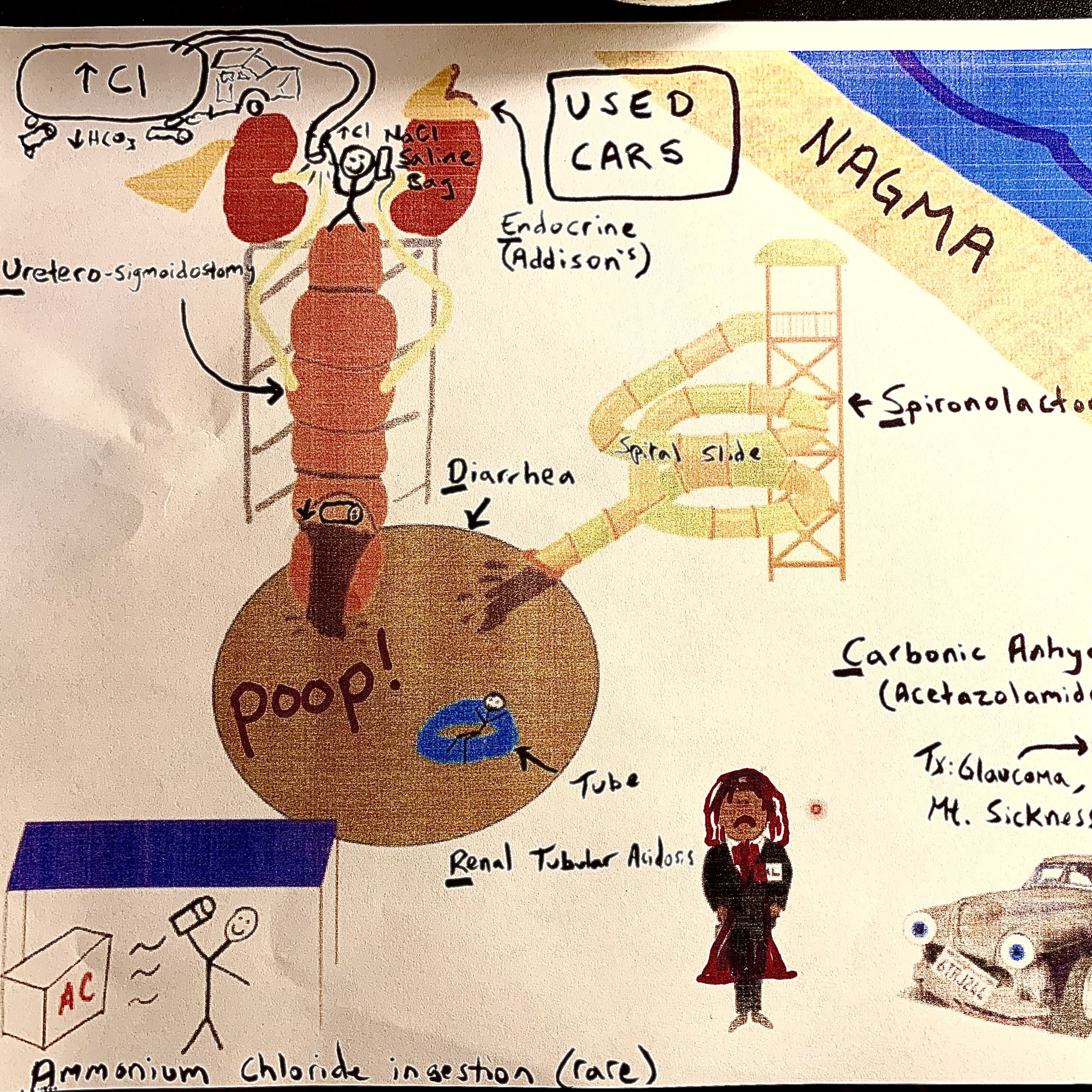
USED CARS non-anion gap metabolic acidosis: high chloride low bicarbonate
from Emergency Medicine Mnemonics · host Aaron Tjomsland
USED CARS mnemonic for non-anion gap metabolic acidosis (NAGMA):Why “USED CARS”? • Ureterosigmoidostomy • Saline & Chloride infusion (excessive).. chloride offsets AG • Endocrine disorders (Addison’s disease aka adrenal insufficiency, hypoaldosteronism) • Diarrhea • Carbonic anhydrase inhibitors • Ammonium chloride • Renal tubular acidosis • Spironolactone⸻U – Ureteroenteric fistula (or diversion surgery) • Why NAGMA? • Ureter attached directly to colon; bicarbonate lost into bowel, chloride absorbed, causing hyperchloremic acidosis. • Symptoms: • History of bladder/colon surgery, urine-like smell from stool, chronic acidosis. • Labs: Normal AG, elevated chloride, chronic metabolic acidosis. • ED Management: • Identify, refer to urology or general surgery for definitive repair. • Correct electrolyte disturbances (usually potassium, bicarbonate).⸻S – Saline Infusion (Excessive) • What: Excessive infusion of normal saline (0.9% NaCl). • Why (Pathophysiology): High chloride content of NS dilutes bicarbonate → hyperchloremic metabolic acidosis (common in hospitalized patients). • Symptoms: Usually subtle (fatigue, mild confusion, fluid overload signs). • Labs: Normal AG, hyperchloremia, normal renal function initially. • ED Management: • Switch to balanced solutions (Lactated Ringer’s, Plasmalyte). • Monitor fluid and electrolyte balance.⸻E – Endocrine Disorders (Addison’s Disease/Adrenal Insufficiency): • Why: Lack of aldosterone = inability to excrete acid & retain sodium. • Clinical Clues: Weakness, fatigue, low BP, dizziness, hyperpigmentation (skin darkening), abdominal pain. • Labs: Low sodium, high potassium, normal anion gap, metabolic acidosis. • ED Management: • IV fluids (Normal saline), hydrocortisone, monitor electrolytes closely. • Admit for adrenal crisis management.⸻D – Diarrhea • Pathophysiology: Loss of bicarbonate-rich fluids via stool → bicarbonate depletion. • Clinical Clues: Frequent watery stools, dehydration signs (tachycardia, low BP). • Labs: Normal anion gap, hypokalemia common, hyperchloremia. • ED Management: • Aggressive fluid resuscitation (often NS or LR). • Electrolyte replacement (especially potassium).⸻C – Carbonic Anhydrase Inhibitors (Acetazolamide) • Mechanism: Prevent bicarbonate reabsorption → bicarbonate loss → acidosis. • Clinical clues: Medication history (glaucoma treatment, altitude sickness prophylaxis, idiopathic intracranial hypertension). • Labs: Normal AG, mild hypokalemia, mild hyperchloremia. • ED Management: • Stop offending medication, supportive care, and electrolyte replacement.⸻A – Ammonium Chloride Ingestion • Mechanism: Direct chloride ingestion overwhelms bicarbonate buffers. • Rare cause today, often historical or industrial exposure. • Clinical clues: History of ingestion, occupational exposures, metabolic symptoms (nausea, vomiting, confusion). • Labs: Normal AG, hyperchloremia. • ED Management: • Supportive care, stop exposure. • Correct metabolic acidosis if severe (sodium bicarbonate IV if severe).⸻R – Renal Tubular Acidosis (RTA) • Mechanism: Kidneys fail to reabsorb bicarbonate or excrete acid properly. • Bicarbonate replacement. • Potassium correction (careful monitoring). • Referral to nephrology.⸻R – Renal Tubular Acidosis (Already covered above) • Included in detail in the “A” section, given its complexity.⸻S – Spironolactone (and other Aldosterone Antagonists) • Mechanism: Blocks aldosterone receptors → reduced acid and potassium excretion. • Clinical clues: Use in CHF, cirrhosis, hypertension treatment. • Hold spironolactone, manage hyperkalemia aggressively (calcium gluconate, insulin/dextrose, albuterol, kayexalate). • Consider bicarbonate if severely acidotic.
Embed this episode
NOW PLAYING
USED CARS non-anion gap metabolic acidosis: high chloride low bicarbonate
No transcript for this episode yet
Similar Episodes
No similar episodes found.
Similar Podcasts
No similar podcasts found.